I am a software tester, finding flaws in products. I am also passionate about user experience & design and find it exciting to simplify & improve the experience of products we use. One such thing I wanted to simplify & make it more accessible is the sidewalks. Something that’s part of our public space.
Like many, I’ve tried to de-stress by going for a walk, only to be forced off the sidewalk and into the street. Our sidewalks are often unusable—either encroached or poorly designed. The intersection of my experiences in testing, design and walking, made me view these sidewalks not just as civic problem, but as a design & behaviour problem. I began capturing pictures of various sidewalk patterns I encountered, trying to understand what makes some pathways easily walkable and others a nightmare. How might we reclaim these vital public spaces?
*Sidewalks are also known as footpaths, pavements, walkways, promenades, etc.
The Usability Flaws Forcing Pedestrians into the Road
In software, if a user interface is confusing or clunky, users simply abandon the app. On a city street, if a sidewalk is uneven, painful, or frustrating to navigate, pedestrians abandon it for the road.
Pedestrians naturally seek the path of least resistance—an even, continuous surface. Two major design flaws actively discourage people from using sidewalks:
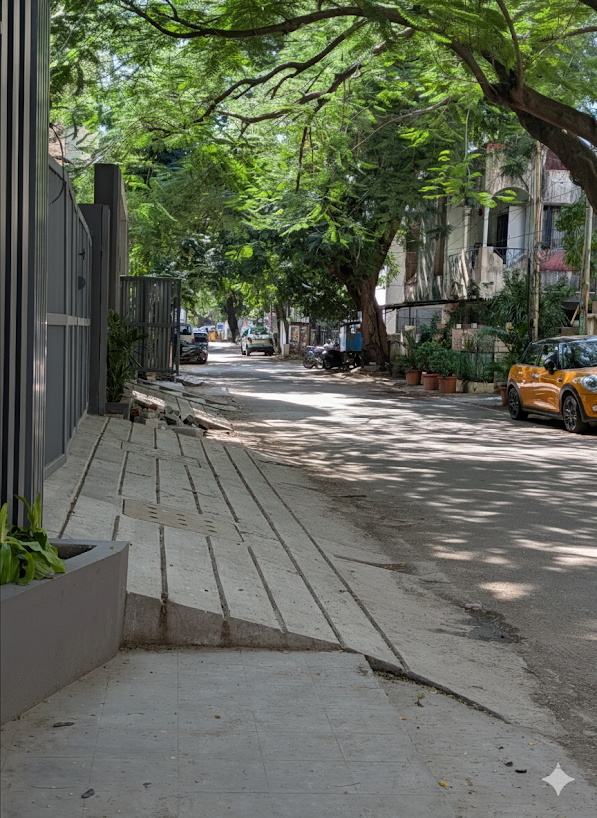
- The Roller-Coaster Surface: Private homeowners and businesses frequently build steep driveway ramps or custom steps right through the sidewalks to transition into their properties. This forces walkers to constantly step up, down, and tilt sideways.
- The High-Stepping Obstacle: Many sidewalks are built too high from the road level without a gradual transition. When a sidewalk abruptly forces a pedestrian to break their walking flow to climb a massive ledge, they choose to walk on the even road instead.
Below are some example of uneven sidewalks, which dissuade pedestrians from walking on them comfortably.


How do Sidewalks get Encroached?
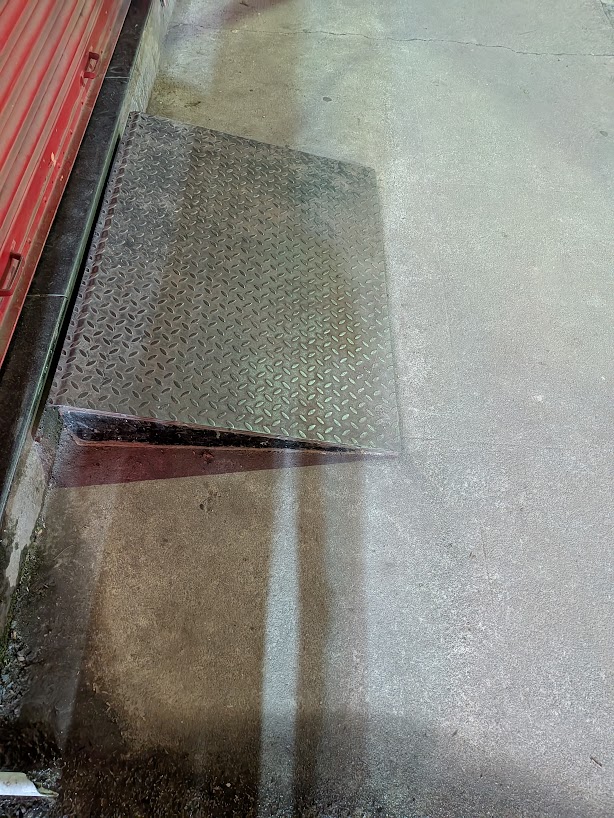
- Ramps & stairs extended beyond the home boundary, onto the public sidewalk
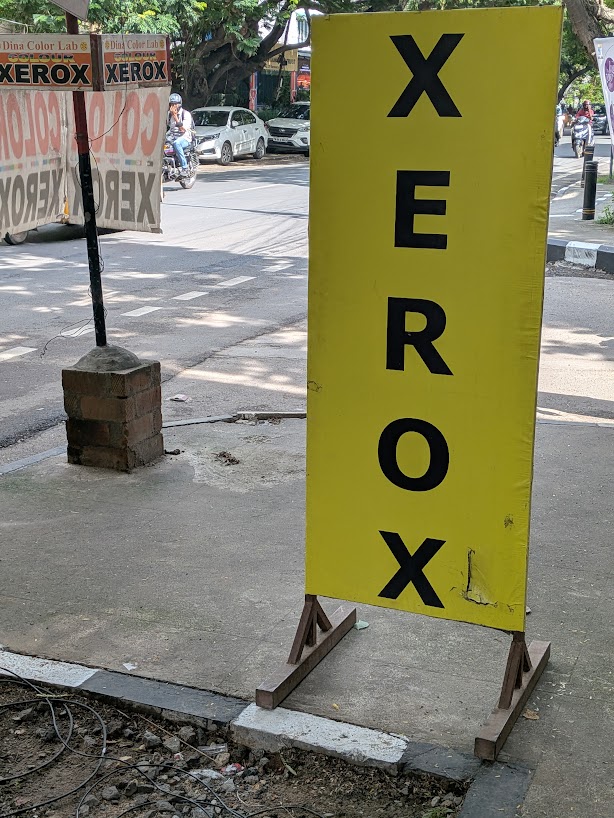
- Shop advertisements placed onto the sidewalks
- Shops extending their storage area onto the sidewalks
- Shops converting sidewalks into customer parking
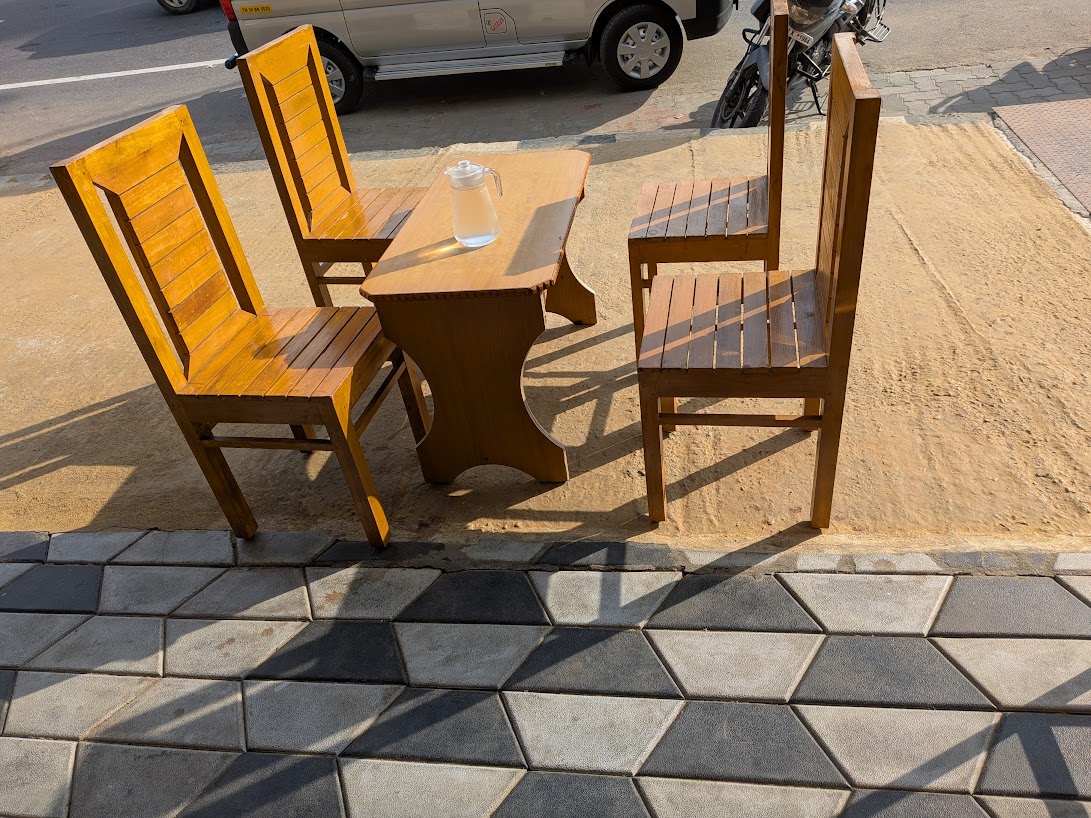
- Small eateries placing tables onto the sidewalks
- Food carts occupying the sidewalks
- Ironing carts occupying the sidewalks
- Tea shops extending the sunshades and letting customers utilise the sidewalks while refreshing
- Housing building gates that opens outward rather than inwards or sliding sideward
- Residents utilising the sidewalks for private gardens & security cabins
- Unloading and storing construction materials (sand, bricks, cement & steel) onto the sidewalks rather than property premises.
- Flex banners placed for marriage/birthday functions, political events and commercial advertisements
- Municipalities and corporations using these places to erect light poles, transformers & overhead electricity/internet cables
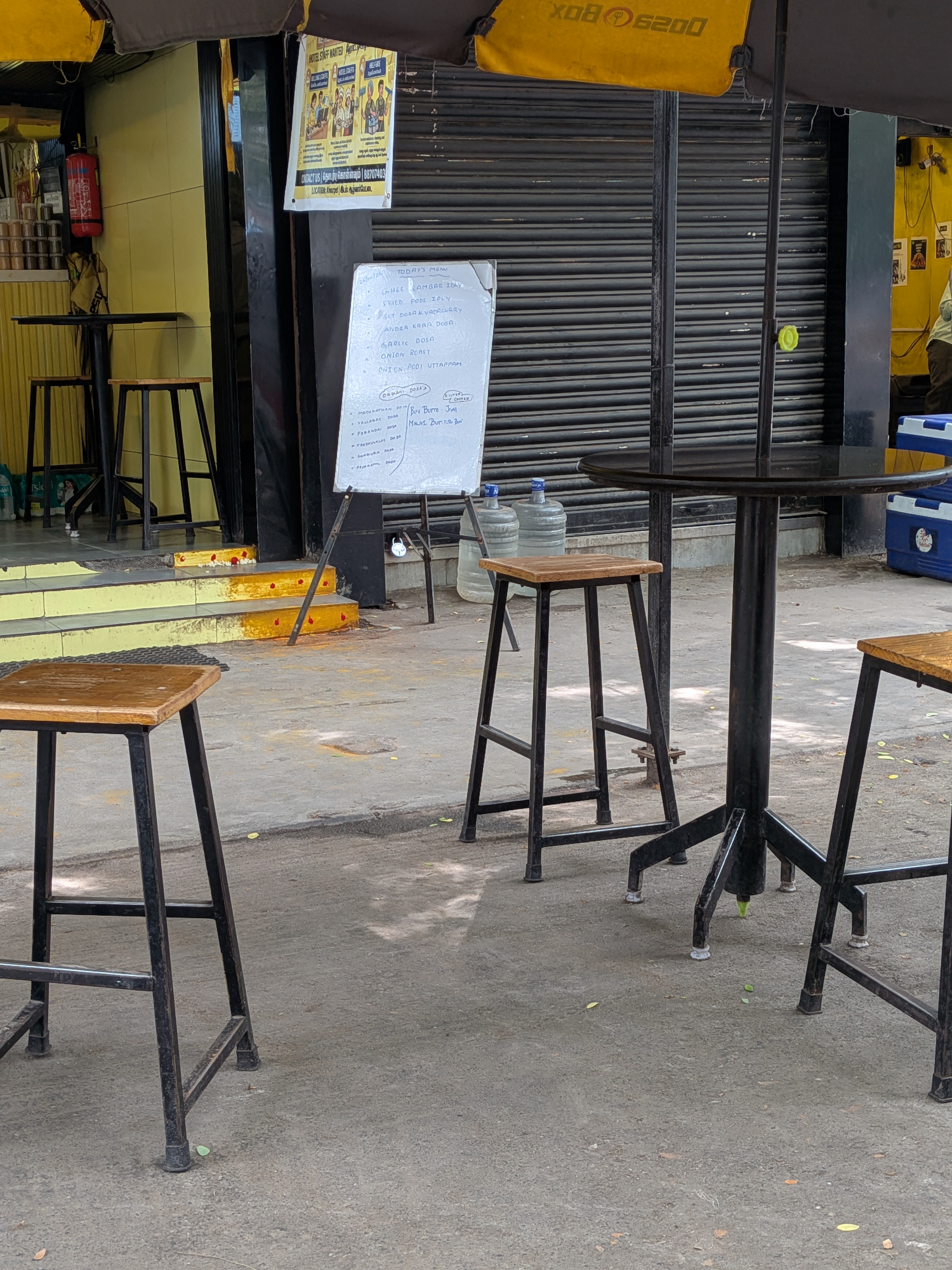
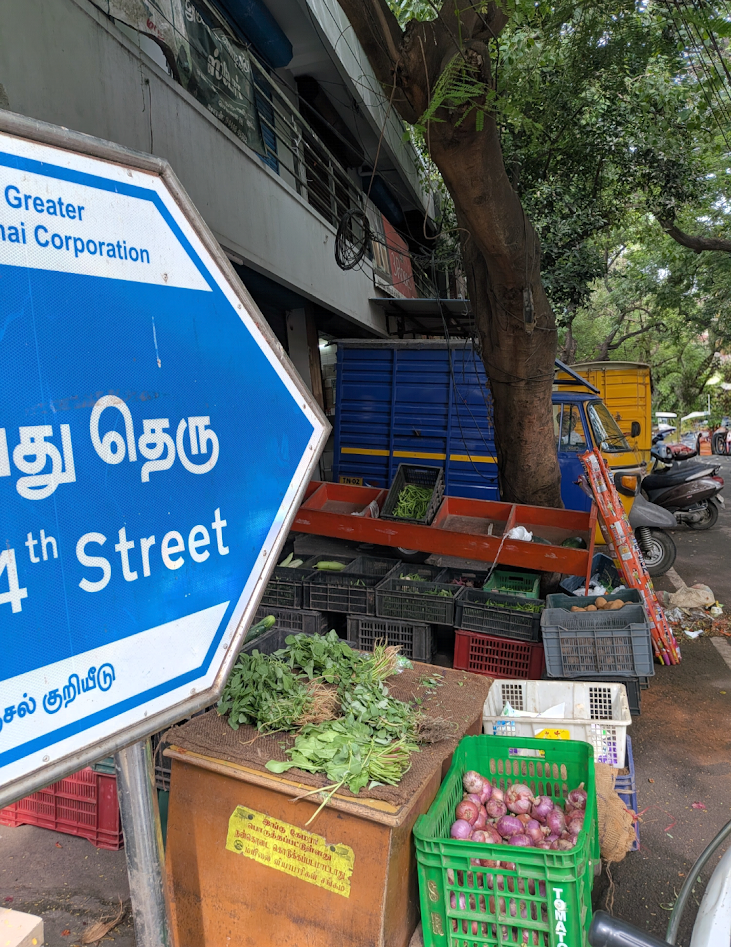
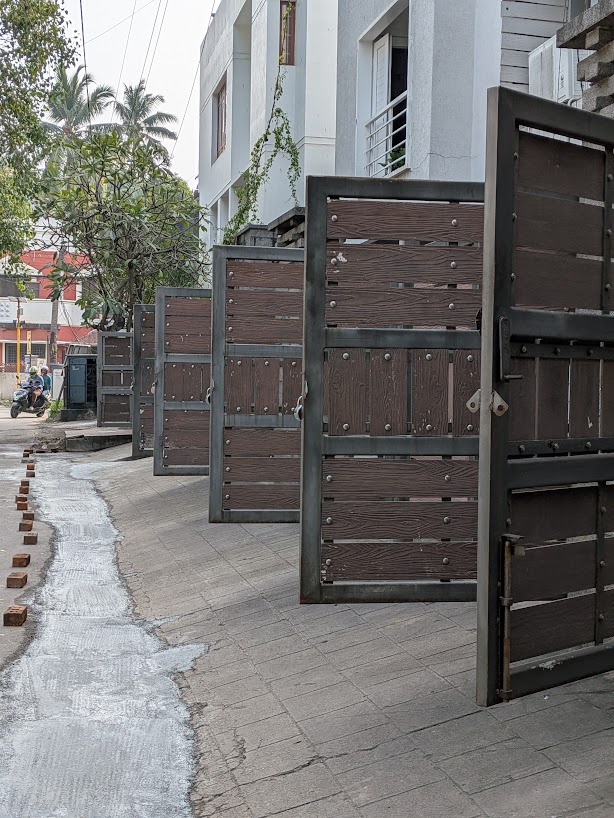

Encroaching to Prevent Encroachment
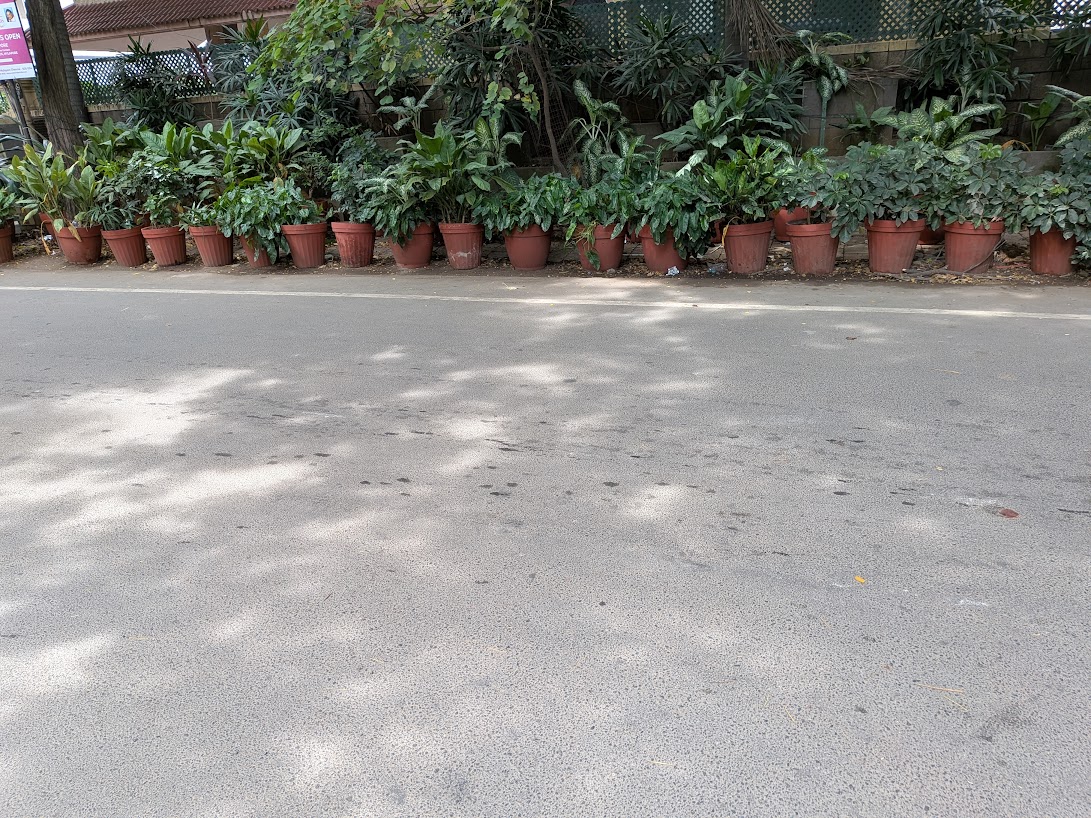
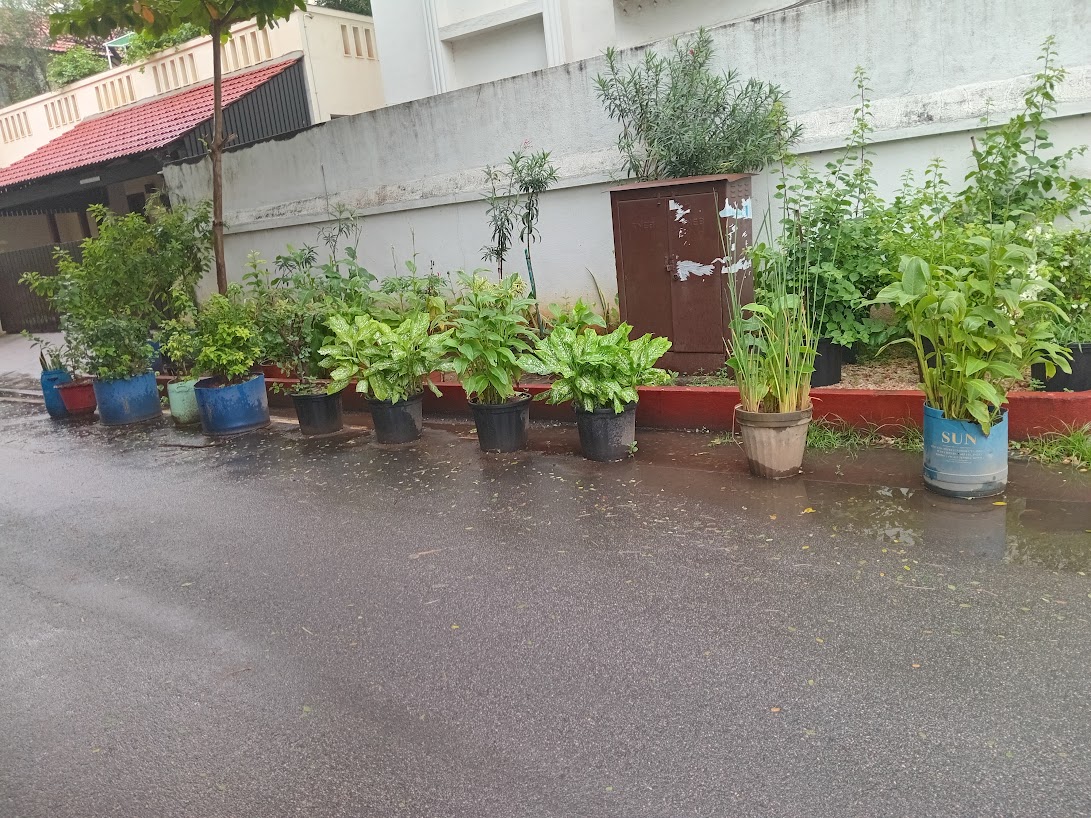
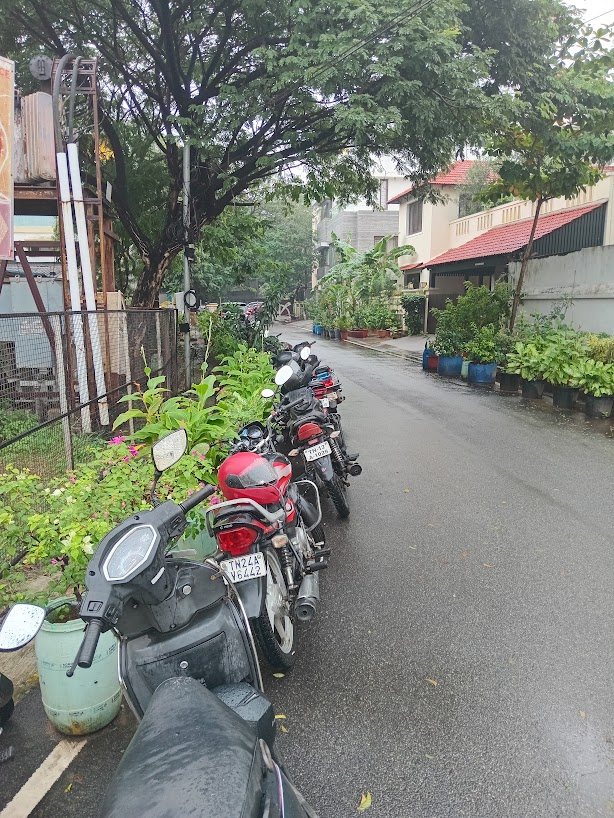
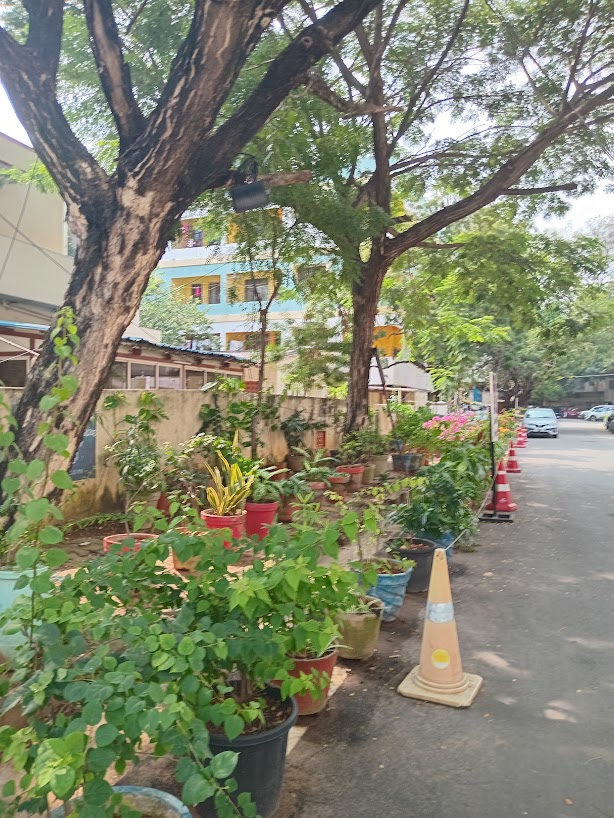
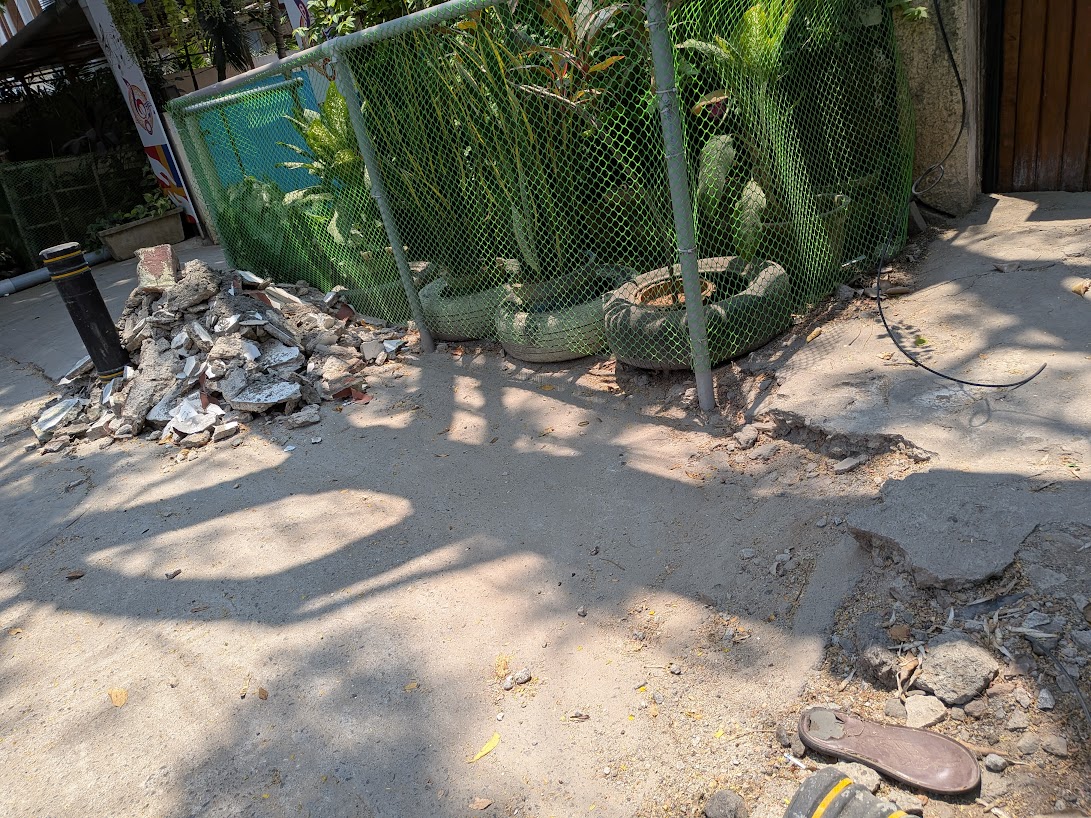
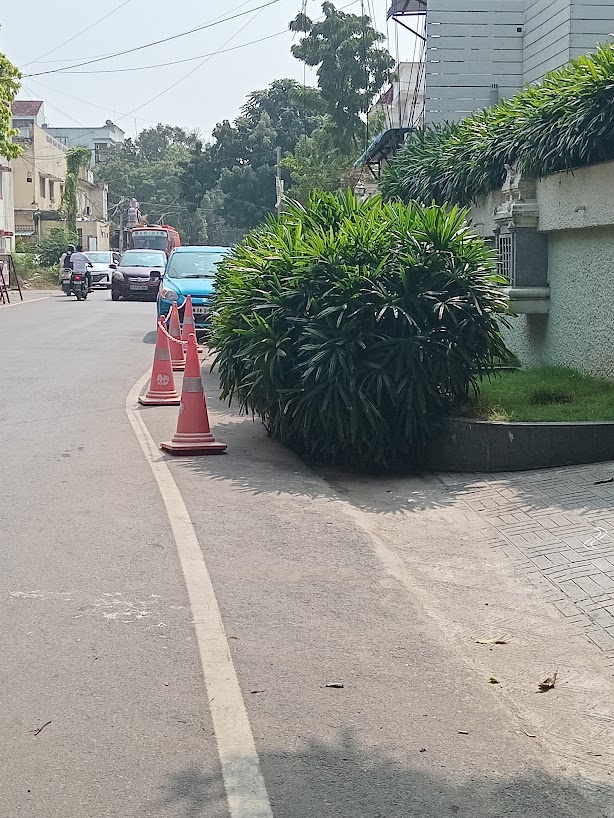
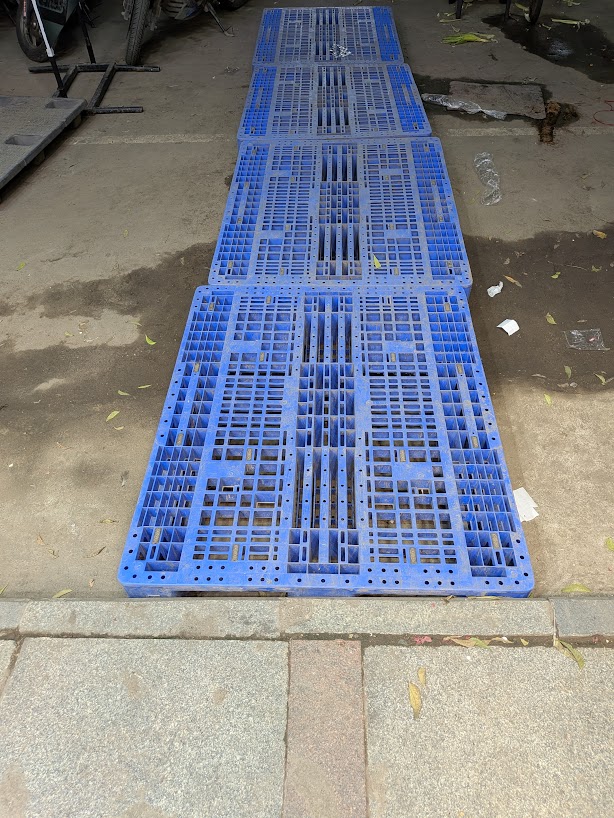
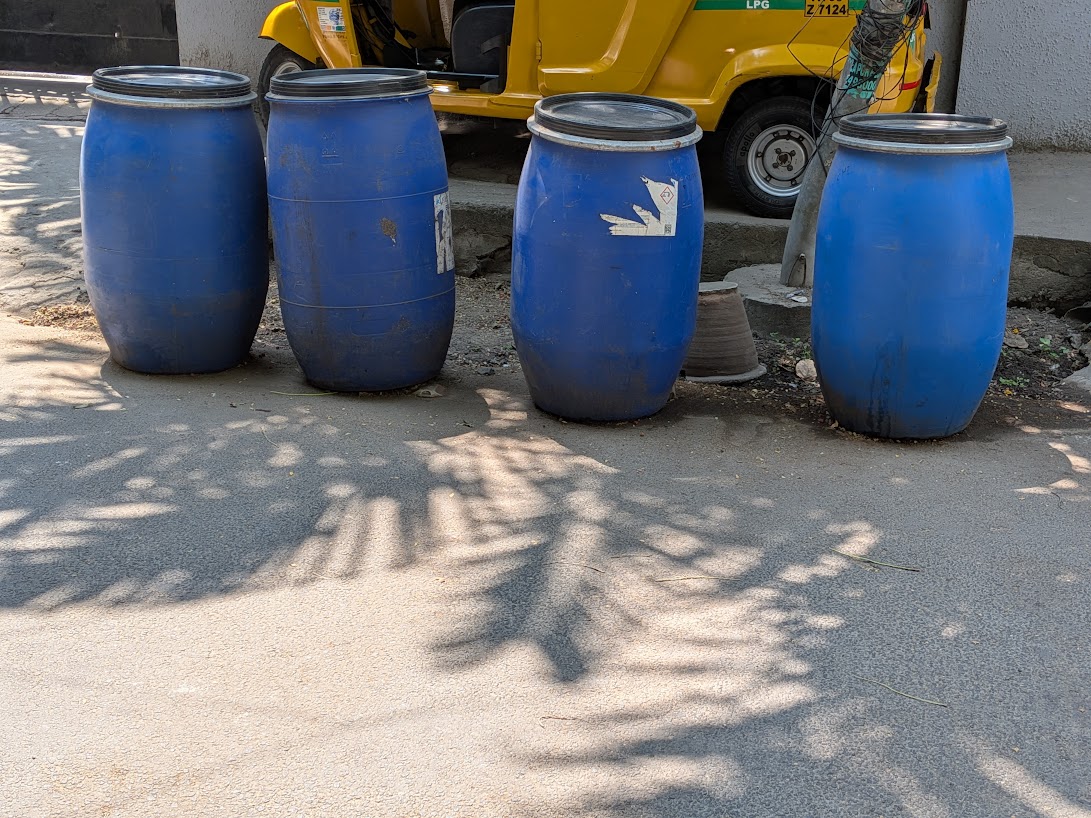
Below are a few examples of residents, shops & commercial establishments pre-emptively seizing public space to prevent others from doing the exact same thing. The rows of potted plants create a green, seemingly “innocent” barrier along the compound walls. However, it’s a passive-aggressive urban defense mechanism—using the social acceptability of nature to mask a visual land grab.
The underlying motivation is clear: “If I don’t occupy this space with something pleasant, someone else will occupy it with a vehicle or a stall.”
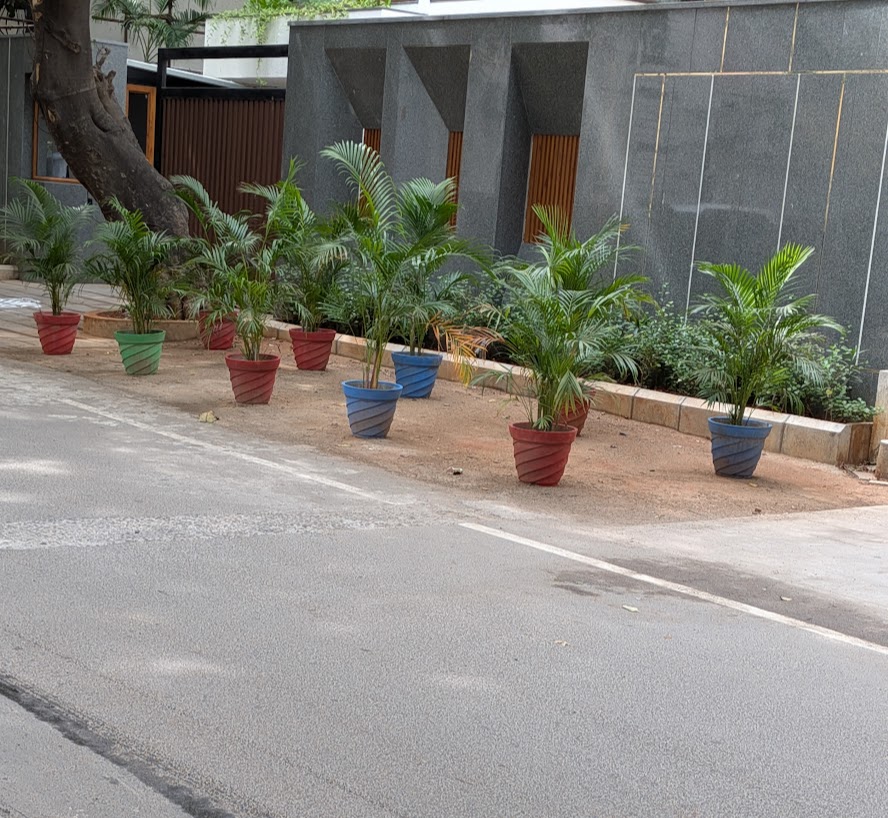
A Note on Design Philosophy: Design for the User, Not the Abuser
Ultimately, the biggest paradigm shift we need is in our core design philosophy. We must build our sidewalks—and all public infrastructure—with a user-first approach rather than an encroachment-prevention-first mindset.
Out of fear of street vendors and two-wheelers, municipal engineers today almost always take a defensive, containment approach. They build fortress-like, high-rise pavements or choke walkways with dense metal barricades. While this might occasionally deter an encroacher, it creates a hostile environment that entirely forgets the actual user—ultimately locking out senior citizens, children, and wheelchair users, and forcing pedestrians onto the dangerous main road. Defensive architecture that punishes the walker to deter the motorist is a fundamental failure of design. A sidewalk so deeply un-user-friendly is a failed product.
A true pedestrian-first approach accepts a simple truth: we must build for the ideal user experience first, and enforce rules against bad actors second. A user-centric sidewalk features a low-rise curb for easy access, smooth curb cuts at every intersection, and flat, continuous levels at property junctions.
Let’s build inviting, accessible walkways first. Once the usability is flawless, we can independently deploy targeted enforcement mechanisms—like structural bollards, automated surveillance cameras, tech-enabled policing, and spot fines—to keep bad actors out. We must stop punishing the pedestrian for the sins of the driver.
How might we design & build pedestrian friendly sidewalks?
How do we solve a problem that is deeply rooted in human behavior? Let’s look at behavioral economics.
The Nobel Prize-winning concept of Nudge Theory by Richard Thaler shows, how subtle cues can guide human behavior. If we put a sign to switch off lights before leaving the room, we are most likely to do so. What if we could apply this principle to our public spaces?
In his book The Tipping Point, Malcolm Gladwell argues that for an idea, trend or behaviour to spread, “The Power of Context” is crucial. Small, structural changes in our immediate environment can trigger massive, positive behavioral shifts in a community. The environment itself becomes the nudge.
What if we applied these principles to our sidewalks?
My idea is simple, yet I believe it holds the potential for significant impact: a new standard for sidewalk design based on these behavioral insights. What if we started using indicative colors on our sidewalks?
Imagine a universal standard where high-visibility, indicative colors are integrated directly into the edges of our sidewalks. These clear visual markers send a quiet, non-intrusive, but powerful message to street vendors, vehicle owners, and pedestrians alike: “This is the pedestrian zone. Respect it.”
We aren’t just painting lines; we are altering the context of the street. We are using the environment to nudge people not to encroach, not to drive vehicles on the sidewalks, not to extend their stairs, ramps and shops onto the sidewalks, and to gently guide pedestrians to walk on the designated path.
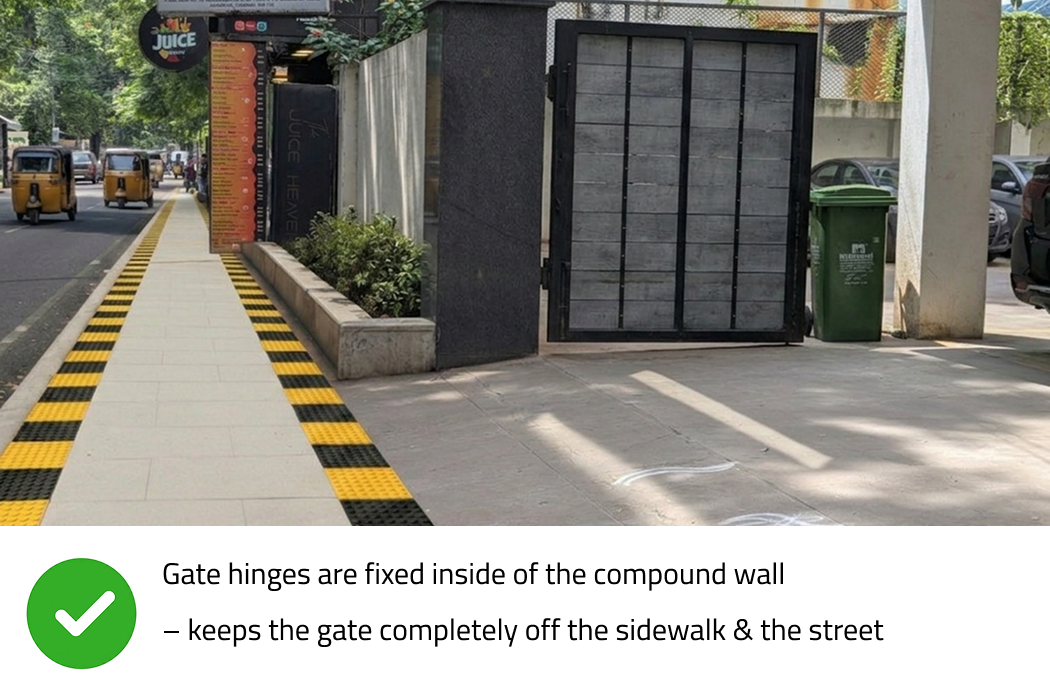
This behavioral design applies to structural elements too. Take private property gates, for instance. By standardizing gate hinges to be placed strictly on the interior of property pillars—or mandating sliding gates—we eliminate the physical hazard of gates swinging outward and blindly striking pedestrians on the sidewalk.
A small modification to our public space can potentially create a positive change in how we use it.
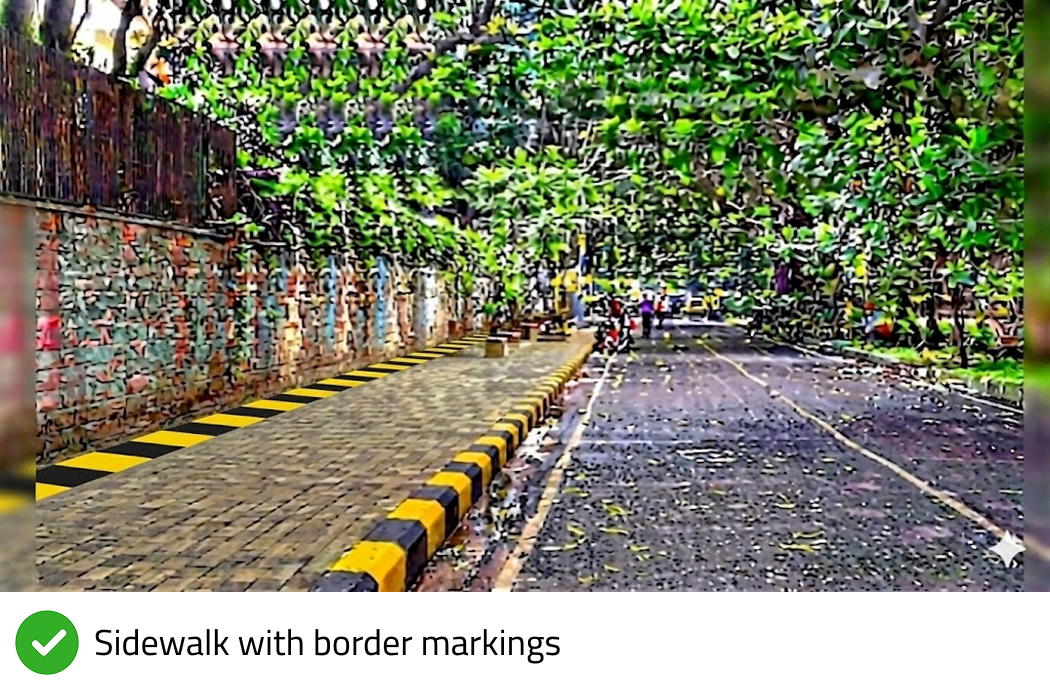
Illustration of a Better Sidewalk with Border Markings
*Images generated with the help of Gemini.
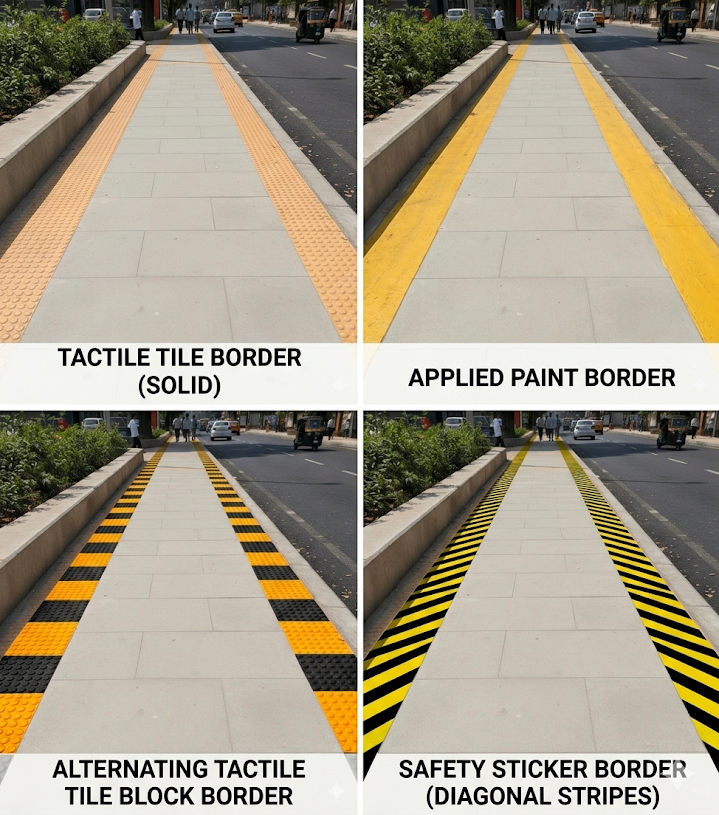
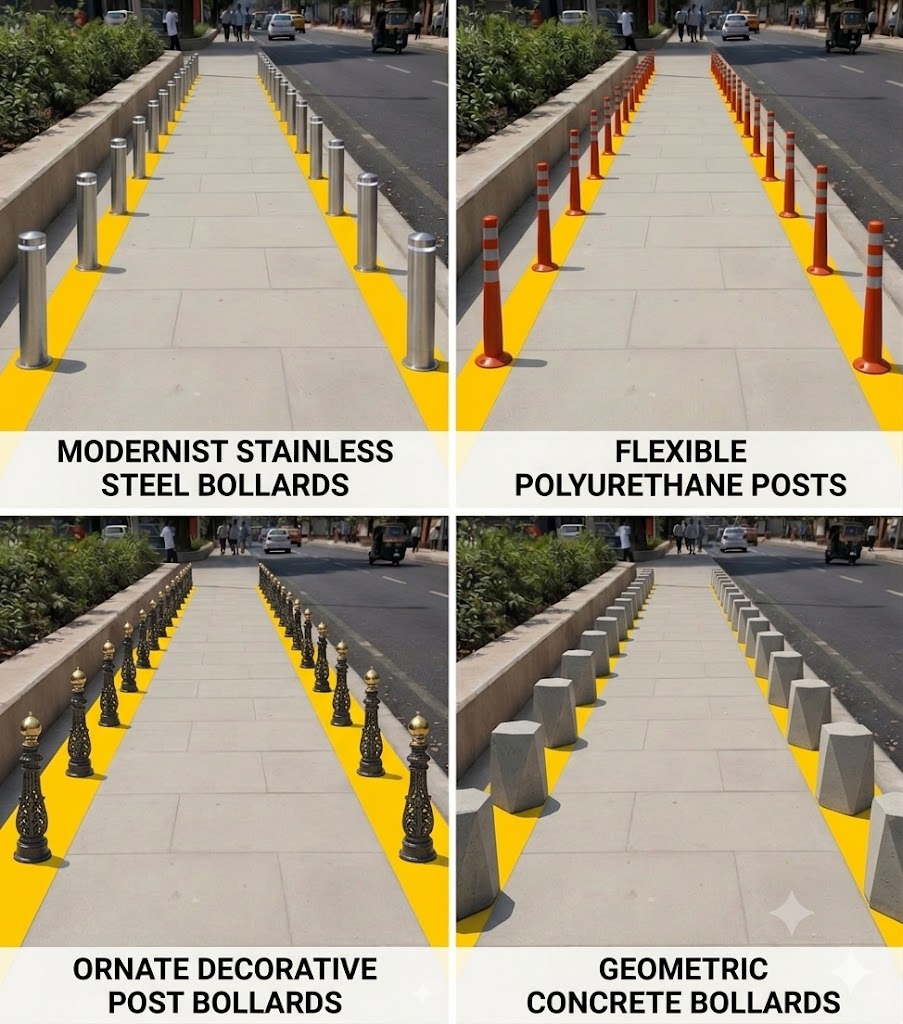
Illustration of Sidewalks with Bollards. Prevents Vehicles from Encroaching
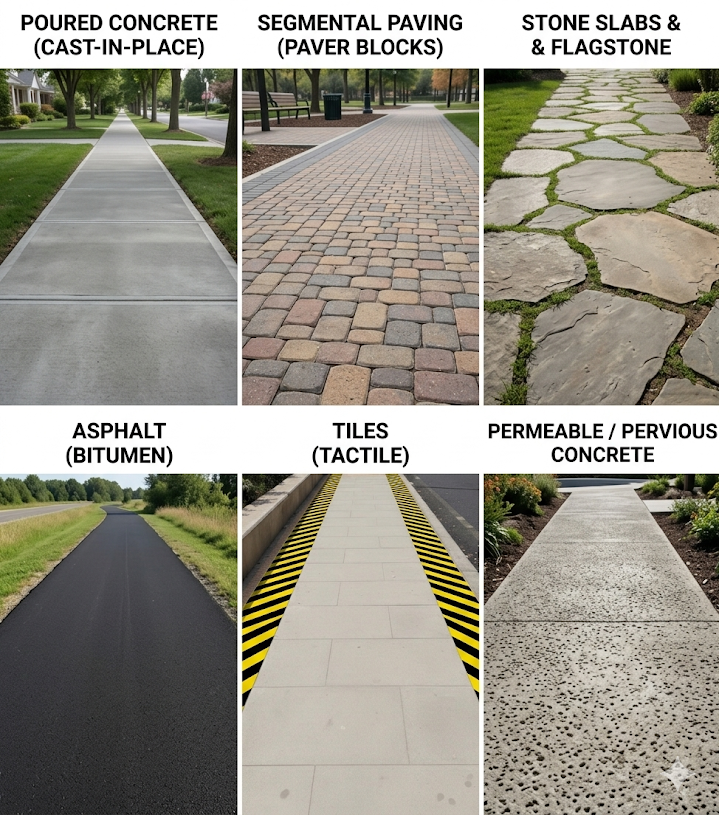
What materials to use?
Below are a few examples of different materials with which a sidewalk could be built
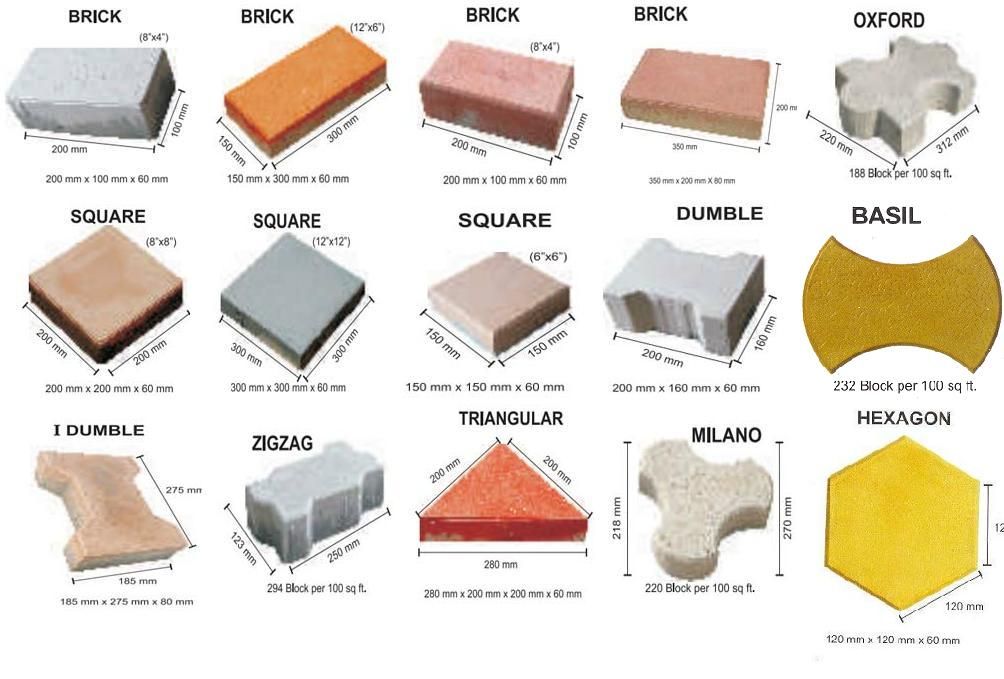
Modular Paver Blocks, Curb/Kerb Stones, Curb Ramps
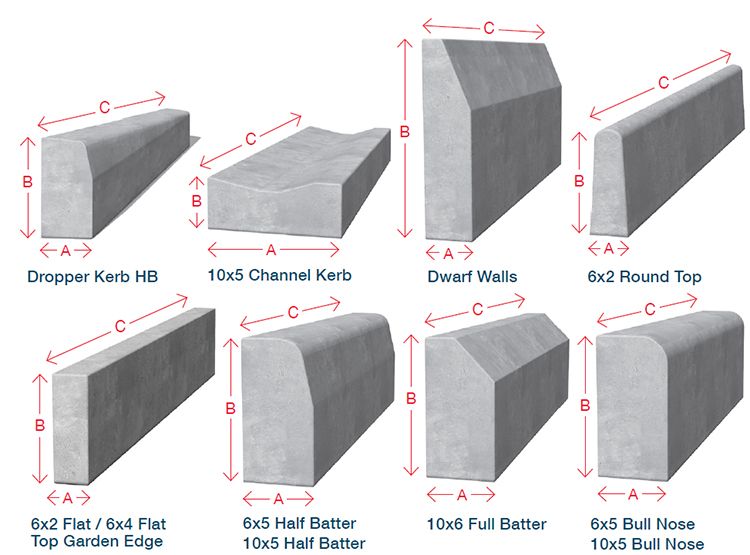
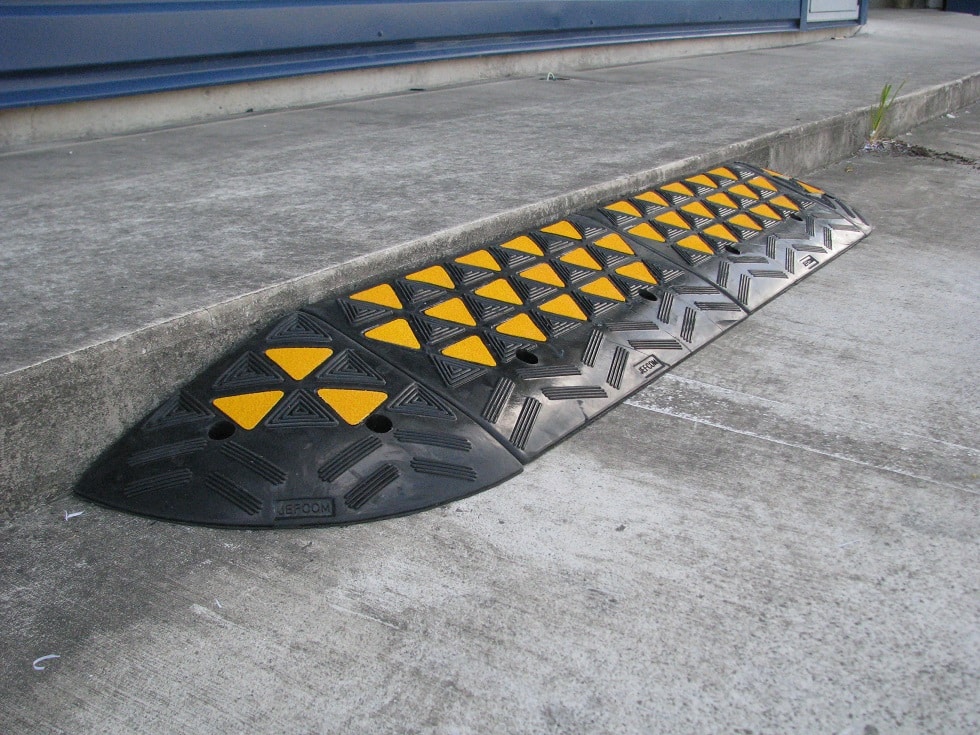
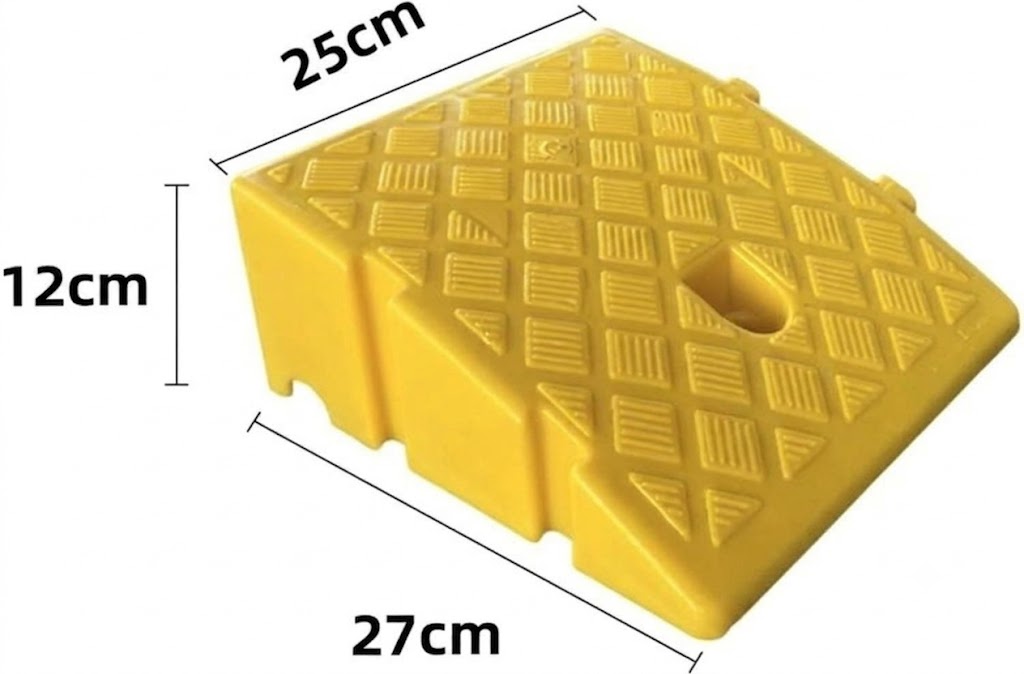
What’s an ideal height?

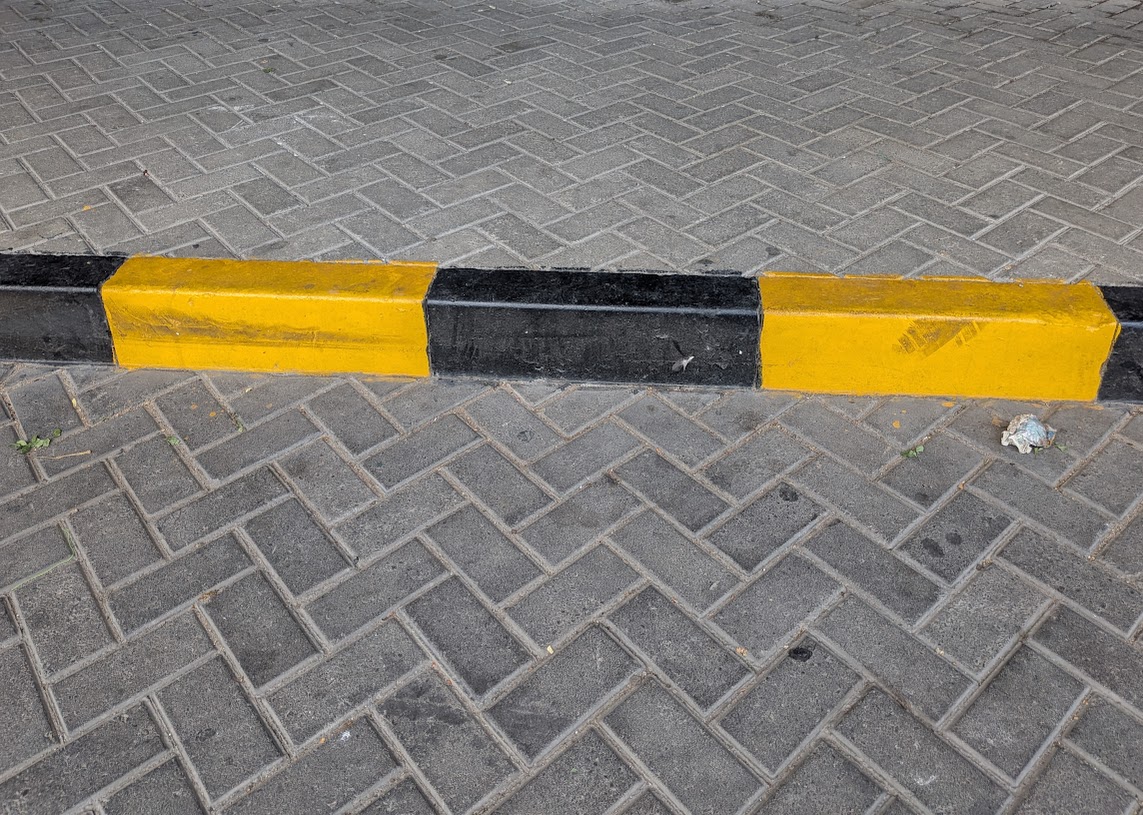
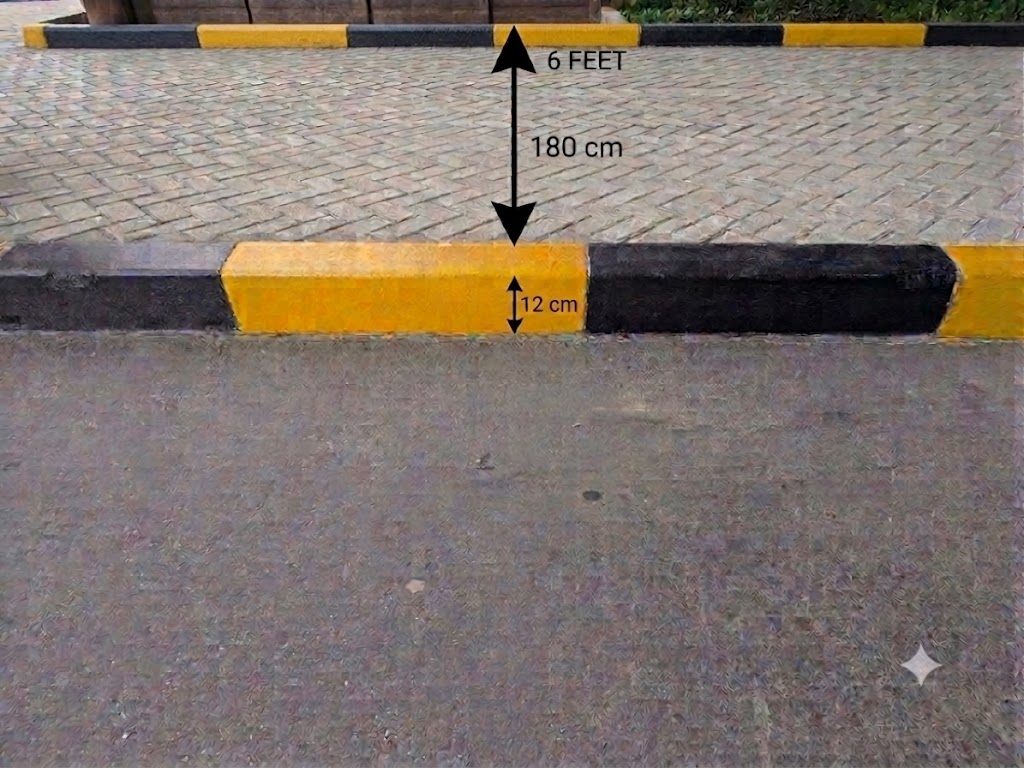
The above sidewalks are from my office complex. Found the height to be just ideal. Easy to step on. Measures 12cms in height. Third image is an AI generated depiction of sidewalk dimensions. 12cms of height. 6 feet of width that makes it easy for 2 people on wheelchair to move comfortably in either directions.
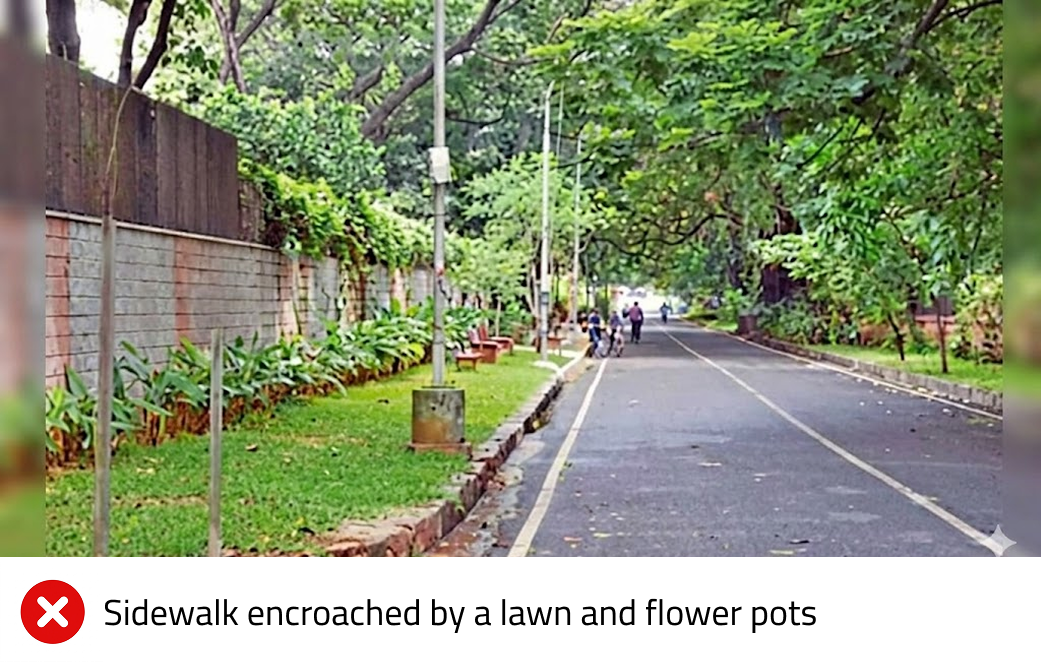
Encroachment by Private Gardens
Below images show a sidewalk encroached by a lawn and flower pots and an AI generated illustration of the same sidewalk with clear border markings, so as to dissuade people from encroaching a pedestrian space.
Encroachment by Ramps & Stairs
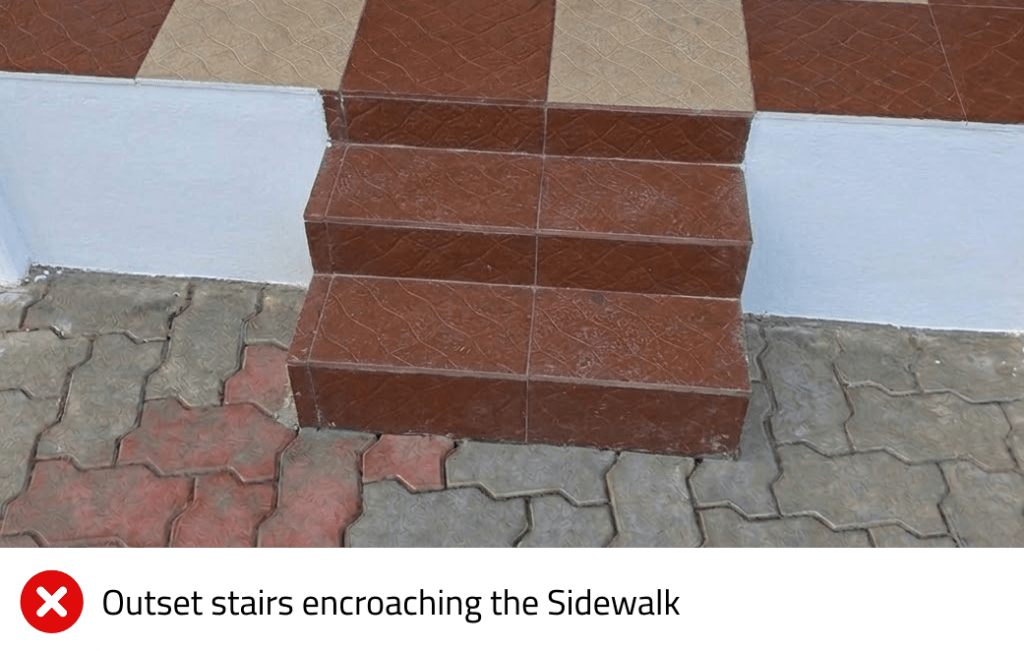
Houses, shops and commercial establishments frequently raise their structures well above street level to prevent rain water from coming in, or for better visibility. While these structural choices are understandable, they do not give owners the right to carve private stairs or ramps directly into public space.
Instead, property owners should be educated and required to connect their buildings to the sidewalk using inset stairs or inset ramps built entirely within their own property lines. Any outset stairs or ramps that aggressively protrude into the public pavement/sidewalks must be legally classified as encroachments and penalized with appropriate fines. By pairing strict enforcement with high-visibility sidewalk border markings, we can create a powerful environmental nudge that prevents storefronts from spilling onto public pathways.


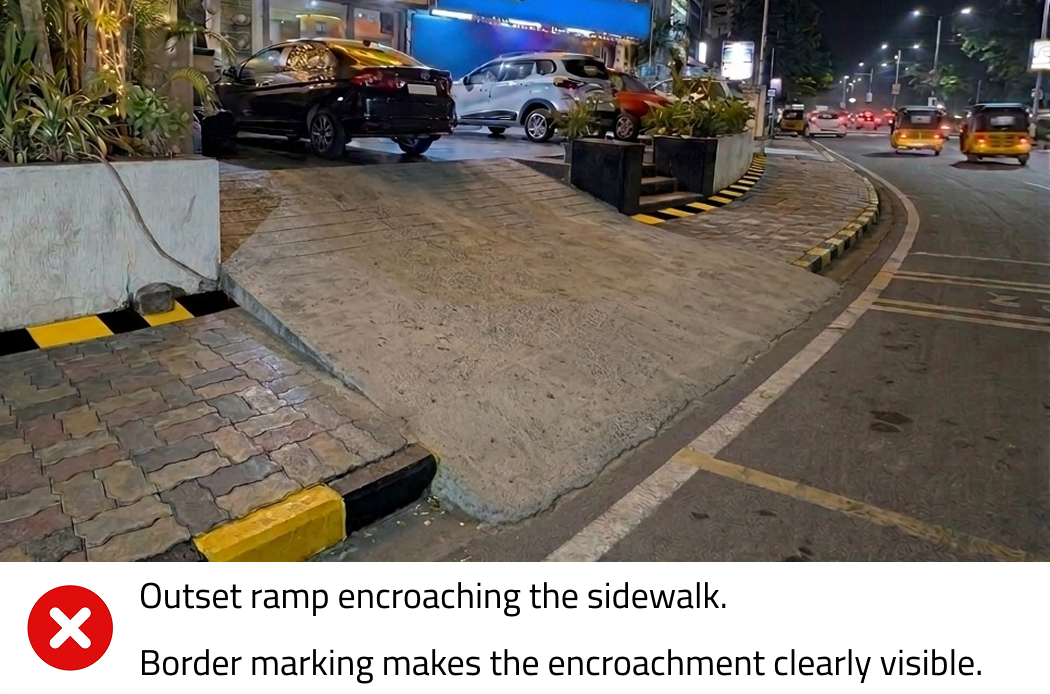
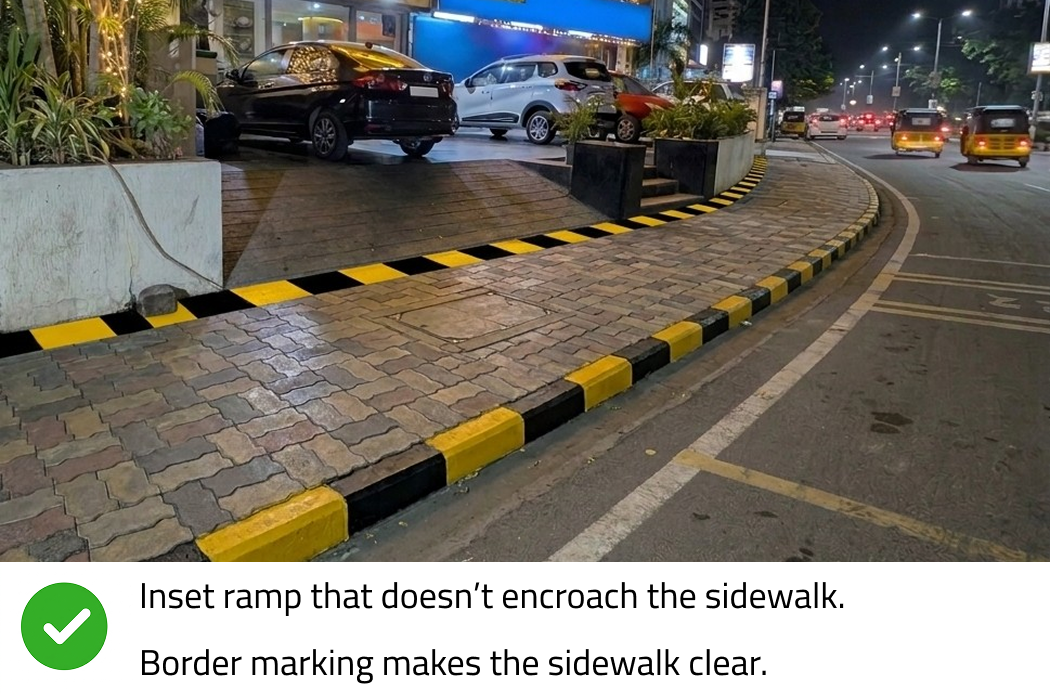
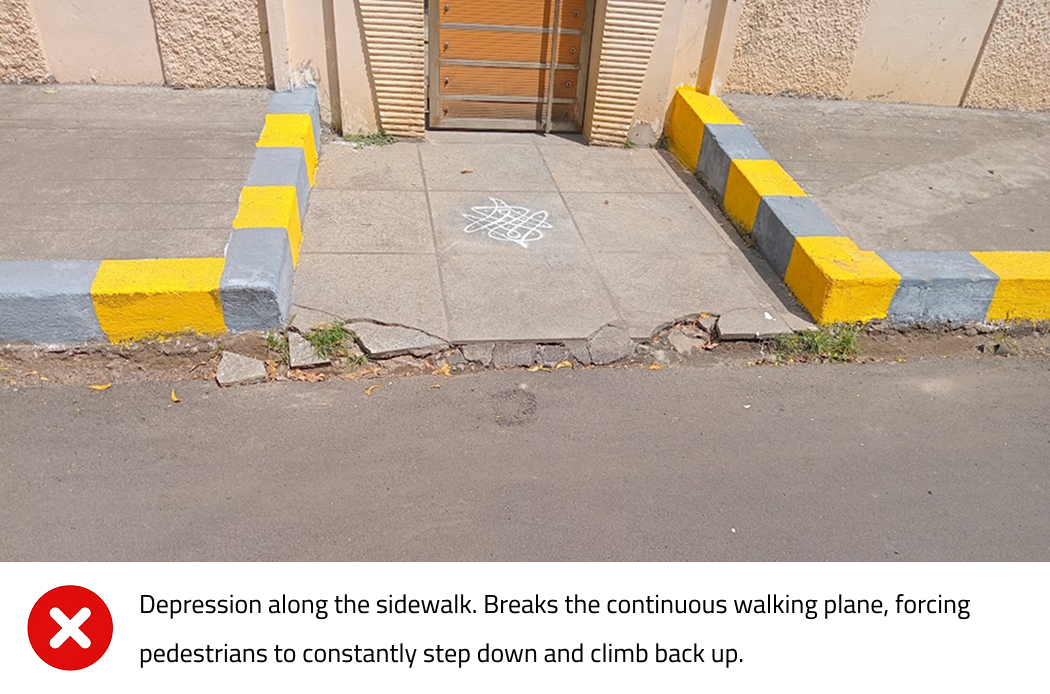
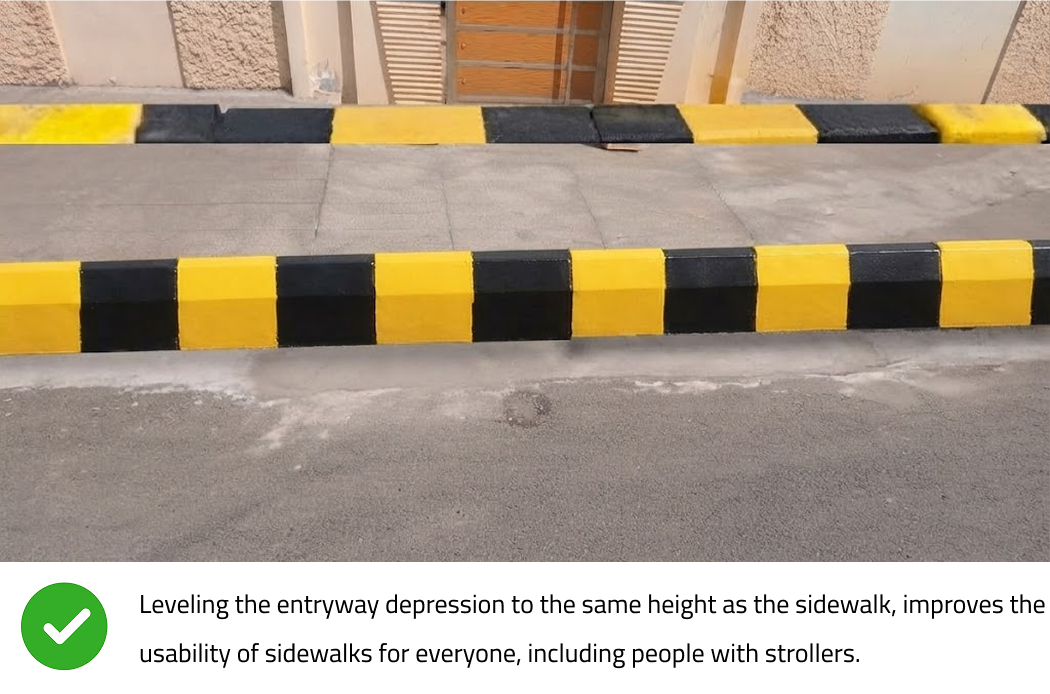
Sidewalks are infinitely easier to navigate when their entry and exit points are built as gradual ramps rather than abrupt vertical steps. In urban design, these are known as curb cuts—the small ramps graded down smoothly to meet the street level. This seemingly simple structural change makes traversing the city highly accessible for individuals with disabilities, but its benefits extend far wider.
In fact, the sweeping impact of this inclusive design is so profound that experts coined the term “The Curb Cut Effect.” The principle states that when you deliberately design for disabilities, you inherently make the experience better for everyone in the process. A curb cut built for a wheelchair user instantly becomes a massive convenience for a parent pushing a stroller, a senior citizen using a walker, or a traveler rolling a heavy suitcase.
To ensure these transitions are comfortable and safe, municipal bodies must adhere to standard ergonomic slope dimensions: 1:12 Slope
– Vertical Rise (Height): 12 cm
– Required Horizontal Run (Length): 144 cms
– Resulting Percentage Gradient: 8.33%

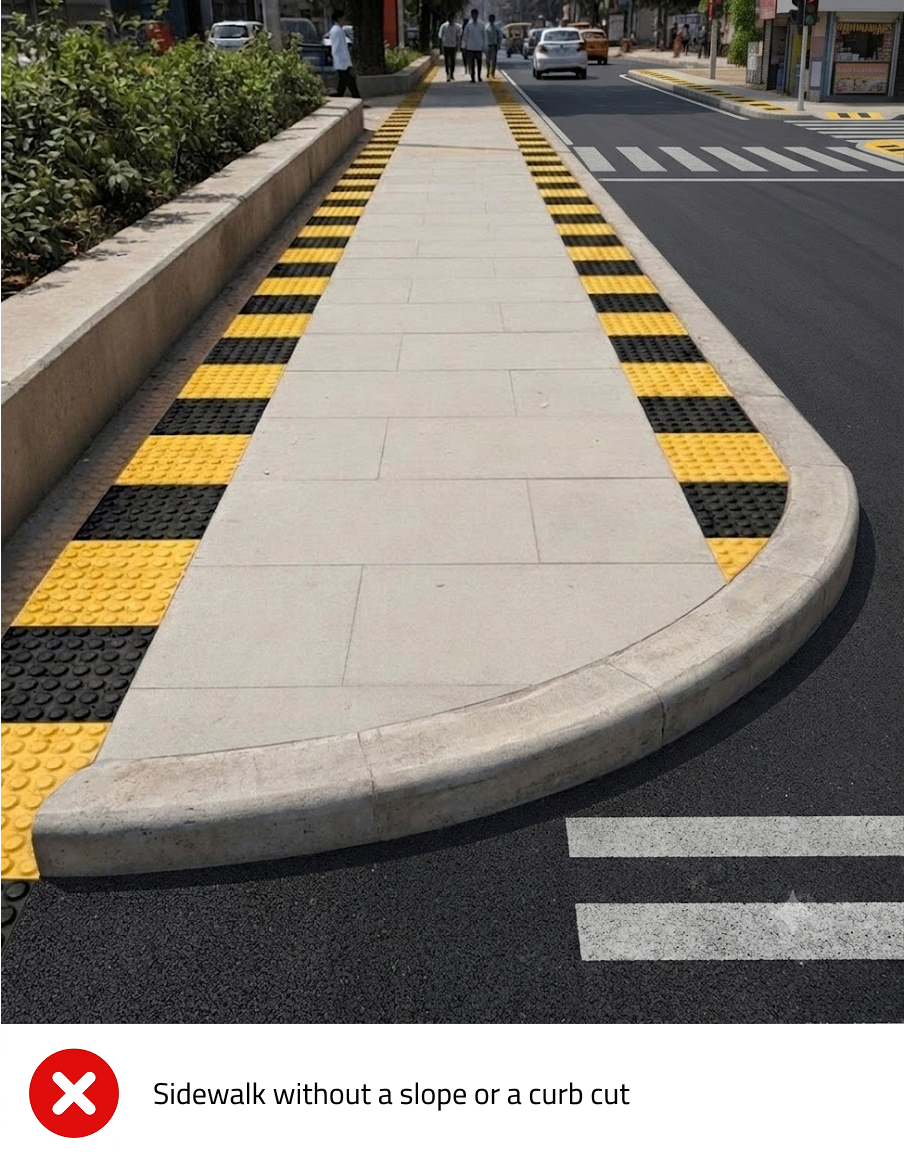
To maintain an entirely unobstructed walkway, we must be precise about how ramps are integrated into the streetscape:
- From Property to Sidewalk (Inset Ramps): When connecting a raised home or commercial establishment to the sidewalk, the slope must be built as an inset ramp—carved inward into the property owner’s private plot line.
- From Sidewalk to Road (Outset Ramps): Conversely, when connecting the sidewalk down to the road level at intersections or crosswalks, an outset ramp or standard curb cut should be used, grading gently downward to meet the asphalt.
By keeping private property access completely tucked away and public transitions smoothly integrated, the primary pedestrian zone remains entirely flat, free of physical obstructions, and safe from unexpected tripping hazards.
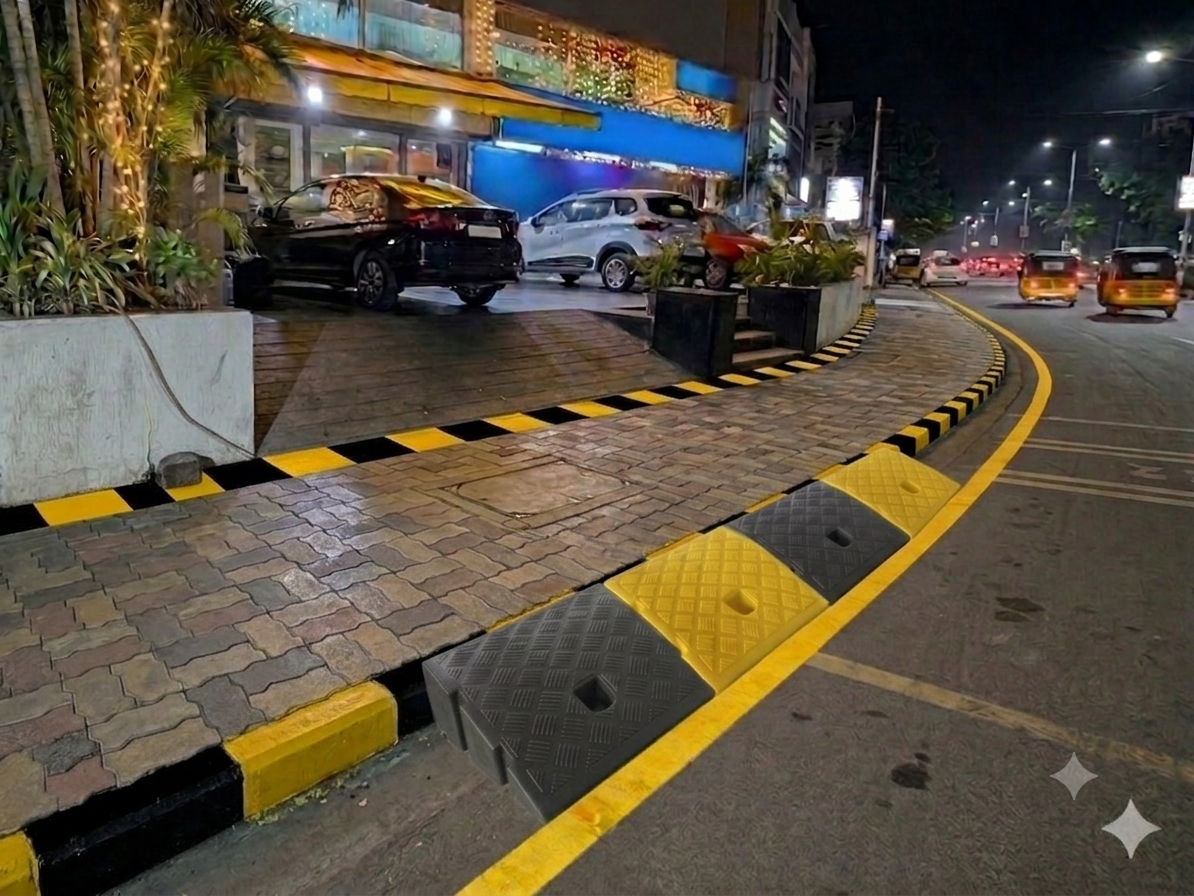
The Cross-Slope Logic: Flat for People, Sloped for Water
To make a sidewalk truly accessible and easy to walk on, the surface should feel perfectly flat. In an ideal world, we might design for exactly a 0 degree slope. However, the real-world enemy of flat sidewalks is standing rainwater. A mathematically 0 degree flat sidewalk will inevitably collect stagnant water puddles, leading to slippery moss growth and rapid structural decay.
To balance effortless walking with proper drainage, civil engineers use a cross-slope of 1% to 2% (shedding water gently sideways toward the storm drain or road). This microscopic slope keeps the sidewalk dry and safe during heavy downpours, while remaining practically imperceptible and flat to senior citizens, children, and wheelchair users.
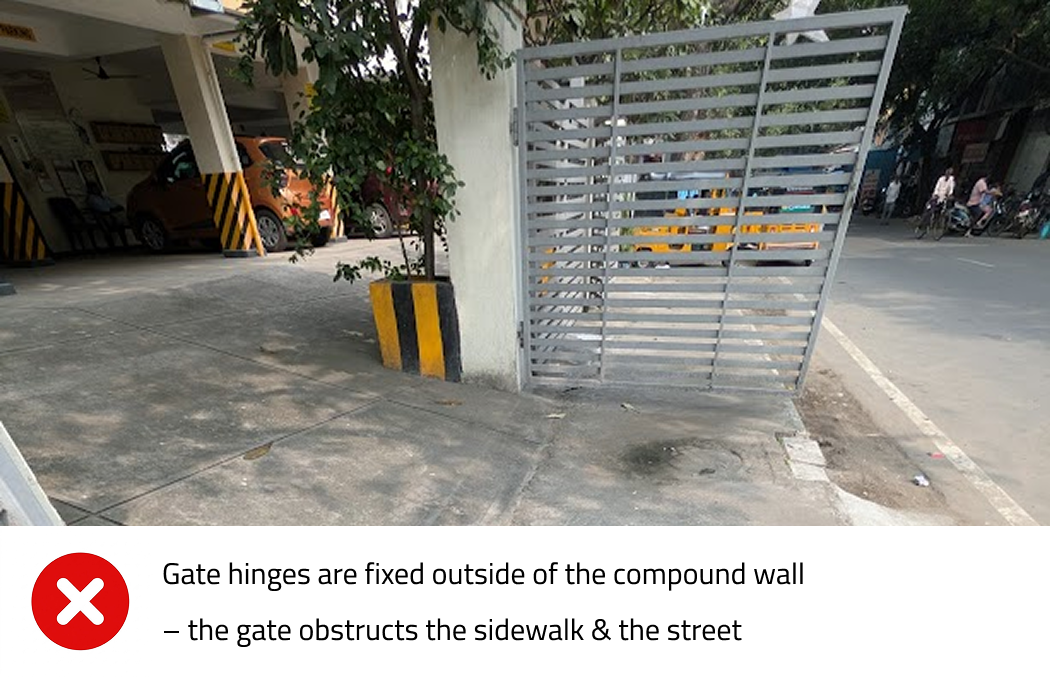
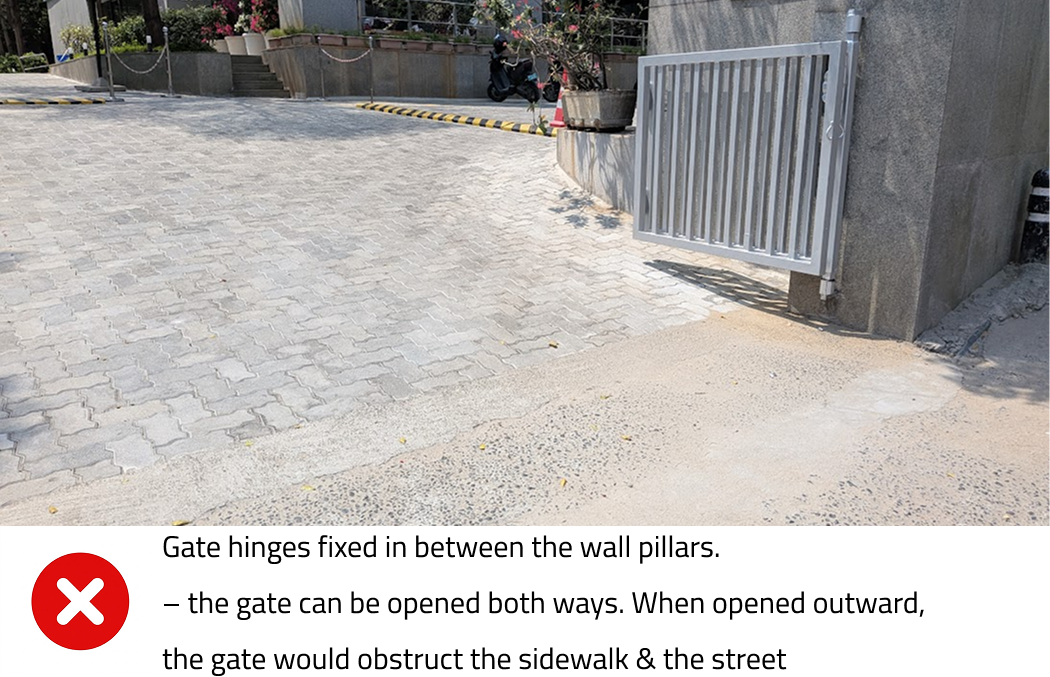
Gate Hinge Placements
Should compound gates swing inward, outward, or simply slide? While public, crowded venues like cinema halls are legally required by emergency egress and safety codes to have doors that push outward for rapid evacuation, private properties must follow a different logic to respect the streetscape.
To preserve a completely obstruction-free sidewalk, urban guidelines should mandate specific residential gate designs:
- Interior Hinge Placement: Mounting gate hinges strictly on the inner face of the compound wall pillar naturally forces the gate to swing inward into the property, physically preventing it from swinging out and striking a passing pedestrian.
- Sliding Gates: Alternatively, properties can install sliding gates that move laterally along the inside of the compound wall.
Both methods ensure that the gate consumes zero public square footage when opening, keeping the sidewalk entirely clear and safe for foot traffic.
Building Sidewalks that are Good Enough, Long Lasting & Easy to Maintain
Of course, a psychological nudge only works if the underlying infrastructure is robust. In a thriving, rapidly evolving urban landscape, sidewalks face a brutal reality: they are constantly being dug up. Between electricity boards, telecom providers, water lines, and sewage repairs, standard monolithic materials like poured concrete or asphalt are highly inefficient. Patching them up after excavation leads to uneven surfaces, waterlogging, and unsafe tripping hazards. To survive this reality, and build a sidewalk that lasts long, serves its purpose, and is easy to maintain, urban planners must move away from monolithic materials and design a modular, multi-utility infrastructure based on Indian Roads Congress (IRC:103) guidelines.
I. The Surface: Heavy-Duty Pre-Cast Interlocking Paver Blocks
For the walking zone, the absolute best choice is high-strength, pre-cast concrete interlocking paver blocks (minimum 60mm to 80mm thickness with an M-30 to M-40 strength grade) laid over a compacted sand bed.
- Why it works for constant digging: Paver blocks are completely modular. When a utility agency needs to repair a pipe or lay a fiber-optic cable, worker crews can physically un-interlock the blocks by hand, dig the trench, complete the work, compact the sand base, and re-lock the exact same blocks back into place. The sidewalk remains flawlessly even. There is zero need for noisy jackhammering, expensive concrete transit mixers, or curing time.
- Why it works for busy streets: High-grade concrete pavers can handle severe abrasion and the occasional illegal weight of mounting two-wheelers without cracking.
- Best Practice: Choose a shot-blasted or textured finish to ensure it remains slip-resistant during intense monsoon downpours.
2. The Smart Design: The Dedicated “Utility Trench & Zoning” System
Material alone cannot solve the problem if utility lines are buried haphazardly directly under the walking path. Indian sidewalks must adopt a strict Zoning System in line with Indian Roads Congress (IRC:103) guidelines. Instead of burying cables in the dirt, the sidewalk structure should be engineered into three distinct functional zones:
The Multi-Utility Zone: Should the poles, bins, transfers be kept on the inner most edge of the sidewalk or the outermost edge? Keeping them on outer most edge acts as barriers or bollards preventing vehicles from encroaching. However, there are more chances of encroachment from shops and people are more likely feel claustrophobic to walk in between a shop or wall on one side and and a transformer on the other side. Practical experiences shows where a sidewalk has been placed behind a transformer or bus stop is only encroached or filled with filth. What if all the surface level utilities like streetlight poles, tree basins, garbage bins, transformers…etc. are placed in the inner most edge.
The Sub-Surface Utility Duct: Instead of burying telecom and power cables directly under the central walking path, a continuous pre-cast concrete underground trench (utility duct) with removable concrete covers should run directly beneath the Multi-Utility Zone (the innermost edge of the sidewalk). All wires are fed through this chamber. Workers can service cables simply by lifting a panel on the edge of the walk, leaving the primary path entirely untouched. Digging up the sidewalk is not necessary.
The Pedestrian Zone (1.8 to 2.5 Meters Wide): The sacred core of the sidewalk. It is kept completely clear of any poles, trees, or structural deviations, allowing two people (or two wheelchairs) to pass each other comfortably.
3. Perimeter Defenses & Universal Access
To prevent sidewalks from becoming informal parking lots or extensions of storefronts, specific design features must be cast into the hardscape:
- Optimal Kerb Height (150 mm): Per IRC standards, the kerb height must be kept exactly at 150 mm (6 inches) above the road level. Anything higher discourages senior citizens and pedestrians from scaling it (forcing them to walk on the dangerous road), while anything lower allows cars and auto-rickshaws to drive onto it easily.
- Anti-Parking Bollards: Heavy-duty concrete or cast-iron bollards must be permanently anchored at all property entrances, ramps, and intersections with a clear gap of 1.2 meters between them. This gap is wide enough to let wheelchairs and strollers pass seamlessly but physically blocks two-wheelers and cars from driving up onto the pavement.
- Continuous Level Property Ramps: Commercial street entrances often break sidewalks into a roller-coaster of mini-ramps for private parking access. The sidewalk must maintain a flat, uninterrupted elevation. If a vehicle needs to cross the sidewalk to enter a building, the road should ramp up to the sidewalk level at the edge, forcing the vehicle to slow down and preserving a continuous surface for the pedestrian.
4. The On-Street Parking Buffer—and Curbing Commercial Abuse
We have to acknowledge why two-wheelers mount the sidewalk in the first place: shoppers have nowhere else to put them, and our roads are intensely congested. If we don’t design a dedicated space for stationary vehicles, they will inevitably colonize the pedestrian zone.
To solve this, urban planners should explicitly paint and mark the outermost lane of the asphalt road as a dedicated parking lane. By shifting parked vehicles off the curb and onto a designated strip of the road itself, we create a natural, heavy physical buffer between moving traffic and the sidewalk.
However, in any system design, we must anticipate and prevent bad actors from exploiting public convenience. In a typical Indian urban ecosystem, ad-hoc public parking spaces are frequently hijacked by predatory commercial entities:
- The Showroom Overflow: Automobile showrooms and two-wheeler service centers routinely use public sidewalks and roads as their extended inventory lots, parking dozens of customer vehicles outside and entirely choking the street for genuine neighborhood visitors.
- The Valet Encroachment: Restaurants and luxury establishments launch valet services, effectively hijacking entire public residential streets for private parking. While neighborhood residents are completely understanding of a guest parking in front of a home for a short duration, the permanent commercial annexation of common public roads by restaurants is unethical and disruptive.
Therefore, designated street parking must strictly remain a public utility—never a free operational loophole for private businesses.
Summary of the Sidewalk Architecture:
- Surface Material: Modular, high-strength pre-cast concrete interlocking paver blocks over a compacted sand base.
- Sub-surface Architecture: Pre-cast concrete utility ducts situated under the inner edge to prevent road cutting.
- Boundary Protection: 150mm high granite kerb stones paired with 1.2m spaced structural bollards at access points to negate vehicular encroachment.
This systemic approach turns a simple walkway into a resilient piece of urban infrastructure that accommodates the inevitable chaotic maintenance demands of a thriving city.
Moving from Concept to Reality: The Lean MVP Strategy
Reading essays by Paul Graham, I understand that it is nearly impossible to predict the absolute success of an idea upfront. The most effective approach is to launch a Minimum Viable Product (Do Things That Don’t Scale,) let the real users use it, observe their interactions, gather feedback and keep iterating to achieve the perfect fit.
As a resident of Tamil Nadu, I would like to humbly share a few suggestions with our state government and municipal corporations. Before committing public funds to mass-scale infrastructure, the government and its municipal corporations shall treat sidewalk design as a live, behavioral experiment. We cannot write the rulebook until we test it in the wild.
Phase 1: The University Prototyping Grounds
The government can partner with the civil engineering, architecture and design departments of elite institutions such as Anna University, IIT Madras, NIT Trichy or the National Institute of Design, and fund experimental 500-meter sidewalk loops of various designs, both inside their campuses and on adjacent public roads.
These institutes can independently design, build, and test various combinations of real-world features:
- Materials: Comparing modular paver blocks, poured cement, and natural stone.
- Dimensions: Testing heights (road-level, 12 cm, and 1 foot) alongside widths (6 feet for residential areas, 8 to 12 feet for busy commercial zones).
- Visual Prompts: Testing different edge markings like high-visibility paint, colored tiles, and embedded textures.
- Edge-Case Engineering: Developing adaptive blueprints for complex urban realities. For example:
- Around Mature Trees: Designing floating wooden boardwalks or porous rubber-concrete rings around tree basins. This preserves the historical green canopy while preventing thick tree roots from bursting through and fracturing the flat pedestrian surface.
- Over Open or Covered Storm-Water Drains: Designing modular, heavy-duty pre-cast concrete structural slabs that double as both the drain lid and the primary sidewalk foundation, fitted with easily liftable silt-trap panels for rapid flood-monsoon maintenance.
- Around Bus Transit Shelters (The Split-Stream Design): Traditional bus shelters are often dropped directly into the center of footpaths, creating massive bottlenecks and forcing walkers onto the asphalt. The university prototype should design a “Split-Stream” layout:
- The Waiting Zone: The physical bus shelter, seating, and passenger waiting area must be pushed to the outermost edge (nearest to the road), integrating seamlessly with the on-street parking or boarding buffer.
- The Unobstructed Walking Zone: The sacred, flat pedestrian path must channel cleanly behind the bus shelter structure. By keeping the walking stream completely separated from the stationary waiting stream, we eliminate commuter foot-traffic friction, ensure continuous accessibility, and eliminate the dead, dark corners behind transit shelters that typically accumulate filth.
By tracking student and public pedestrian usage data, mapping material erosion, and noting which designs naturally nudge pedestrians to use sidewalks, deter encroachers, and can last long enough, these research teams can discover which design of the sidewalk actually works.
Phase 2: The Bill of Materials (BOM) Template
Crucially, this university-led MVP will produce a highly practical, open-source engineering blueprint for public works departments. Rather than vague guidelines, the template will provide precise, granular material breakdowns.
Standardized Estimation Example (Per 100 Meters of a 6-Foot Sidewalk):
- Excavation & Base: Exact depth of earth to be dug and volume of gravel/sand base required.
- Materials: Exact metric tonnage of cement, sand, and high-strength pavers needed.
- Perimeter Guard: Exact square footage of high-visibility edge paint or colored tiles.
- Bollards: Exact count, optimal material (steel vs. reinforced concrete), and exact weight specifications per unit.
By compiling these granular, standardized metrics, municipal agencies can instantly calculate the precise cost of laying every 100 meters of sidewalk, eliminating bureaucratic guesswork and streamlining transparent public tendering.
Phase 3: The Lighthouse Road Strategy (One Major Road Per Year)
Once the university prototype yields a standardized blueprint, the municipal corporation should resist the temptation to execute a rushed, city-wide rollout. Instead, the strategy must scale gradually by transforming one flagship corridor into a “Lighthouse Road” every year.
In Chennai, the city could target a definitive stretch of Anna Salai; in Bengaluru, it could be a pristine section of MG Road. The mandate for this chosen corridor would be uncompromising: redevelop it entirely to global standards. It must feature flawlessly level modular pavers, integrated sub-surface utility ducts, high-visibility pedestrian border markings, and legally designated on-street parking lanes.
Just as ward councillors can commit to delivering one neighborhood Walking Quadrangle per quarter (as detailed in the upcoming ‘Walking Quadrangle’ section), city corporations must commit to delivering one world-class Lighthouse Road per year. Experiencing a perfectly executed, continuous walkway in the heart of the city changes public expectations overnight. It gives citizens a tangible benchmark of what their streets should look like, building the immense civic and political will required to systematically upgrade the rest of the urban landscape.
Ref: Global Street Design Guide
Therblig & Codification: Why the regulators should create and publish definitive standards?
Once the university prototyping phase delivers data-backed clarity on the optimal design, the regulators must codify these findings into a clear, open-source public manual. When the government and affiliated regulators create and publish standards to build sidewalks, it removes the confusion and different ways in which these sidewalks are built.
In the study of ergonomics and motion economy, Therbligs represent the fundamental, elemental motions required for a human to complete a task. In software, we eliminate unnecessary clicks to optimize a user’s flow; in urban design, regulators must use the verified prototype data to eliminate unnecessary physical friction—or “negative Therbligs” like tripping hazards, unexpected slopes, and sudden drop-offs—for the everyday walker.
Publishing these clear standards does something magical: it channels private, organic capital into uniform public infrastructure. Walk down any commercial street and you will see business owners who willingly spend their own money to pave the mud patch in front of their properties—some out of pure civic altruism, others to give their storefront a premium look.
Because there is currently no official playbook, everyone—including different government agencies and private property owners—builds in their own haphazard way, creating a chaotic patchwork of varying tile textures, mismatched heights, and uneven steps.
WITHOUT STANDARDS (Chaotic Patchwork):
[Shop A: 1-foot high granite] -> [Shop B: Mud patch] -> [Shop C: 6-inch concrete ramp]
WITH STANDARDS (Seamless Flow Based on MVP):
[Shop A: 150mm Pavers] ———> [Shop B: 150mm Pavers] -> [Shop C: 150mm Pavers]
By providing a clear, open-source blueprint born from the university experiments, the government can effortlessly standardize the streetscape by leveraging the self-funded pride of local property owners. When Shop A paves their front today, and neighboring Shop B does the same next month, their footpaths will seamlessly merge at a fixed height and width.
To guarantee this frictionless flow, the final published standard manual must mandate precise rules for common structural intersections:
- The Inset Rule for Buildings: Any curb or driveway ramp connecting a private building to the sidewalk must be designed as an inset ramp (carved inward into the property line), keeping the walking path entirely flat.
- The Outset Rule for Roads: Any pedestrian ramp connecting the sidewalk down to the road level must be designed as an outset ramp or a standard curb cut, ensuring a smooth transition into crosswalks.
By formalizing these layouts based on proven prototype data, we remove all confusion, keep the sidewalk perfectly even and clear, and make movement easier for pedestrians, without the risk of tripping due to the obstacle created by the curb ramps.
Addendum 🙂
The Walking Quadrangle

Not everyone in our cities lives near a public park or playground, which are disproportionately concentrated in more affluent localities. To democratize access to public health, we must design a localized “Walking Quadrangle” right where people live.
The health math behind this is simple yet profound: a daily routine of 10 brisk walking rounds on a standard quadrangle circuit is approximately 5.6 km. Consistently repeated five days a week, this simple protocol drastically improves cardiovascular health, manages blood pressure, and boosts endurance. We need to make walking an accessible, highly visible civic priority.
Consider this practical blueprint for our local governance: If a single ward councillor commits to upgrading just one continuous Proximity Walking Quadrangle per quarter, by clearing all the encroachments, street parked cars, shifting existing ironing shops to the other side of the street, removing extended ramps, and paving a wide enough walking quadrangle, then the long-term impact is staggering. By the end of a single five-year term, that councillor will have delivered twenty fully cleared, continuous, and cleanly paved walking loops. This completely transforms the micro-mobility and physical health of an entire ward without breaking the municipal budget all at once. Best of all, it gives local representatives a highly visible, trackable achievement to showcase to voters every three months.
Addendum – Jul 2026:
A report by The Economic Times, titled “Crunch Time for Lifestyle Diseases as Govt Plans Fitness Push,” highlights a staggering crisis: nearly half of India’s population now suffers from non-communicable lifestyle diseases (NCDs) like diabetes, hypertension, and cardiovascular disorders. In response, NITI Aayog is actively drafting a national blueprint to incentivize active lifestyles, looking closely at international infrastructure models like the Netherlands’ integrated cycling networks.
However, scaling massive new cycling grids across dense, historically organic Indian cities requires massive capital and decades of structural overhaul. The Proximity Walking Quadrangle solves the exact same public health crisis with three distinct advantages:
- Zero-Cost Infrastructure Real Estate: It doesn’t require acquiring new land; it simply reclaims and optimizes the public spatial footprints we already own.
- Immediate Preventive ROI: As noted in the medical data, the simple protocol of walking 5.6 km a day directly combats metabolic disorders. By building safe walking loops right at the doorstep, we lower the friction to exercise, triggering the precise behavioral “nudge” NITI Aayog is trying to enforce nationally.
- Hyper-Local Accessibility: Unlike centralized public parks that require vehicular travel, the quadrangle democratizes active infrastructure, ensuring that preventive healthcare is accessible to every citizen, regardless of their neighborhood’s economic profile.
By upgrading our everyday street margins into predictable fitness loops, local ward governance can deliver the fastest, lowest-cost execution of the country’s national fitness mandate.
The Residential Wellness Circuit
This philosophy of prioritizing daily utility over marketing fluff is a framework that private real estate desperately needs to adopt. In many Indian gated communities, premium amenities like swimming pools have turned into mere marketing tools; studies show a vast majority of homeowners rarely use them, yet societies pour massive maintenance funds into keeping them functional. Instead of chasing a superficial “100+ amenities” checklist that only looks good on a sales brochure, forward-thinking builders should channel those resources into a beautifully paved, 6-foot-wide, entirely unobstructed walking track along the inner perimeter of the housing society. This track should be lined with hardy, shade-bearing trees that can survive long-term with basic watering, replacing high-maintenance, namesake gardens. Designing for actual human habits rather than namesake luxury transforms a residential complex into a functional wellness asset.
Can a vehicle like this dissuade encroachment?
Below is a depiction of an encroachment clearance vehicle that is mounted with a camera to capture on spot evidence, generate fine and immediately remove sidewalk encroachments like shop name boards placed onto the sidewalks. The government can work with organisations like eGov foundation to create a software product that can capture evidence of encroachment using the camera (like how Google does for streetview,) add time, date and location details, generate immediate fine slips, collect payments or mark pending payments for spot fine and track repeat offenders…etc. The fine slip should have a QR code which will redirect the offenders to a page detailing the sidewalk standards or guidelines and how to build or maintain an ideal sidewalk, free of any kinds of encroachments. The software should also have options to accept evidence of encroachment from the public. Ex. the public, when they see and encroachment, should be able to capture an image on their phone and easily share it to a designated number maintained by the corporation, just through an RCS-SMS or WhatsApp message, along with details like the location, date and time.

Can a sticker dissuade street parking?
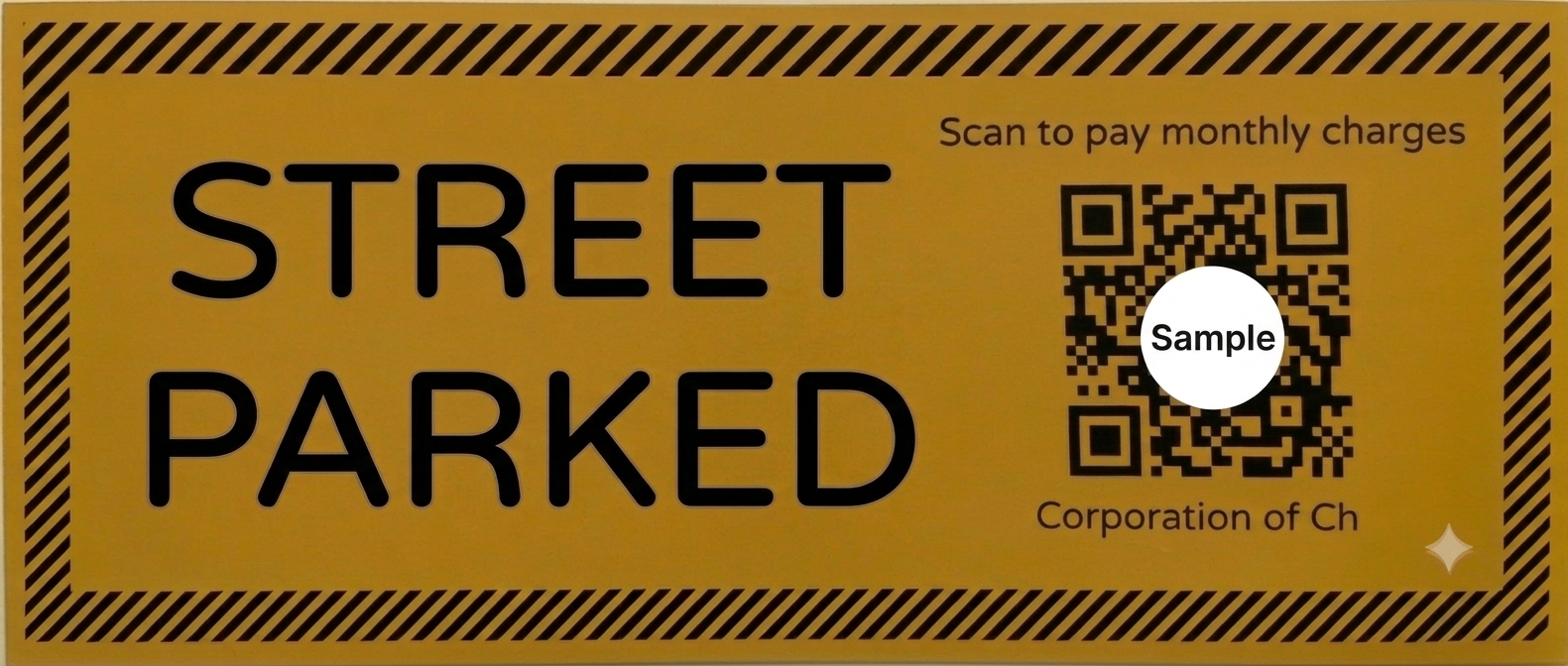
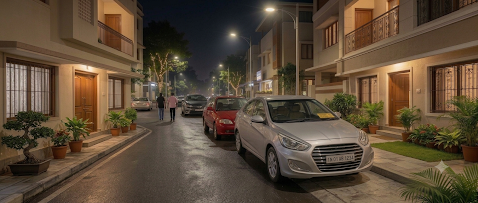
This might sound slightly harsh. Still expressing my thoughts. A spillover effect of corruption in real estate and the inflated real estate prices is home owners building house without parking space. An extra room brings them extra rent to justify the inflated price of purchase. This leads to street/roads being constantly encroached with cars parked in the night. What if municipal authorities take up night patrol and put an yellow sticker on the front windshield of the streetside parked cars, with a QR code that advises the car owners to pay some monthly parking charges? The software mentioned in the previous paragraph, to track encroachment can be used to track these too. Any streetside parked car that hasn’t paid up should be randomly towed. This can gradually make people park cars within their house premises in the night, rather than on roads.
Civic Social Nudge
Despite robust physical infrastructure, there will always be a fraction of reckless motorists who choose to ride on sidewalks, actively endangering pedestrians. To counter this, municipal corporations can deploy targeted digital accountability campaigns backed by automated enforcement. By identifying high-violation hotspots and installing dedicated surveillance cameras, the city can seamlessly cross-reference captured license plates with the central Vahan portal. Crucially, the evidence from these cameras can be used to instantly fetch vehicle data and issue automatic fine slips (e-challans) directly to the violators. To amplify this deterrent, the city can also clip and publish these traffic violations on official social media handles—or as civic awareness reels before movie screenings in local cinema halls—overlaying the owner’s masked name, violation date, and exact location directly onto the video. Combining automatic financial penalties with visible public accountability introduces a powerful psychological deterrent, leveraging both the law and social pressure to reclaim the sanctity of our walking spaces.
The Socio-Political Friction Points
Beyond structural engineering, reclaiming our sidewalks requires navigating deeply entrenched socio-political habits. Two massive challenges stand out:
1. The Flex Banner Hegemony
How might we tackle the endless rows of political advertisements, commercial notices, and birthday or marriage wishes printed on PVC flex banners that routinely hijack our walkways? While a blanket government ban on flex banners is an obvious legislative step, true change requires a cultural shift. Can political and social organizations take a collective self-pledge to banish public road displays during rallies and events? Moving these announcements to digital spaces preserves the sidewalk for its intended user: the citizen.
2. The Legacy of the “Mud-Patch” Habit
To understand our current sidewalk crisis, we must look at how our roads evolved. Decades ago, when the government built the first single or double-lane roads, a vast, unpaved mud patch was left on either side of the asphalt. Landowners naturally built their commercial establishments right up to their property lines, and their customers used that vacant public mud patch as a convenient parking lot.
Today, as traffic has exploded and those roads have expanded into dense four-lane or six-lane corridors, that public mud patch has been converted into the modern asphalt road and pedestrian sidewalk. Yet, the old habit remains. Commercial establishments still expect the immediate public road and pavement to serve as their private, ad-hoc parking zone, paralyzing micro-mobility.
How might we nudge commercial establishments to design their buildings so they stop encroaching on public paths?
- The Setback Incentive: Municipalities can introduce architectural zoning rules that offer property tax rebates or minor floor-area incentives to commercial buildings that voluntarily build a set-back “parking pocket” inside their property lines.
- Physical and Legal Nudges: We must use uncompromising street infrastructure—like high-quality bollards and automated towing zones—to signal that the road and sidewalk are strictly transit corridors, forcing developers to solve their customers’ parking needs internally through smart design.
3. Integrating Local Livelihoods
How might we address informal street micro-economies, like the traditional ironing carts (istri boxes) that occupy sidewalk spaces. Instead of aggressively displacing these workers and harming their livelihoods, we can use an institutional nudge. Municipalities can incentivize Resident Welfare Associations (RWAs) to integrate a dedicated, micro-paved kiosk for an ironing vendor within their apartment or colony compound lines. By moving the service just a few feet inward, we completely clear the public pavement while ensuring the neighborhood retains its vital daily services.
Addendum – Sep 2026:
Why not use behavioral economics and nudge the vehicle buyers directly at the showroom?
When a buyer books a car or bike, dealership executives already collect extensive paperwork for Regional Transport Office (RTO) registration. That registration dossier should also mandate a signed statutory declaration called as “The Buyer’s Pledge.”
The same could also be printed on PVC Foam and pasted in the reception area of the car and bike showrooms.
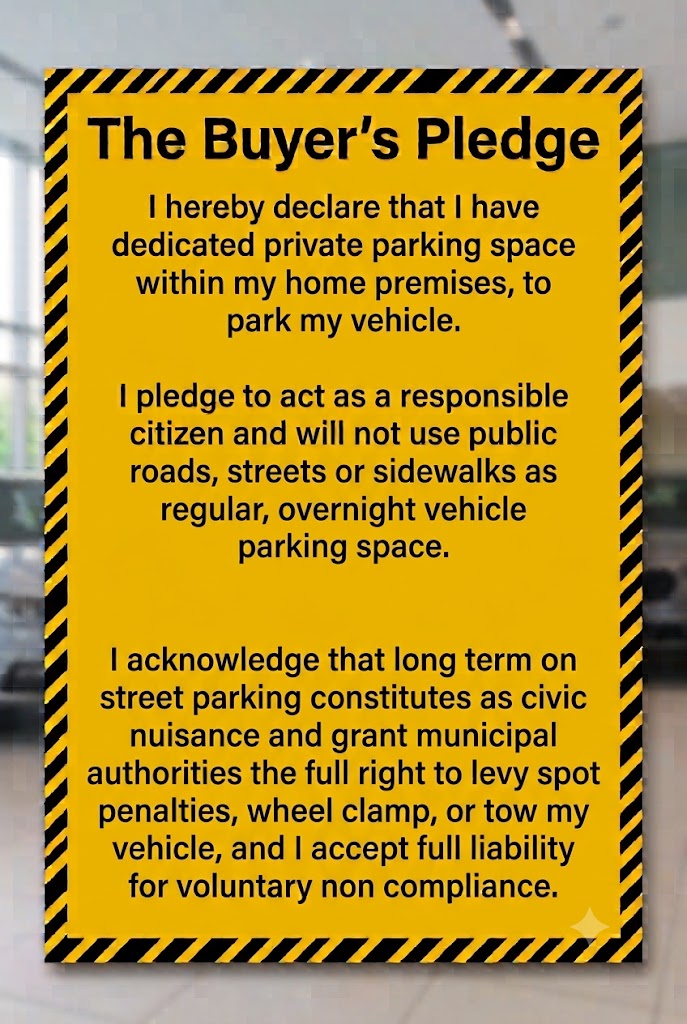
Just as indicative markings alter the visual context of the sidewalk, a formal pledge alters the psychological context of vehicle ownership, establishing clear civic accountability before the keys are handed over.
Addendum – Oct 2026:
This might be a ruthless thought, but let’s be honest: we cannot complain about a problem while actively funding it.
We often vent our frustration about unusable, encroached sidewalks, only to pull over on our way home to buy snacks, groceries, or tea from the very vendors blocking the path. In doing so, we become part of the problem we complain about. In behavioral terms, our purchase is an incentive, a feedback loop that rewards the encroachment of public space.
If we want change, we have to examine our own habits. What if we resolve to not encourage vendors who operate on encroached sidewalks? A user friendly city isn’t just built by municipal engineers; it’s sustained by the daily choices of its citizens.
The Impact 🙂
Many of us have dreamt of living in a place like Singapore just to experience the sheer ease of its clean, predictable, and beautiful streetscapes. But we don’t need to emigrate to experience that reality; we can build it right here.
Designing sidewalks with a pedestrian-first mindset does something far deeper than just paving a path—it directly unlocks our public health and mental peace of mind:
- Activating a Natural “Blue Zone” for Health: One of the defining characteristics of global “Blue Zones”—regions where people consistently live healthy lives past the age of 100—is built-in natural movement. Longevity is cultivated when an environment naturally invites you to move. When a city provides safe, continuous, and shaded sidewalks, walking a kilometer to the local market, school, or office stops being a hazardous chore and becomes a default, healthy habit that adds years to our lives.
- Restoring Peace of Mind through the Last Mile: The primary reason citizens abandon public transport isn’t the train or bus ride itself—it is the exhausting mental friction of the “last mile.” If the walk from home to the metro station is a chaotic obstacle course of broken pavers, open drains, and speeding bikes, our daily peace of mind is shattered. Flawless, walkable sidewalks seamlessly bridge this gap, restoring calm to our daily commutes and unlocking the true potential of public transit.
Defining clear standards, enforcing strict structural uniformity, and using environmental nudges to prevent encroachment ultimately transforms the cultural and behavioral fabric of our public spaces.
When our walkways become seamless and unobstructed, our streets will naturally mirror the dignified, world-class landscapes of developed nations. Reclaiming the sidewalk isn’t just a minor civic upgrade; it is how we elevate Indian cities to command global respect and offer our citizens the standard of living they truly deserve.
Thank you for reading 🙂
What is the biggest obstacle or design flaw that prevents you from using the sidewalks in your neighborhood? What structural or visual changes would make them truly user-friendly for you? Please share your experiences and thoughts in the comments section below.
References and a wealth of resources:
How a broken wall led me explore the modern management principle, Therblig?
Bricklaying Ergonomics
IRC 103 : 2012 Guidelines for Pedestrian Facilities
Footpath Design Guide
Better streets, better cities: A guide to street design in Urban India
IRC Code 103: Comprehensive Guidelines for Pedestrian Facilities
The curb cut effect: How universal design makes things better for everyone
https://scd.karnataka.gov.in/storage/pdf-files/Harmonised%20guidelines/CHAPTER%20-%204.pdf
Global Street Design Guide
Wheelchair accessibility: Descriptive survey of curb ramps in an urban area
Road Kerbs: Design, Materials, and Types – Civil Jungle
Sidewalk Design – NACTO
https://www.instagram.com/urbanbros.lab/
*This blog has been refined using Gemini. Many AI generated images were added later after the original blog was published.


The problem is some people who ride two wheelers, specifically the food delivery persons, use the pedestrian walk way for running their vehicles. This is happening mostly in Bangalore where they do this to move forward in the heavy traffic. Following them other bike users too use it. Though there are few areas where the small pillars are installed to forbid the vehicles from using that space. It is not sufficient. They utilize it and damage the pathway. The pedestrian walk that is already laid out is not upto the level already and now this vehicle usage makes it more worse.