My school type Reji sir shared his blog about Father’s Day. It made me draft my note of gratitude. Keeping this as a placeholder. Please excuse.
Category Archives: Life
The Problem with Free: We Don’t Value It
“That which we obtain too easily, we esteem too lightly.” — Thomas Paine
There is a fundamental quirk in human psychology: what is given too freely is almost always valued too cheaply. When the price tag of a commodity or a gesture drops to absolute zero, its perceived value often plummets with it.
We see this play out constantly, from macro-level government policies to corporate boardrooms, and even in our closest neighborhoods.
1. The State Government Dilemma: Welfare vs. Worth
Over the years, successive state governments have rolled out massive welfare schemes distributing free televisions, fans, mixers, and grinders. This isn’t a critique of social justice—welfare has its place. However, the execution exposes a flaw in how we perceive free items.
Walk into second-hand shops, and you will find piles of these pristine, government-issued appliances. Many recipients sold their free TVs immediately—some even packaged them off to student hostels in neighboring states for quick cash.
The psychological shift happens at the price point. If the government had charged even a token amount—say, ₹100—the public narrative would have changed. It would no longer be “free junk”; it would be a heavily subsidized asset worth protecting.
The Concept of ‘Skin in the Game’ through Civic Action
If charging a nominal financial fee is politically or logistically impractical for a welfare scheme, the state can introduce cost through a different currency: personal accountability. What if freebies or social security benefits were linked to conditional milestones?
For instance, to qualify for a government benefit, a citizen might need to demonstrate that they have bought a basic term insurance policy to insulate their family from sudden poverty, or drafted a legal will to eliminate generational property disputes. By introducing these nudges, the government transforms a passive handout into an active tool for social engineering. It forces the recipient to think about long-term stability, ensuring that while the benefit is free, the right to access it requires a meaningful commitment to their family’s future.
2. The Corporate Cafeteria: From Gratitude to Grievance
Step into the corporate world, and you see the exact same behavior. Many top-tier companies offer lavish, free buffet meals to keep their employees fueled and happy. Yet, day after day, you can hear employees cribbing about the menu options or the salt levels.
Constructive feedback is healthy, but habitual complaining about a premium, free benefit is a symptom of entitlement.
The reality is, nobody is forcing employees to eat at the office cafeteria. It is an entirely optional perk. If someone feels that the free meal doesn’t cater to their specific taste, they are well within their rights to bring food from home or eat elsewhere. Blaming the company for a voluntary benefit makes little sense.
Now, imagine if the company priced that exact same buffet at a nominal ₹5. Instantly, the psychological context flips. The narrative changes from “This free food is mediocre” to “Wow, where else on earth can I get a massive, delicious buffet for just five rupees?”
There is an old, wise saying that applies perfectly here: “Don’t tell the person carrying you up a hilltop that they smell bad. If you don’t like it, get down and walk.”
3. The Commute Complaint: Nodal Points vs. Entitlement
This psychological blind spot doesn’t stop at the cafeteria; it extends right into the office transport bay.
Consider a company that provides free, air-conditioned cabs for employee pickups and drops. To keep commute times efficient and fair for everyone, the transport department asks employees to walk a few meters to a designated “nodal point” on the main road. It makes logical sense: navigating narrow residential streets during peak-hour traffic delays the entire cab and inconveniences everyone else on board.
Yet, rather than walking those few short steps or choosing to commute using their own vehicles, many employees still crib about the service. They overlook the massive financial and logistical burden the company is lifting off their shoulders.
What makes the complaining even more unreasonable is that the company does provide doorstep drops during night shifts or pre-dawn pickups to ensure safety. But during normal hours, when the policy is optimized for the collective good, the concept of a “free ride” makes people focus entirely on their minor inconvenience rather than the major benefit.
Once again, when a premium service costs zero rupees, our expectations skyrocket to unreasonable heights.
4. The Neighborhood Lesson: When Charity Hurts Self-Esteem
Perhaps the most profound example of this happens at a deeply personal level, where giving freely can inadvertently hurt the very person you want to help.
In my village, a neighbor rented a small room to a daily wage laborer for ₹800 a month. When a member of the tenant’s family developed a severe kidney complication, the medical bills broke them. Seeing their struggle, the kind-hearted house owner waived their rent for two months to let them recover.
Instead of being relieved, the tenants abruptly packed their bags and vacated the house. The house owner was stunned. Why leave when someone is actively trying to support you?
What he later realized was a masterclass in human dignity: living entirely rent-free had severely bruised the tenant’s self-esteem. Furthermore, they carried the crushing anxiety that the neighbors would look down on them as objects of charity. By trying to eliminate their financial burden entirely, the house owner had inadvertently created a psychological one.
The Takeaway
Human beings are wired to equate cost with commitment. When we pay nothing, we invest nothing—neither our gratitude nor our respect. Whether you are running a state, managing a corporate team, or helping a neighbor, sometimes the best way to preserve someone’s dignity and value for what you offer is to ensure they have skin in the game. Sometimes that means charging a token financial price; other times, it means demanding a baseline of personal accountability and civic action. True value is never found in a passive handout; it is forged when we are asked to invest something of ourselves in return.
What are your thoughts on this? Have you ever noticed a situation where giving something away for free completely changed how people valued it? Let’s discuss in the comments below!
P.S. This post is purely a psychological observation on human behavior; it is not a critique of social justice schemes or the intentions of kind-hearted samaritans.
*This blog post was refined using Gemini.
The Scrapbook, The Bookshelf, and an Evolving Hobby
We’ve all been there: sitting in a classroom with a blank sheet of paper, tasked with the classic essay prompt, “What is your hobby?” In those days, the answers felt almost algorithmic. Most of my classmates would dutifully write about philately (stamp collecting) or numismatics (coin collecting). These were the “respectable” hobbies—activities that sounded structured, educational, and ready for an interview panel. But for many of us, the reality of our leisure time was much more fluid.
The Midnight Pep Talk: Defining “Leisure”
I remember a pivotal night in Class 9. My House Captain, fresh from a motivational trip to the National Defence Academy (NDA), gathered us outside his dorm for a marathon pep talk that stretched until midnight. As we fought off sleep, he challenged our rigid ideas of what a hobby actually was.
He told us about a junior who nurtured a talent for drawing cartoons post-school hours, and even a senior who told an SSB (Services Selection Board) panel that his hobby was experimenting with different hairstyles. His message was simple: A hobby is simply what you actually do with your time when no one is telling you what to do.
In a school schedule packed with classes and mandatory games, those quiet hours between lunch and tea were our only true “white space.” While others played “exam pad cricket” or watched TV, I found myself drawn to something else.
The Art of the Scrapbook
My home didn’t have a TV, and I never developed much of an interest in watching one at school either. Instead, I became a curator. I found myself armed with a pair of scissors and a stack of magazines. I would cut out anything that resonated: a clever joke, a poignant poem, a striking photograph, or—most frequently—motivational quotes.
Initially, these clippings migrated to my dorm walls and the inside of my cupboard. They were my “hooks,” the small anchors I used to steady myself while navigating the pressures of school. Eventually, I began pasting them into an old, unused diary. It was only later that I learned there was a formal name for this: Scrapbooking.
As my interests evolved toward quizzing and management, my scrapbooks transformed too. The clippings became more specialized, reflecting my growing curiosity about the world and my future career.
From Paper Clippings to “Tsundoku”
That habit of physical curation eventually manifested in a new form: a love for books. Over the years, I began accumulating motivational and self-help titles. My collection grew faster than my reading pace, leading to a bookshelf filled with both well-loved pages and “yet-to-be-reads.”
Nassim Taleb’s “Anti-Library” Habit: Why Your Unread Books Are More Important Than Your Read Ones
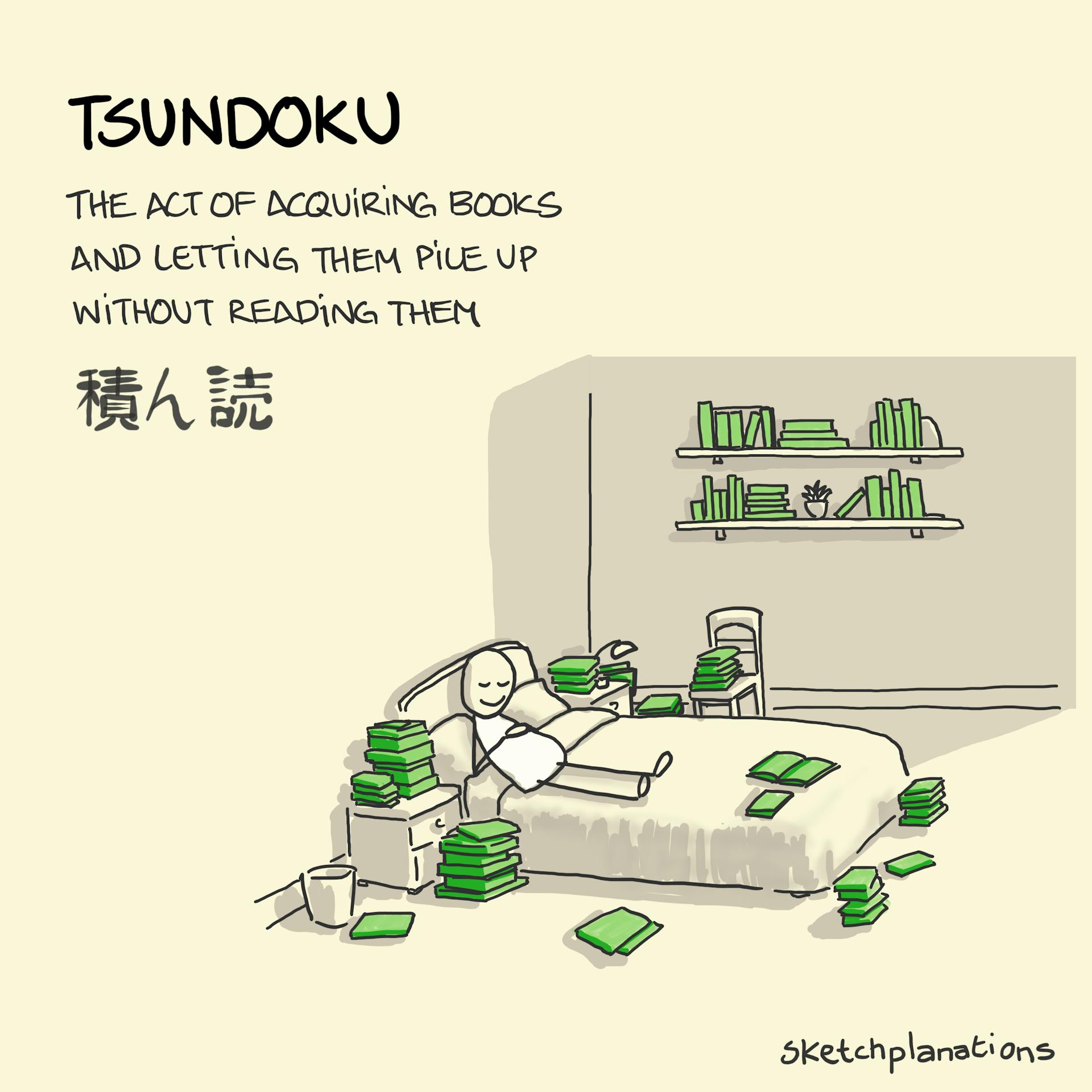
I recently discovered a beautiful Japanese term that perfectly describes this stage of my journey: Tsundoku (積ん読). It refers to the act of acquiring reading materials and letting them pile up without necessarily reading them all. For me, it isn’t just about the “unread” pile; it’s an extension of that original scrapbooking impulse—the desire to gather and surround myself with ideas that inspire growth.
The Digital Pivot
Today, my “scissors and glue” have been replaced by the digital “Pin.” My collection of articles and interests has migrated to Pinterest boards, allowing me to curate ideas with a speed my ninth-grade self couldn’t have imagined.
Looking back, those “part-time hobbies” were never just filler. Whether it’s a physical scrapbook, a shelf of books, or a digital board, the act of collecting is really an act of self-discovery. It’s about identifying what speaks to you and keeping it close.
So, if you’re still trying to define your hobby, don’t worry about whether it sounds “official” enough for an essay. Look at what you do when the world leaves you to your own devices. That—whatever it is—is where your story begins.
Additional Refs:
Winston Churchill used to lay 200 bricks per day to keep his mind busy when feeling down. Depression hates a moving target.
https://x.com/george__mack/status/2051334328303669498
What was your “exam pad cricket”? Did you have a hobby that didn’t quite fit the standard essay template? Let me know in the comments!
*This blog post has been refined using Gemini.
Why I linked December with Dessert?
When we end the meal with a dessert, the sweetness lingers on our tongue, for some more time. It feels satisfying. I had a terrible 2024 and wanted to end the last month of 2024, doing/learning something for the sake of fun. Somethings feel like therapy. I intentionally visited sweet shops & cafes to lift my mood. My wife learnt home baking of cakes & cookies and I feel thankful for that. Taking inspiration from this blog, casually clicked and shared random beautiful pics. Decided to watch one TED video on photography daily in the evening. Some were pleasing and some showed the difficulties/realities, as shared by photo journalists. The compilation of the talks are below. Also, below are a lot many resources, I found on the internet, which I plan watch later, at leisure. Happy video watching at leisure 🙂
- Steven Addis: A father-daughter bond, one photo at a time | TED Talk
- JR: One year of turning the world inside out | TED Talk
- Becci Manson: (Re)touching lives through photos | TED Talk
- Erik Johansson: Impossible photography | TED Talk
- Cesar Kuriyama: One second every day | TED Talk
- Five great moments in time-lapse photography | TED Blog
- Levon Biss: Mind-blowing, magnified portraits of insects | TED Talk
- Alec Soth and Stacey Baker: This is what enduring love looks like | TED Talk
- Jimmy Nelson: Gorgeous portraits of the world’s vanishing people | TED Talk
- Stephen Wilkes: The passing of time, caught in a single photo | TED Talk
- Giles Duley: When a reporter becomes the story | TED Talk
- Sebastião Salgado: The silent drama of photography | TED Talk
- Lisa Kristine: Photos that bear witness to modern slavery | TED Talk
- Paul Nicklen: Animal tales from icy wonderlands | TED Talk
- James Nachtwey: My wish: Let my photographs bear witness | TED Talk
- Jonathan Klein: Photos that changed the world | TED Talk
- David Griffin: How photography connects us | TED Talk
- Frans Lanting: The story of life in photographs | TED Talk
- Taryn Simon: Photographs of secret sites | TED Talk
- Kristen Ashburn: The face of AIDS in Africa | TED Talk
nb: TED encourages sharing the talks, under Creative Commons license. Please refer TED Talks Usage Policy
A wealth of resources on photography, from the internet.
- Good photography channels on YouTube – Reddit
- National Geographic – YouTube
- Recommendations from Shaikh Samar
- “Tales by Light”: Explore breathtaking visuals and storytelling behind the lens.
- “Abstract: The Art of Design”: Gain insights into the creative process of various artists, including photographers.
- “Photography Masterclass” (Annie Leibovitz)
- 20 Best Photography YouTube Channels To Follow in 2024
- 9 Must-Watch YouTube Channels for Photographers | ISO Republic
- The 8 Best Photography Youtube Channels for Beginners – FilterGrade
- 9 YouTube channels that will help you become a better photographer
PS: I don’t aspire to be a professional photographer, but like to click random beautiful things that are pleasing to my eyes, using mobile phone. Thanks to my friend Ravisuriya, my school senior Balaji man & Ram, whom I met at Kabini, whose photographic works, I admire.
As we end 2024, I whole heartedly thank my family, friends & relatives, for all the support in times of extreme distress.
Movember and Men’s Health

The word ‘Movember‘ is derived from the combination of the word ‘Mo‘, which is the Australian-English abbreviated form for ‘Mustache‘ and ‘November,’ as the event takes place every year during the month of November. This involves growing of mustaches in order to raise awareness of different men’s health issues like prostate cancer, testicular cancer and mental health challenges.
Using the mustache as a catalyst, Movember encourages men to invest in their own health by more openly talking about their health concerns and more proactively seeking necessary medical care. The idea is to bring about change and give men the opportunity and confidence to learn and talk about their health and take action when needed. Participants of Movember are called ‘Mo Bros’ and the women who support are called ‘Mo Sistas.’

The idea of Movember originated in…
View original post 398 more words
Tributes to the Women Who Added Colours to my Life
As the world celebrates Women’s Day and India celebrates Holi, I feel so proud and gratified to write about these ladies who apart from my mother, stood by me in times of distress, guided me to wade through troubled waters and added colours to my life.
My darling sister(first cousin) Ms. Kalaivani
My college buddy Ms. Lina
My English Prof., Mentor and God Mother Ms. Charumathi
My colleague and a lovely buddy Ms. Kiruthika
…to be continued
100+ things to make an Incredible Life!
Read a few articles on 100 things to do before you die, by a few enthusiasts! Gave a serious thought and decided why don’t I write my own. I picked a few from the net and inserted a few on my own. The list exceeded 100 and hence changed the title as ‘100+ things to make an Incredible Life!’ The list can grow even more. The philosophy is to crowd as many great experiences into life, make a dignified living and also to treat people with kindness and respect. (Follow your heart, but do not break any)
1. Write down your personal mission statement, follow it, and revise it from time to time
2. Make sure to tell your friends and family how much you love them so that when you do die… they won’t wonder and you’ll be at peace.
3. Stop worrying about the things that you can do nothing about and start doing things you can and are passionate about
4. Fall deeply in love — helplessly and unconditionally
5. Tell someone the story of your life, sparing no details
6. Have a mentor
7. Let someone feed you
8. Hug your loved ones often
9. Kiss someone you’ve just met on a blind date
10. Find a job you love
11. Build a huge business empire
12. Get passionate about a cause and spend time helping it, instead of just thinking about it
13. Write your will
14. Give to a charity — anonymously
15. Attend at least one major sporting event: Olympics, Tour de France, Wimbledon
16. Attend one really huge rock concert
17. Set foot on each of the seven continents, you can truly call yourself a world traveler
18. Climb one of the world’s Seven Summits
19. Tour monuments around national capital region – Delhi
20. Tour Kashmir & Ladakh
21. Tour Rajasthan, indulge staying in a palace
22. Tour Mauritius
23. Swim with a dolphin/shark
24. Skydive
25. Ski
26. SCUBA dive in the Great Barrier Reef. The largest coral reef in the world
27. Surf. Catch the waves
28. Bungee Jump. Experience the adrenaline rush
29. Take a ride on the highest roller coaster in the country
30. Go up in a hot-air balloon
31. Go white water rafting
-> Rafted at Galibore; planning to do in Ganges too.
-> Rafted at Galibore; planning to do in Ganges too.
32. Go Rock climbing/trekking
-> Went on a few hikes while at SSA
-> Went on a few hikes while at SSA
33. Explore a cave
34. Learn to rollerblade
35. Run a marathon
-> Completed the Half Marathon as part of Spirit of Wipro Run 2011
36. Cross a country on a bicycle
37. Learn to ride a horse
-> At SSA, just learnt how to trot
-> At SSA, just learnt how to trot
38. Take a martial arts class
39. Have your portrait painted
40. Develop a talent for photography
41. Learn to play a musical instrument (Keyboard) with some degree of skill
42. Learn to speak a foreign language (Spanish) and make sure you use it
43. Watch the launch of the space shuttle/satellite
44. Own a wonderful motorbike (Thunderbird/Harley Davidson)
45. Own a wonderful SUV
46. Buy/build a wonderful house
47. Own a room with a view
48. Sleep under the stars
49. Shower in a waterfall
50. Buy a round-the-world air ticket and a rucksack, and run away
51. Be a member of the audience in a TV show
52. Sit on a jury
53. Be an extra in a film
54. Spend a whole day reading a great novel
55. Get to know your neighbors
56. Spend a whole day eating junk food without feeling guilty
57. Spend three months getting your body into optimum shape
58. Plant a tree
59. Grow a garden
60. Grow and eat your own vegetables
61. Make cookies from scratch
62. Go deep sea fishing and eat your catch
63. Go without food for a few days
64. Watch a meteor shower
-> At SSA, after a tiring inter-house water polo competition, Col. Verma mustered the students at Oval ground by 1 AM, to show us what a meteor shower is. Unfortunately it turned out to be a celestial fiasco!
65. Edge Of Space Supersonic Jet Ride
66. Take a ride on a fighter jet/Pilot an airplane
67. Dive into the ocean on-board a submarine
68. Tour Egypt, Climb or get inside the great Pyramid of Egypt, Go on a Nile river cruise
69. Ride a camel into the desert
70. Visit the Great Wall of China
71. Ride the Trans-Siberian Express across Asia
72. Go wild in Rio during Carnival
73. Visit the Amazon rainforest
74. Take an African Safari (Masai Mara)
75. Cross a glacier on foot
76. Climb an active volcano
77. Buy a boat and learn to sail
78. Bathe in the Ganges
79. Gamble at Las Vegas
80. Covert Ops (Incredible-Adventures.com)
81. Go to Disney World
82. Play in the mud
83. Play in the rain
84. Go to a drive-in theater
85. Be on a cruise ship
86. Get a tattoo
87. Tour ancient sites
88. Fire a rifle, shotgun, or pistol
-> Took part in firing competitions, while at SSA and during NCC camps
-> Took part in firing competitions, while at SSA and during NCC camps
89. Be in a combat zone
90. Do something you should regret, but don’t regret it
91. Get flowers for no reason
92. Ask for a raise
93. Publish an article about your travels
94. Teach someone illiterate to read
95. Save a life/Sponsor some ones education
96. Look into your child’s eyes, see yourself, and smile
97. Visit the birthplace of your ancestors
98. Find out something significant that your ancestors did
99. Create your Family Tree
100. Forgive your parents
101. Invent or discover something that changes the world for the better
102. Shake hands with someone who has truly changed a country
103. Have your picture in the newspaper
-> Appeared in local newspapers when I won a few quizzes & other inter collegiate
competitions
-> Appeared in local newspapers when I won a few quizzes & other inter collegiate
competitions
104. Write articles for a large publication
105. Write a book
106. Donate money and put your name on something: a college scholarship, building
107. Volunteer abroad for a month
108. Be able to handle: your tax forms, your banker, investments
109. Learn how to take a compliment
110. Learn not to say yes when you really mean no
111. Learn how to complain effectively — and do it!
112. Reflect on your greatest weakness, and realize how it is your greatest strength
113. Stand up for yourself
114. Learn to take criticism gracefully
115. Be someone’s mentor
116. Be the boss
117. Own one very expensive but absolutely wonderful business suit
118. Create your own web site
119. Throw a huge party and invite every one of your friends
120. Be content with yourself. Accept yourself for who you are
121. Actually feel happy about your life, even for just a moment
122. Donate a substantial amount of your personal wealth to charity
123. Laugh enough! Love much! Live well!
You only get one shot at life. Make yours exactly how you want it to be. LIVE!
Cheers,
Ashok Prabhu T
“Happiness is a choice…
Life is a choice. It is YOUR life. Choose consciously, choose wisely, choose honestly. Choose happiness.”― Bronnie Ware
Life is a choice. It is YOUR life. Choose consciously, choose wisely, choose honestly. Choose happiness.”― Bronnie Ware
“Some people feel the rain. Others just get wet.” ― Bob Marley
“Love the life you live. Live the life you love.” ― Bob Marley
“Love the life you live. Live the life you love.” ― Bob Marley
“Life is God’s gift to man. What we do with it is our gift to God.” ― Harold B. Lee
“Have the will to be well, to be happy, and to live in joy.” ~ Ernest Holmes
Addendum:
124. Be on a record book
125. Learn to play tennis
126. Become a Collector
-> I collect News Paper Articles, Photographs, Jokes, Poems
-> I collect News Paper Articles, Photographs, Jokes, Poems
127. Have a hobby
-> Cyclist. Traveler. News Paper Articles, Photographs, Jokes, Poems Collector.
-> Cyclist. Traveler. News Paper Articles, Photographs, Jokes, Poems Collector.
128. Watch the American Film Institute’s 100 Funniest Movies
129. Learn not to take what others do or say personally
130. Become an early riser
131. Face your greatest fears
132. Be there at the World Economic Forum (WEF) in Davos
 Attitude is Everything