The people I follow tweet on multiple topics. However, not all the tweets are relevant to my interests. If I can have an option to either follow all tweets from an account or tweets on specific topics from an account, it would make my experience better.
In the twitter Bio or below the Bio, people can be given an option to add approximately, 5 -6 topics of interest.
Ex: Design, Startups, Health, Football, National Politics, Local News…etc.
Or something like, Tweets on #design, #startups, #health, #football, #nationalpolitics, #localnews…etc.
While Tweeting, users should be presented with their topics of interest, as tappable buttons to quickly select the tweet’s topic. Once the user selects the relevant topic from the available options, the selected topic should be added to the tweet as #tag. Ex: #design, #startups, #health, #football, #nationalpolitics, #localnews…etc
Also, when I open Twitter, I wish to have quick filters in the form of #tags or tabs, above the feed, to view tweets on the topics of my interests.
I retweet a lot of tweets from others, many of which are part of my learning, and I wanted to refer to those retweets later. If there is an option to easily search and filter all my retweets, based on the account and topic, it would be great.
I also wish to see the profiles differentiated based on if they are individuals, companies, magazines, news papers, political parties…etc. and then would like to have search filters to view tweets based on these types.
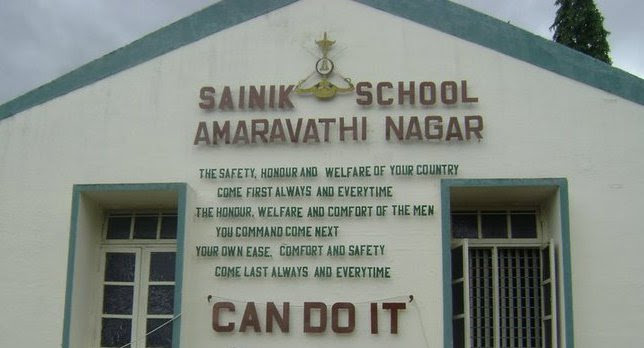
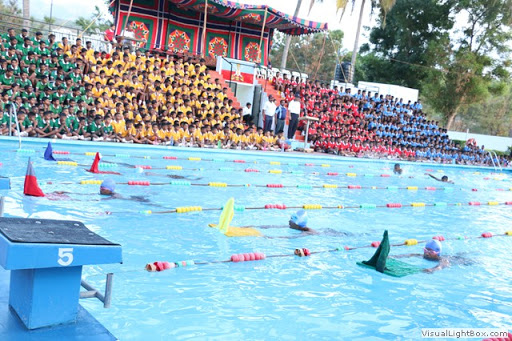
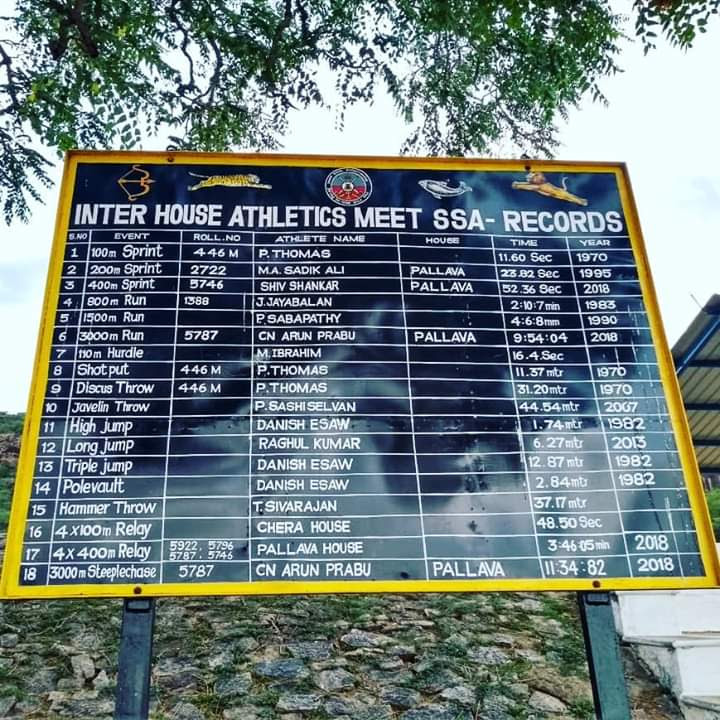
Mar 1994: It was my last day of class 4. Tore the unused pages of our notebooks, wrote “Happy Holidays” on those small pieces of paper and on the way back home, all school busmates threw “Happy Holidays” on the road. Reaching home, I was in joy, thinking of the 2 months summer holidays and that was short lived. My father informed me, I will just have one week of holidays and on the advice of my uncle who was a teacher, I’ll be joining a coaching centre, staying in a hostel for the first time in my life and preparing for the Sainik School entrance exam. After I finished the entrance test, my father used to check with our village postman often, if there was any letter for me, anticipating the results. I was able to clear the entrance test, and the subsequent interview and the medical test. Then came the final selection letter and the lost list of joining formalities. I was elated! With a government scholarship, joined class 6 at Sainik School, Amaravathinagar in Jul-1995 and left after completing class 12 in Mar-2002. It was certainly a journey to remember. 16-Jul-2022, my alma mater celebrates Diamond Jubilee and I am reminiscing my days at SSA.
Sainik School, Amaravathinagar is a residential military public school and one of 33 such schools present in different states of India. The concept of Sainik Schools originated with Mr. Krishna Menon, who was the Defence Minister in the early 1960s. Mr. Menon felt that a school with rudiments of a military way of life in each state of our country, could prepare cadets and help build up an infrastructure for intake into the National Defence Academy.
When people were having film roll cameras, they took it out during special occasions, clicked a few pictures, developed them and put them into albums, which were later cherished as memories. With the advent of mobile photography, we click too many photos and sometimes we also miss enjoying the moment.
We went on a family trip for two days, along with our cousins. In those two days, we took nearly 600 photos. In a dessert shop that had Instagram worthy background, we clicked 37 pictures. For a portrait shot inside a tea estate, we clicked 15 pics of the same person, where I just needed one photo with a good facial expression and great background.
To capture a portrait picture when my friend was best dressed for a marriage, we clicked 25 photos with 3 different backgrounds. To get the best shot, my friend posed for photos with different styles like having free hair or plaited hair, wearing spectacles or without spectacles, smiling widely or without a smile, and with the face looking at the camera or looking sideways.
Of late, the albums are filled with too many photos, mostly because we click around 3 to 10 pictures in the same spot, so as to get the best shot and also because our cameras do not have film rolls like the old analog cameras, we don’t care how much ever we click.
A few months down the line, I might not appreciate having too many photos per album. I prefer minimal photos per occasion, somewhere between 10-50 photos per album. So after each occasion like picnics or wedding functions, I sit and diligently delete most duplicate or unwanted photos. Deleting these photos is a very boring task! But I still do it, to keep my albums clean. As I deleted the photos, I made notes of what I deleted, so that I can share with Google requesting them to use their AI prowess, image recognition capabilities and come up with algorithms that would help users declutter the photos.
How did I shrink the size of my albums and retain the good looking photos, the ones in which people are smiling, facial expressions are positive and the background is nice? By deleting the not so good photos. Here is what I did:
Toggle between successive shots, look for if all the people in the pic are seeing the camera, are they smiling, decide on which one is better to retain and delete the other one.
Between multiple photos of the same frame, I retained the one that looked lively. For me, being lively means smiling. Laughing means it is livelier.
Compared between smiles that are wide with the ones that are gentle and retained, the one looked lively.
Deleted photos if there are non welcome objects seen in the photo, like scattered clothes, unused chairs in the background…etc.
Deleted photos in which people were seen talking and hence the facial expression was not good.
Deleted photos in which people were trying to make children smile or make them look at the camera by uttering some jokes or using some gestures.
Deleted photos in which the face was obstructed due to hand movement or some other objects.
Deleted photos in which people were seen with eyes fully or partially closed.
Deleted photos in which people were not smiling, seen frowning or staring rudely.
Deleted photos if someone’s eyes or face is looking elsewhere.
Deleted photos in which people were looking downward or the head was too up and faces were not clearly visible.
Is the frame of the photo good? Has someone gone out of frame? Delete if someone is only partially covered in the frame than the one in which they are visible fully.
Deleted photos with too much or too low lightning.
Deleted photos if there is a glare on the face
Deleted photos with poor shadow disturbing the frame.
Deleted photos with hand or lip movements or if a part of the body part is blurred due to movement while taking the photo.
Deleted if the person was giving some instructions or talking while taking the shot and the lip movements were not looking good.
Deleted photos in which someone has photobombed.
Deleted photo in which the baby was seen crying.
Deleted photos if they were holding some props which are not fully visible. Ex. My daughter picked some strawberries from a farm and wanted those to be visible in the photo.
Had multiple pics of the baby eating strawberries. Retained the one that had a lively expression.
Deleted pictures where the costumes might have misaligned.
If I have to cover a background with some name on the board or letters, deleted the ones where the names were partially cut
Deleted photos that were taken from behind and were not looking great.
For photos taken in front of monuments, compared with poses where the person was sitting, with the ones where they were standing and deleted the one that was not looking good.
Took photos of a strawberry farm with family members and without family members in the frame. Retained the pic with family members. Might be it were a monument, I would have retained a pic that doesn’t have anyone else other than the monument in the frame.
If everyone is asked to pose in a certain way, are all doing the same? Ex. Pouting, thumbs up, laughing, smiling. Does the pose look natural?
I was choosing between photos with half frame and full frame, photos with feet visible and if they are looking good or ugly.
A few patterns I noticed:
For pictures of people with good natural landscapes in the background, landscape mode looked better than portrait mode.
Portrait picture with half frame, full frame and longshot. Full frame looked good. Long shots in portrait mode did not look good.
Portrait shots with people standing far behind don’t look good.
When there are more than 3 people in the frame, a photo in landscape mode looks good.
In a spot, compared to a selfie, a photo taken by someone else looked good.
When a pic was taken on hills with the photographer standing on highland and the person being photographed standing slightly below, then a photo with faceup looked better than a photo with face down. Similarly, when a pic was taken on hills with the photographer standing on lowland and the person being photographed standing slightly higher, then a photo with chin down looked better than a photo with chin up.
Let there be a Nudge: At the end of the day, if the photos app can show suggestions and provide tools to compare and delete duplicate and not so good looking photos, it would be great. The tool can prompt the reasons as to why a photo can be deleted. Ex. Someone looking away, blurred hand, foreign particles in the background, someone photobombed …etc.
Nudges can also be applied to delete not so useful videos, forwarded memes, good morning messages…etc.
Medical Archives: I regularly take photos of medical prescriptions and test report sheets, so that I can refer to them later. It would be great if there is a separate medical archives folder. When the labs send me the reports as pdf, in email, I can save it to Google Drive. However, if I get a physical copy of the reports, I click pictures of it, which would be in Google Photos. It would be helpful if there is an integration between Google Photos and Google Drive and I can have a common medical archives folder that can be accessed from both these apps seamlessly.
Casual Pics: When my wife had a new haircut, we took multiple pics to see if it looks good for her. I don’t intend to keep these photos for long. Also, there are lots of photos we take casually, while on a car ride or in a local train, but will not be a special long term memory and these photos can be classified as casual photos and have some option like delete these casual photos after 6 months or 2 years …etc.
Apart from albums, it would also be nice to have categories for photos, like family, friends, vacations, sports, work, medical documents, professional mode photos, other documents …etc.
Let the process of organizing and managing photos be simple and delightful and the memories cherishable. Also, clearing the clutter contributes to a sustainable earth, in a small way.
PS: Professional photographers will be able to add more ideas, to shortlist the best photos.
Thanks to Ravi for reviewing the draft of this post 🙂
Addendum:
I have enabled partner sharing on Google Photos. I click multiple photos and delete the not so good ones later. However, the photos I delete, only gets deleted on my account and not on my partner’s account. I would appreciate if there is an option to set sync settings for partner sharing, like sync with partner’s account immediately, after an hour, after 24 hours or after a week, so that I can delete the not so good photos and later only the good left over photos gets synced. Else, when I delete, the partner account could be notified highlighting the photos that were deleted and prompting if the partner would also like to delete or is ok to retain the photos.
I was casually capturing the building landscapes at my office and felt that the left most photo with the full building visible, looked better than the middle one, which looked better than the right most photo
In December 2002, the United Nations General Assembly declared May 21 as the World Day for Cultural Diversity for Dialogue and Development, to help communities understand the value and richness of cultural diversity, learn how to be inclusive, live together in harmony and achieve prosperity in a sustainable way.
I have been an Inclusion & Diversity champion at my organisation, took part in the “Power of Diversity” week celebrations every year, explored on this topic, out of personal interest and wanted to journal a few of my learnings over the last few years.
My understanding of diversity during my young age was through the school textbook lesson “Unity in Diversity.” During the initial years of my career, I thought it was all about having an inclusive environment for people from various cultures and also for people with disabilities. The companies I worked with over the last few years, made conscious efforts to create awareness on how to appreciate Diversity and be Inclusive of people from various cultures, social status, people with disabilities, people from LGBTQIA+ community, different generations and other diverse backgrounds. These efforts have helped me better understand what Diversity, Equity, Inclusion and Belonging means, enabling me to create psychological safety, inclusive environment, and appreciate people from diverse backgrounds, for who they are.
Diversity: The presence of differences within a given setting. Each individual is unique. In the workplace, that can mean differences in race, ethnicity, gender, gender identity, sexual orientation, age and socioeconomic class. It can also refer to differences in physical ability, veteran status, whether or not you have kids — all of those are components of diversity. When we think of diversity in the workplace, we often think of physical, visible differences. However, it’s important to be mindful of diversity of thought. “From a business standpoint, different perspectives directly influence a product — how it’s made, who it serves, how it functions and so on. More perspectives make for a better product.” People from diverse backgrounds with varying life experiences can thrive personally and professionally.
Equity: The act of ensuring that processes and programs are impartial, fair and provide equal possible outcomes for every individual. Equity takes into account the fact that not everybody is starting at the same level.
Inclusion: Attitudes and behaviours that create a place where people of diverse backgrounds and perspectives feel a sense of belonging. This means that everyone feels comfortable and supported by the organization when it comes to being their authentic selves. In a truly inclusive environment, everyone is valued, welcomed and appreciated, for who they are.
Diversity
Browsing the internet on diversity, I understand that three-quarters of the world’s major conflicts have a cultural dimension. Helping people understand and accept different cultures and creating an inclusive mindset is necessary for peace, stability and sustainable development.
“Just as natural diversity is vital to sustain ecosystems, cultural diversity is the lifeblood of vibrant societies. Cultural diversity provides fresh ideas and perspectives that enrich our lives in countless ways, allowing us all to grow and thrive together. A culturally diverse classroom is not only more inclusive, it boosts student learning and achievement. A culturally diverse workplace is not only more innovative, it is also more productive and economically profitable.” – Irina Bokova, Director General – UNESCO
A few things I learned during the “Power of Diversity” week celebrations:
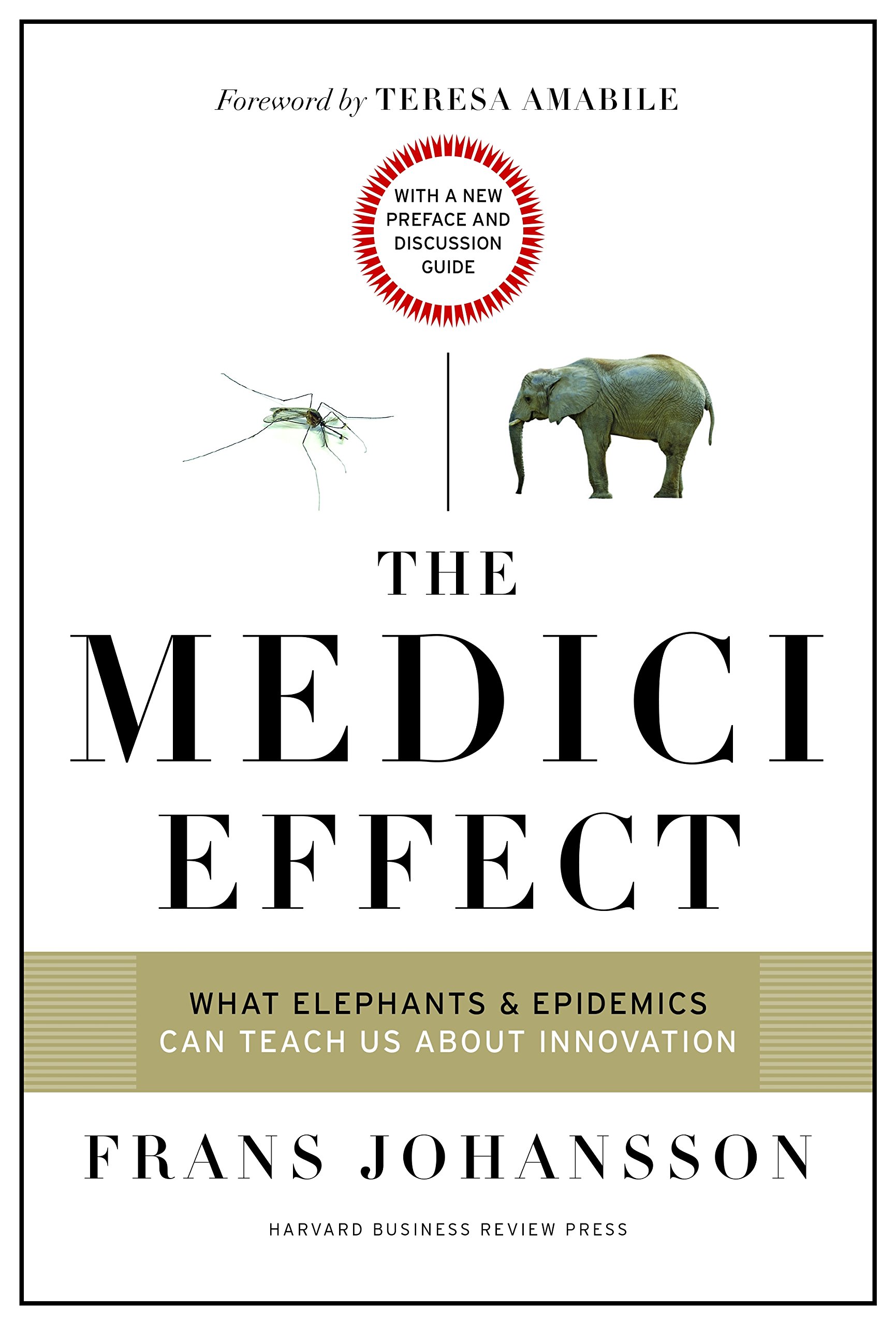
One of the wonderful talks I had listened to was by Frans Johansson, in the year 2020, where he spoke on how the Medici family funded people from diverse backgrounds, which accidently led to the Renaissance. The speaker uses the Medici effect as a metaphor for teams to flourish, by deliberately bringing different cultures together in order to create more productivity through the intersection of different ideas, experiences, backgrounds and beliefs.
Nurturing Diversity of Thoughts – Dr Aarti Ramasami
Organization as network of conversations. What are the conversations you are having/encouraging?
Leveraging Polarities. How do you find synergies in differences?
Inclusion in Action – Rafal Ohme
New skills for the hybrid world: Ability to Adapt (agility), Social, Emotional & Technological skills.
Emotional Intelligence is a feature the AI will not have.
Mirror neurons – helps to feel the emotions of others and sense their intentions.
Loneliness & depression would be the most important threat in the digital world.
Reward yourself as often as possible.
Socialise. Wait for no occasion to celebrate. In a few cultures, people don’t wait for an occasion. They meet in the middle of the week to have dinner together.
Life policy – social relationships will support, motivate and make you happy.
Physical proximity becomes a privilege in a hybrid world. Dining together at work would become a privilege. Oxytocin reduces cortisol levels. Gives enormous pleasure. It enhances immunological systems.
“Social people, who meet regularly in a regular group, even to eat together and gossip, have a better chance of living longer than those who quit smoking, lose weight or exercise regularly” – Susan Pinker, The Village Effect
Using the Power of Diversity to Drive Innovation – Navi Radjou
Congruence – Alignment to harmony. Does your workforce diversity reflect growing market diversity.
Best Practice #1: Create change agents to shift culture on all levels.
Best Practice #3: Create communities of passion that unites diverse people based on shared interests.
Ex: Communities of Passion at the design company, Frog.
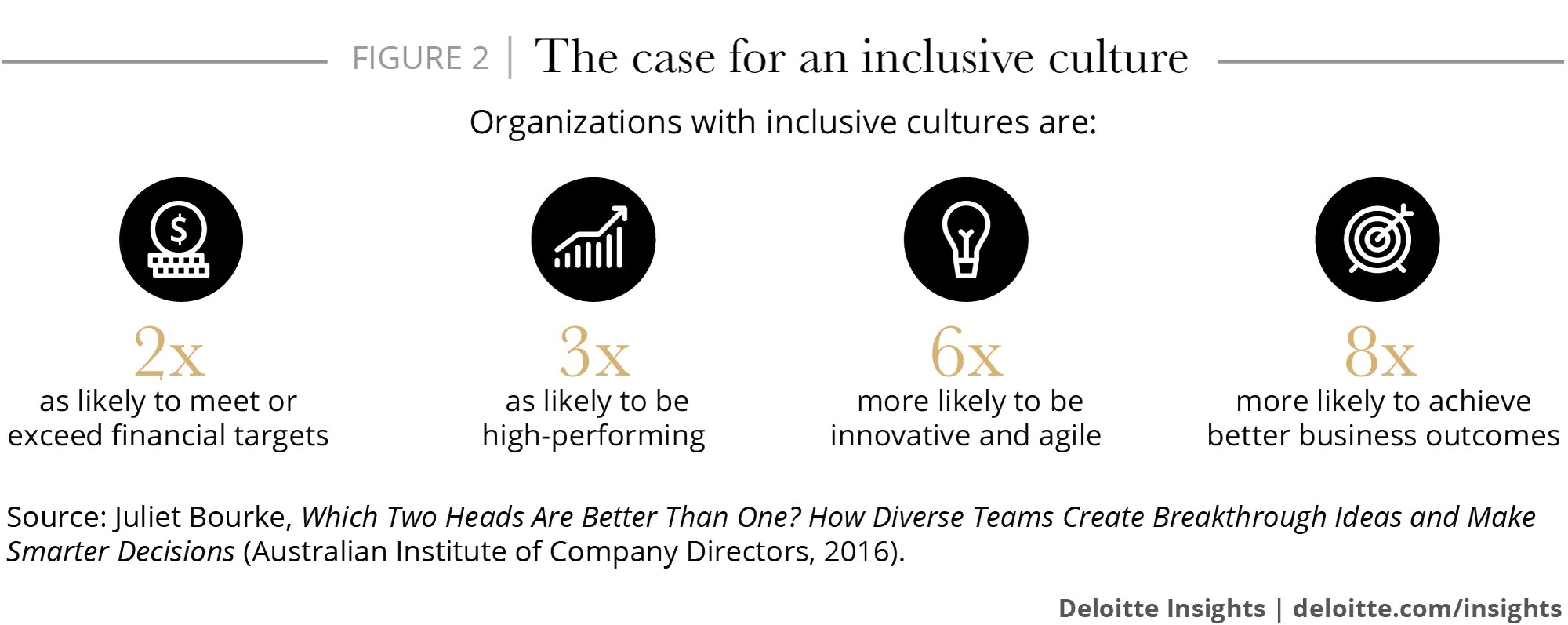
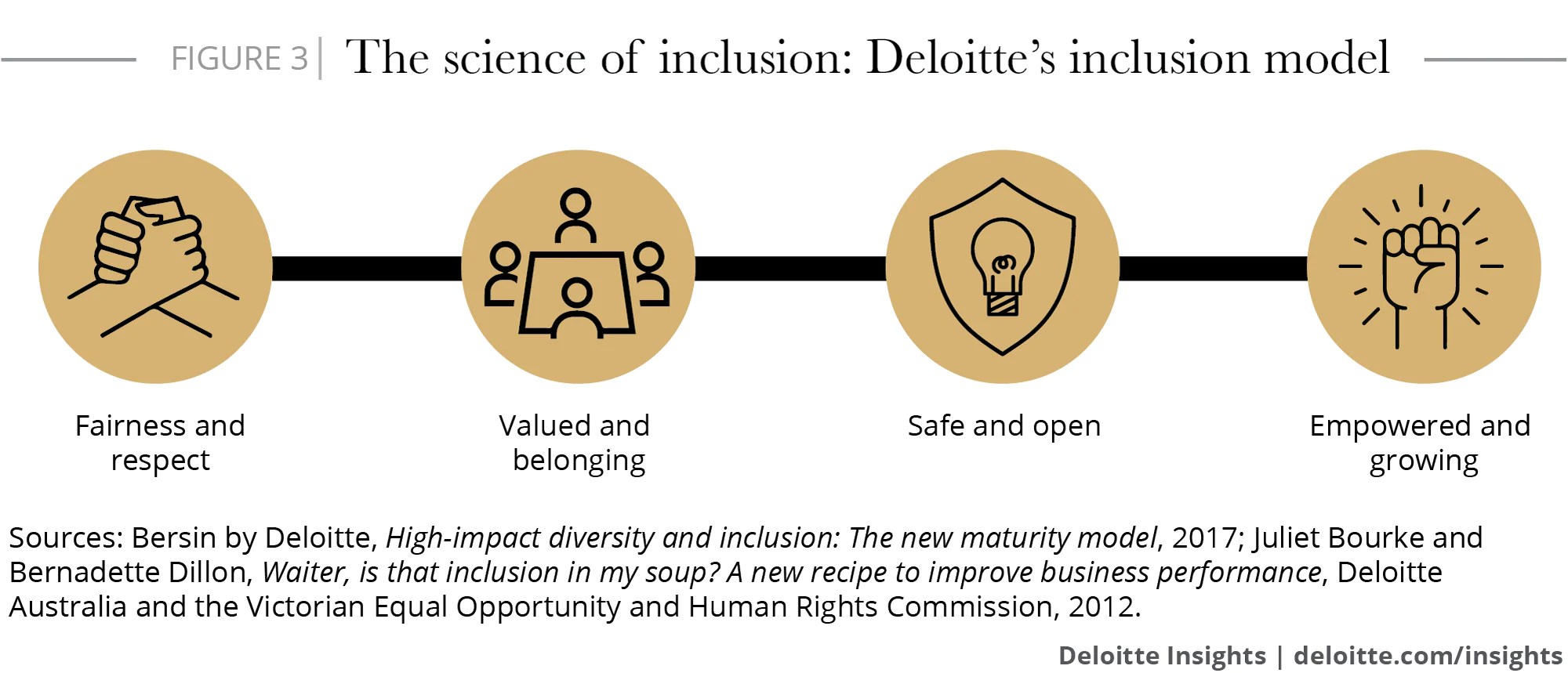
Slides from Deloitte Insights, referenced by the speaker.
Acting on Inclusion – Arriving At A Place Of Belonging – Dr Curtis Odom.
Think of your employees as people first. They should feel a sense of belonging.
People struggle with “speak up” because people struggle with feeling uncomfortable.
The tell-tale sign: when the most vocal people become silent.
Inclusion is a behaviour. Cultivate a culture of inclusion.
Create a culture of belonging.
Leaders are the culture.
“Belonging requires the safety to believe that, “I matter.” To matter, we must know that our mistakes, our misconceptions, and our misgivings have room for grace. I believe that grace is one of the most powerful tools a leader can have.”
A tender heart and a compassionate disposition can also make a great leader.
Micro Affirm
Bring people into conversation
Ask for their opinion
Recognize their achievements and vocalize
Take personal interest in someone’s personal life
And most importantly, be an ally when you see others being treated unfairly
Reverse mentoring as a tool . Listen to people. Ask questions. Be curious.
Provide psychological safety, give credit, find the gaps, provide wellbeing support. Foster an environment where everyone can ‘Speak Up’ and speak their minds
“Psychological safety in the workplace means that every single person in an organisation is able to bring their whole self to work. No hiding, no censoring and no pretending to be someone else. From this space, people communicate and collaborate effectively, and a culture of curiosity and creativity is cultivated.” – Gina Battye, Consultant & Trainer.
In this short article Mike Robbins explains, how a lack of “…psychological safety makes it difficult for the group or company to thrive and perform at their highest level because people are holding back some of who they really are.” If I feel included, I feel welcomed. I can be me and bring the best everyday.
‘Working hard’ doesn’t necessarily mean that you don’t also benefit from privilege afforded by race, gender, economic wealth, education, access to healthcare – the most effective way to address it, is to recognise that it exists!
Privilege is not the suggestion that a person has never struggled and that everything they have accomplished is unearned. Instead, privilege should be viewed as a built-in advantage, separate from one’s level of income or effort.
Privilege is greater access to social power and resources available to some people because of their social group membership; an advantage, or immunity granted to or enjoyed above other groups. It is often invisible to those who have it.
“Privilege isn’t about what you’ve gone through, it’s about what you haven’t had to go through.” Janaya Khan, Co-founder of BLM Toronto
Most of us have some form of privilege. We can all, in one way or another, step up as an ally to someone else.
Being an Ally
An Ally is an individual who speaks out and stands up for a person or group that is targeted and discriminated against. An Ally works to end oppression by supporting and advocating for people who are stigmatised, discriminated against or treated unfairly.
Allies may come from dominant or majority groups or from other oppressed groups and still use their sphere of influence to effect positive change for others. Regardless of background or motivation, all allies are united by the common belief that everyone deserves equal treatment.
“At its highest point, inclusion is expressed as feeling confident and inspired.”
Characteristics of the emerging generations and generational differences. Source: https://mccrindle.com.au
During the celebration of World Day for Cultural Diversity, at office, colleagues from across the world shared their cultural uniqueness, festivals, customs, traditions, attire, food, language, music, sports…etc., which was all a sheer pleasure to read. I wanted to present one story that I cherished the most:
“The culture of respect is one of the most important values in Japanese society. It is reflected in Japanese language, manners and customs. We have a national holiday called “Respect for the aged day” in September, to honour elderly people. Many people send gifts to grandparents, and sometimes elder people in the community to show respect and wish for long and healthy life.” – from a fellow colleague.
Before closing, I also wanted to share my cultural story. Born in an agricultural family, I have had a very humble beginning and spent my childhood in a village in Tamil Nadu, India. We speak Tamil and the customary attire for us are the Pudavai, Veshti, and Sattai. We eat rice-based foods. The breakfast most farmers in our locality had was predominantly the Palaya Soru (fermented rice from the previous days left over) and occasionally Upma, Idli or Dosai. We also have a local signature dish called Arisiyum Paruppum Saadham (Ariseem Paruppu). The important festivals we celebrate at home are Pongal (farmers thanking the God after the harvest), Deepavali (festivals of lights, celebrating the defeating of demons) and the local village festivals.
I was lucky enough to clear an entrance test, was granted scholarship and studied from class 6 to class 12, in a military public school and hence am a beneficiary of Equity & Social Justice. The good education I received also created better opportunities later in life, which has been a Privilege. Also, having good friends & relatives, whose support helped me come out of turbulent times is a Privilege. Gratitude 🙂
******
Here are a few simple things that YOU can personally do to celebrate the World Day for Cultural Diversity for Dialogue and Development:
Visit an art exhibit or a museum dedicated to other cultures
Learn about another religion
Plan an international movie night
Listen to a musical tradition from a different culture
Play a sport related to a different culture
Invite a friend over and cook traditional food
Learn about traditional celebrations from other cultures
Volunteer with an organization working for diversity and inclusion
Learn another language
Spread the word around you, family, friends and invite people from a different culture to share your customs.
Be Kind, Be Inclusive, Be an Ally, Create a Safe Space 🙂
Addendum:
June – the Pride Month brings us an opportunity to educate ourselves, empathize, be an Ally, and be kinder to all.
July – the Disability Pride Month, celebrates disabled persons embracing their disabilities as integral parts of who they are, reclaiming visibility in public and interacting fully with their disabilities out in the open, and rejecting shame and internalized ableism. AmeriDisability describes Disability Pride as “accepting and honoring each person’s uniqueness and seeing it as a natural and beautiful part of human diversity” and connects it to the larger movement for disability justice.
A few more notes from the Power of Diversity events of 2022:
Health Equity – everyone has fair opportunity to be healthy.
Bias can be a big barrier to inclusion.
Supplier diversity programs open doors, creates socio-economic impact with a fairer economy and fairer distribution of wealth, by maximising opportunities to the less privileged or businesses owned by under represented population. IMPACT: Creates a positive chain reaction. Improves the entire community that was disadvantaged.
Being inclusive is embracing everyone. When everyone is included, everyone wins.
We need equity because not everyone is starting at the same point in life. Some people cant use stairs and need some equitable access. Accessibility.
Equity means widening the gate not lowering the bar. Equity is not reverse discrimination.
A good plan makes a great day. Digital world presents us with plenty of choices and distractions. We struggle to organize our day, leading to missed deadlines, not keeping up with commitments, and as a result, loss of trust. Failing to plan also leads to working overtime, missing personal and family time which in turn leads to stress and anxiety. Also, people spend a considerable amount of time on various administrative tasks, which when delegated, simplified, or automated, frees up time for important tasks or initiatives.
Nudge theory is a Nobel prize winning concept in behavioural economics, that proposes positive reinforcement and indirect suggestions, to influence the behaviour.
A decluttered and organized life enhances wellbeing and improves productivity. Nudging people plan their day, optimize the schedules, and focus better, increases productivity, and helps manage work-life balance.
Below are the pictures of my desk board at home and the notebook I use to take notes, to-dos and plan my day.
Ways for Improvement
Nudge people make daily, weekly plans, disconnect distractions and focus.
Nudge people make progress, one task at a time, one day at a time.
Nudge people develop better habits and monitor.
“The biggest influence in life is habits. To get better results, develop better habits.” ~ Vala Afshar
Visual Boards & Notebooks: From my experience, visual boards, notebooks, and reminders are nudges which are right in front of my sight and have aided me in making my day organized, accomplishing tasks and being productive.
I also have a few pages in the back of my notebook, to note down the distractions and analyse once in a while on how to eliminate them during office hours.
The hack that helps me prioritize the important tasks to start first: Just imagine power will go off in the next 2 hours. What is the one important thing you wanted to complete before that, which, when not completed can lead to missed deadlines or an escalation? The chatbot can use such hacks to help people prioritize better.
Focus Mode – Disconnect distractions, Timebox & Deep work: While I learnt exploratory testing, we used a methodology called Session Based Test Management (SBTM). A similar thing in business parlance would be timeboxing. You take a task, fix 1 hour, and commit to be focused only on that task for the next 1 hour. You just do deep work or do nothing during that time. If the chatbot can nudge people to timebox, eliminate distractions like pausing email & chat notification and commit to deep work, it will help focus better and finish tasks with ease.
Routine Tasks: Nudge users to complete routine tasks like booking cabs in advance, filling timesheets by end of every week or month, submitting expenses and tax documents before deadline, deleting old mails once in a week and decluttering.
Habits are a superpower. What habit do you want to develop and monitor? Ex: Did you read for 15 mins today?
Reflection: Nudge people to spend 5 mins daily evening, reflecting how the day was? And, to have a quick glance at the next day’s calendar.
Gamify: A gamified approach can create an inherent motivation. Ex: When the user consistently achieves his plans for all days of the week, present him with a “Hurray! You earned a 5-star badge.” Else, gently say “Oops! you missed the plans for this day. No issues. Let’s rise tomorrow.”
Suggested Solution
An ideal solution would be a Microsoft Teams or Google Workspace based chatbot that acts as a virtual assistant and nudges people to plan, focus and relax.
Why a chatbot? At the office, we have goals and learning plans in various applications. We take notes physically in a notebook or keep it digitally as documents or in emails. We have emails to respond, meetings on calendar and minutes of meetings in email. We also have routine tasks like booking cabs in advance, filling timesheets by the end of every week or month, submitting expenses and tax documents before the deadline…etc. Like this there is lots of information scattered between many apps and we forget to check them all leading to missed tasks or deadlines. However, we check the chat window multiple times in a day, which has become a habit for many and hence having an AI enabled chatbot on MS Teams or Google Workspace, can assist in planning the day better, making smarter decisions and nudging users to act on the important.
The chatbot should nudge users,
To track their long-term goals and daily plans
To make commitments and set deadlines
To act on pending tasks by sending reminders
To create a habit of learning with 15 mins daily learning plan
To take regular breaks.
To delete mails and declutter the mailbox.
To glance at the next day’s calendar before logging off for the day.
And by the end of the day assist in gauging the mood of the user
Happy 😊
What made me happy today?
Worried ☹
What worries me?
What distracted me today from achieving my plans?
While nudging users, we should make the users feel confident that their privacy will not be violated, and their activities are not tracked by anyone else other than the user and be mindful that high frequency notifications can also be overwhelming. The Nudge should be framed in a way that motivates and enables rather than pressurising.
Benefits
A good plan makes a great day.
When you can anticipate the needs of your day, you can prioritise what is important.
Organised day helps manage time smartly and increases productivity.
Crazy schedule feels overwhelming. An organized day reduces the stress.
Helps us evaluate the progress.
Striking off completed tasks is satisfying.
We can have a clear mind and feel positive.
We get time to relax.
Increased work-life balance.
We feel a sense of accomplishment and can have a better sleep at night.
The individual nudges, when multiplied by the total number of employees in the organisation, can create value at scale.
PS:Submitted this internally, when my company solicited ideas to implement AI/Chatbot/NLP based services across various functions, so as to become smarter/faster/leaner/better.
Would be nice if a similar self service chatbot can also be implemented by phone based chat applications, to help individuals better manage their day.
Addendum: I read that Wednesdays are the most stressful days of the week. I prefer to have Deep Work Wednesdays with no meetings of any type & Learning Fridays, which would helps us think, plan, learn or share something new professionally or personally.
Please click & expand for a wealth of resources & references
Recently I came across a video clip about TWG’s Yellow Gold Bud Tea. This tea is believed to have been once the favourite of Chinese emperors and as precious and costly as gold. In fact, each tea bud is lavished in 24-karat gold, which once infused, yields a delicately metallic and floral aftertaste.
In the Sixties, during our childhood days, back home in Kottayam, the regular morning brew was coffee. Ripened red coffee beans were plucked from the coffee trees that grew in our homestead and after being sun dried their outer covering was removed. The beans were then fried until they turned black and ground to a powder at the nearby mill, to be stored in air tight containers. The coffee powder was put into a copper vessel with boiling water and was left for a few minutes for the coffee to be infused and the thick powder would…
In continuation of my earlier post on how billions of dollars are lost every year due to unproductive meetings, I would like to share my suggestions for having sustainable online meetings.
Lots of work related meetings are happening online leading to meeting fatigue. With the online meeting service providers having a record option for meetings, people tend to record meetings with the assumption that people can refer to the recordings in future. However, any meeting recorded for playback occupies a lot more digital space than it would, had it been saved as a transcript or as simple meeting notes. I understand from general reading that people rarely view the recordings later. These recordings sit on servers and occupy lots of space and energy. When we calculate the amount of meeting recordings for an entire company or across the world, it would be massive, and the energy spent to maintain those recordings would also be massive.
We can tend to reduce the number of meetings. If a meeting must happen, then we can think of options to take notes or transcribe the discussion points rather than recording the entire meeting.
For a learning or educational meeting, a recorded video would be useful as people understand better through demonstrations, visuals, and illustrations. However, meetings recorded for future references can be transcribed using Artificial Intelligence / Natural Language Processing and the recordings replaced with just text. Texts are also easily searchable.
Nudge 1: Firstly, when a meeting is set up, prompt the meeting organiser with simple questions like,
What is the purpose of this meeting?
Does this meeting have a clear agenda?
Can the purpose be solved with quick ad-hoc discussions or chats rather than a meeting?
Nudge 2: Next, when the planned meeting happens and when the meeting organiser clicks on record button, prompt him with questions like,
Keeping in mind our sustainability goals, is it necessary to record this meeting?
Will anyone ever watch this recording later?
How long do you wish to retain this recording?
Is this meeting recorded just for future reference or is this an educational session?
Will taking notes suffice rather than recording?
Nudge 3: When there is 5 mins left before the meeting ends, nudge the participants to summarise the meeting points. Show the transcript of the meeting and enable the participants to remove the noise and retain only the important points. Enable collaboration of the meeting notes so that participants can mark if their actions are done.
Nudge 4: An Effective Meeting = Agenda + Action Items + Responsible Individual + Timeline. Nudge the participants to see if all the agenda items are discussed and based on the discussion, add the responsible individuals to actions identified, along with the deadline to act on it and an option to notify either 1 day or 15 mins before the deadline ends.
Suggested Solution
As a meeting happens, enable a sidebar and using Natural Language Processing, capture the meeting transcript.
Enable the participants to edit the transcript, removing the unnecessary noise and keeping only the important points from the meeting.
Enable the organiser to do a quick check if the agenda items are discussed.
Enable the organiser to list down the action items, assign responsible individuals and set deadlines.
Enable the organiser to trigger alerts before the deadline approaches. Ex: 1 day or 15 mins before the deadline.
Benefits
Any meeting involves time and money and simplifying it saves time and money.
Not recording a meeting is an opportunity to save storage space and contribute towards sustainability.
When we calculate the amount of meeting recordings for the entire company and across the world, it would be massive, and the energy spent to maintain those recordings would also be massive.
Transcripts are easily searchable. Acts as quick reference. Important points from an hour long meeting can be quickly glanced and grasped probably in 5 mins.
Employees feel overwhelmed due to too much meeting time online and hence lesser meetings and no recordings, reduces stress and improves wellbeing.
Assigning actions with timelines, nudges participants to keep up with commitments.
Helps follow up on the action items.
No confusion as responsibilities can be clearly assigned.
Reading has been described as an active activity while watching videos has been described as a passive activity. Watching videos does not put the cognitive senses into any use close to how reading puts it.
Let’s strive to have fewer meetings. And if a meeting needs to happen, let’s strive not to record and instead take notes of important actions, responsible individuals and the timeline.
Teams is now able to extract text, suggest tasks & assign them to the right/responsible people automatically. Meeting recaps and real time transcriptions are saving billions of minutes for professionals.
A few years back, when I was preparing to give an internal company talk, my then boss suggested, I listen to a few TED Talks and improve my presentation skills. I had never heard about TED Talks before that. Over time, I developed a habit of watching at least one TED Talk per week and enjoy watching these talks and taking notes for personal reference. Based on my interest, the content, the enthusiasm of the speaker and the presentation styles, I have created my watch list and am delighted to share it here.
Many of our classmates take time off their busy schedule to attend the Alumni meeting at Sainik School Amaravathi Nagar, held during the last weekend of June. Many undertake this pilgrimage to their Alma-Mater purely to relive their childhood and partake of for the tea and food the school mess served. The menu was based on a weekly ‘Bill of Fare’ which hung on the notice board of the mess. The only variation during our entire stay at the school (1971-1979) was the date on the top and the name of the vegetable served, mostly based on seasonal availability.
The senior cadets (Grade 8 to 12) were divided into four houses – Chera, Chola, Pandya and Pallava- named after the ancient Tamil Kingdoms. We along with the teaching staff dined on tables which were also placed house-wise. The waiters were permanent and they served us with love and affection. They…
The word ‘Movember‘ is derived from the combination of the word ‘Mo‘, which is the Australian-English abbreviated form for ‘Mustache‘ and ‘November,’ as the event takes place every year during the month of November. This involves growing of mustaches in order to raise awareness of different men’s health issues like prostate cancer, testicular cancer and mental health challenges.
Using the mustache as a catalyst, Movember encourages men to invest in their own health by more openly talking about their health concerns and more proactively seeking necessary medical care. The idea is to bring about change and give men the opportunity and confidence to learn and talk about their health and take action when needed. Participants of Movember are called ‘Mo Bros’ and the women who support are called ‘Mo Sistas.’
I have been reading on how to run meetings effectively and be considerate of others time. Here is a compilation from what I learnt. Studies indicate that we spend anywhere from 35%–55% of our time, and sometimes much more, in meetings. Of the approximately 11 million meetings that take place every day in the US, a third are unproductive. It comes at a cost. An estimated $37 billion is lost every year to unproductive meetings, in the US alone.
Successful executives like Jeff Bezos, Elon Musk, and Steve Jobs developed their own techniques to combat bad meetings and here’s how Steve Jobs did it:
At Apple, any meeting should have a clear agenda. (Also, it is good to be clear of the venue and the time)
He kept meetings as small as possible. To Steve Jobs, the core idea of an effective meeting is for it not to be crowded.
He made sure someone was responsible for each item on the agenda. He called that person, Directly Responsible Individual or DRI. The DRI would own the task, facilitate discussion around the agenda item and often manage post-meeting actions about it. (Research shows that clearly and publicly attaching a name to a task fosters accountability. This, in turn, increases follow-through)
Conclude agenda topics with actions or next steps. Each action item will have a DRI and the deadline or time to complete.
Virgin Group founder Richard Branson insists everyone stands in meetings. If you’re standing, you’re not going to chitchat for too long, and you’re not going to have long, drawn-out conversations.
Agile teams have standup meetings, timeboxed between 5 to 15 mins, with participants standing up to remind people to keep the meeting short and to-the-point and usually take place at the same time and place every working day, with the simple 3 point agenda:
What I did yesterday?
What will I do today?
Am I facing any challenges in accomplishing my sprint goals?
Now, let’s see how to create the Perfect Meeting Agenda. Consider creating it as a set of questions to be addressed:
Instead of a topic titled “Budget Problems,” consider a question such as, “How will we reduce our spending by 100K by the end of the fiscal year”?
Instead of a topic titled, “Customer Process Improvement,” consider a question like, “What are the key ways of improving overall response time to customers by 25%?”
Instead of a topic titled “Leader Succession,” try changing it to “Where are we vulnerable from a leadership turnover perspective and how might we address these vulnerabilities?”
Instead of a topic titled “Continuing Our Strategic Planning,” try changing it to what exactly will be worked on in the meeting such as, “What is the key market threat we need to be aware of, how could it affect us, and what can we do about it?”
Instead of a topic titled, “Miscellaneous Updates,” try changing it to “What key pieces of information do each of you have to share or need from one another?”
A question-and-answer approach makes it easier to determine your invitation list, for one: it’s the people essential to answering the questions. This approach also better informs when to actually end a meeting — when the questions have been answered to satisfaction.
Design questions that are specific and challenging.
Collaborate to identify questions that truly matter.
Privilege the most important questions first.
Execute on the agenda.
And remember: if you can’t think of any questions to be answered in a meeting, that may be your sign that a meeting is simply not needed. Give back the gift of time to would-be attendees. They will thank you.
Let’s also see a few Meeting Mistakes:
You don’t have a strong agenda.
You invite too many people. Amazon’s Jeff Bezos follows the Two Pizza Rule: No meeting should have more people than can be fed with a pair of pepperoni pies. This not only allows for quicker decisions, it also lets teams test their ideas without the interference of groupthink
You don’t have a facilitator.
You don’t establish and follow ground rules.
Not starting a meeting on time. A whopping 37% of meetings start late, mostly because someone attending it was late
You listen to the loudmouth, rather than the expert.
You use your phone.
You drink too much coffee or eat during the meeting.
You indulge in small talk. (Leave the small talk for the water cooler.)
Term of the post: meetingitis – An excessive tendency to hold unnecessary meetings.
Addendum: During a Lean Coffee meeting at office, we discussed on how to stop small talks during meetings and save time.
Start the meeting on time and not wait for latecomers.
The organizer can strictly stick to the meeting agenda.
The meeting rooms shall have printed notices saying “Please keep the casual conversations at water cooler points or at cafeteria” and also some stats on the time and money wasted by unnecessary meetings, so that the participants are conscious.
If the agenda items are discussed, close the meeting and give participants their valuable time back.
Please click & expand for a wealth of resources & references
A pen and a notebook have been a great productivity tool for me. I take notes and ToDos. I write down deadlines and important dates. When a ToDo item is Done, I strike it off, so as to keep track of what is pending. For taking notes, I prefer to use a spiral sketchbook that is turned over by the side rather than a notepad that is turned over at the top. Why note taking has been a crucial skill for me as a tester. I take notes,
About an application under test
During requirement discussions
During testing, making notes of issues
For test idea generation
To keep track of the queries
To keep track of the issues
To keep track of the deliverables, deadlines and it’s status
To remember important points during calls and conferences
To note down ideas or suggestions …etc.
The benefits of note taking:
“Note taking isn’t just about recording information. Effective note taking is thinking on paper.” – Nicole Liem Yang of Show Me the Notes
Not only do good notes help us recall facts and ideas, there’s good evidence that the act of writing things down helps many of us to remember them better.
By jotting down what you need to remember later, you can then turn your focus on what you’re hearing or reading. You will have room to ask follow up questions or clarifications
Notes help us to prioritize the important.
Notes help to eliminate the communication gap.
We have smartphones and laptops. Then why use notebooks?
You have a significantly higher chance of achieving your goals if you write them down. This is likely why vision boards or lean visual controls have become popular.
We can always have that handy and in sight, thus reminding us of our priorities.
A few tips on note taking:
Keep it short. Yet, it should be clear so that you understand when you refer to it next time.
Don’t write down every single word.
Focus on important points.
Use abbreviations or short-hand writing.
Forget spelling and grammar.
Here are a few note taking methods
Cornell Style of Note Taking
The Outlining Method
Mind Mapping
One of the greatest note-takers was Leonardo Da Vinci, whose notes (Codex Leicester) were bought by Bill Gates for over $30 million and are exhibited today to the public.
Telecommuting, also called working from home, remote work, telework, or teleworking, is a work arrangement in which employees do not commute or travel to a central place of work, such as an office building, warehouse or store and work from home, coffee shop or a place of their choice. Below listed are a few points to help you telecommute / work from home effectively:
Take pride in your work.
Start early – you can get a lot done with a fresh mind.
At the home office, no one’s watching. You are responsible for what you do.
Communicate expectations with anyone who will be at home with you so that they don’t distract/disturb you.
Pretend like you are going to office. Don’t stay in the nightdress/pyjamas. Structure your day like you would do in office. This helps you to be focused and productive.
Choose a dedicated workspace – Setting your work space apart from your home space allows you to better delineate the two, and lets your brain know when it needs to be in work mode or home mode.
Set goals for the day, create a To-Do list and commit to doing things. Using a simple notepad and pen works better. Write down and strike off as you finish a task.
Set deadlines for tasks.
Work in Sprints – to allow yourself dedicated time to a task at hand, work in sprints of no more than an hour at a time before you take a break. This way, your main task gets your entire focus for the allotted time, and then you can take a break for a few minutes to recharge.
Save calls for the afternoon.
Use technology smartly, to stay connected. (Ex. Skype, Slack, Hangout, Microsoft Teams)
Communicate Deliberately. Remote workers have to be better at communication than their office brethren.
Communicate well and often. Check in with co-workers and the boss several times a day.
Find the team’s golden hour – it makes sense to find the time when the majority of the team is available, so that you can schedule daily standup or all-hands meetings or other important events during that time.
Be virtually present in meetings.
Every 1 hour, take short and clear breaks. Get up and get outside to the balcony, for a while. Coffee breaks and lunch allow for some respite and time away from the desk and screen.
Follow the 20/20/20 rule – look away from the screen, every 20 mins, to something 20 feet away, for 20 secs.
Don’t go to non-work appointments in the middle of the day.
Make it harder for yourself to mess around on social media and TV. Resist the impulse.
Resist the urge to snack often.
Set office hours. Pick a definitive start and finishing time each day.
Have a shutdown ritual – this could be anything, from writing up what you did during the day and planning what you want to achieve tomorrow.
Do not forget to update the status for the day with the team and the manager.
Follow a routine – waking up, exercise, breakfast, logging in to work, lunch, logging out of work, evening family time, dinner, sleep. Routines help you to be organised.
As a manager,
Be proactive. Reach out to your team members regularly to set clear goals and expectations, offer support and assistance, and show you care about them as people, not just employees
Provide the right tools for the employees
Communicate clearly
Set clear expectations
Track progress
Be transparent
Remember to stay healthy,
Exercise regularly
Clean home creates a positive environment and helps focus.
Drink plenty of water
Eat healthy
Maintain proper hygiene
Get some fresh air, take a few deep breaths
Maintain a good posture
Take short breaks, quick walks, and do a few stretches
Put aside your devices at night
Have enough sleep at night and feel sufficiently rested
Every remote worker can have their own version of this list that helps them work to their full potential and be 100% productive for their team.
PS:I had compiled and shared this with my team 2 years back, when we had to work from home for a few days. Sorry that I do not remember the exact links or the sites, to provide reference here. Re-sharing it now for the benefit of all those who are privileged to have an option of working from home.
One morning around 6.30 am, my phone beeped upon receiving an SMS. Usually, I get my office cab details in SMS around the same time every day and thought it might be the same. When I took the phone to check the message, I was shocked to see that someone abroad had used my credit card to transact around 900 GBP. My sleep went off in the shock and I immediately dialled my bank to notify that the transaction was not done by me.
Of late, we have started receiving lots of spam and marketing messages/SMS on mobile. We receive transaction alerts from banks as SMS. It happens, we fail to notice these alerts as they get buried with the rest of the other spam messages in the Inbox. In case, any unauthorised transaction has been made and if we fail to notice the banking alert SMS, it could prove costly.
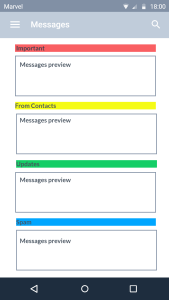
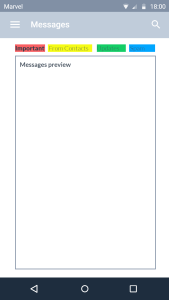
With Android rolling out RCS (Rich Communication Services) messages, I thought I can share a suggestion to organise the messages in a better way so that we don’t miss out any messages that are important. Besides, too many spam messages are annoying, which keeps me away from opening the messages app and there certainly should be an option to filter these spam messages. Google has implemented tabbed messages in Gmail and thought why not we have a similar option for the messages too with four tabs. The first tab can be for Important alert messages like bank alerts, ATM withdrawal alerts, credit card spending, OTPs, stock market trade details, online wallet transfers and purchase receipts …etc. The second tab can be for the messages From Contacts. All other messages which might not be important and might not be spam too can be in the third tab, Updates. The marketing and spam messages in the fourth tab, Spam.
Below are a few layout suggestions to organise and display the messages. They are the candidates to experiment and understand which serves the users best and which the users love. The layout can have grid, list and tab views to display the messages. This UI presentation makes the messages to be organized and well presented. More importantly, it helps in noticing important messages and making decisions quickly, which is missing today in the messaging app. The time to act upon a required message will be less here when compared to the current message inbox. Apart from the layouts suggested, it would also be helpful if the user has feature to sort unread messages, follow-up messages and add reminders to the messages. All these improvements can eventually make the experience of using the messaging app much better.
Thanks to Pari & Ravi for reviewing the draft and the feedback 🙂
Addendum:
These days, after shopping at stores, very few people save the physical receipts, which would be used in case of exchanges, warranty or for any other tracking purpose. It would be of great help if the messages app also has options to categorize and store receipts, that are sent as messages after billing through POS machines. Additionally, these receipts can also be useful to redeem loyalty points. Gradually, shops can eliminate the necessity to issue physical copy of receipts. If the Messages app can summarize all the spends for a month or year that would be an added delight, which would help us manage budgets.
Also, I m interested to have Google pay integration with Messages. If I receive my monthly notification for credit card payment or phone bills, I should be allowed to pay directly from the Messages app.
The newly elected government in India has just assumed office and here is a common man’s wish list for good governance.
A website with information on various government services – A lot many people find it difficult to figure out how they or their family can avail various government services or schemes. It would be better, if the government can create a website like howto.gov.in and posts instructions either as text or videos in English and other prominent Indian languages, on how someone can apply for a birth certificate, new gas connection, enrol a family member for Aadhaar, open a new bank account, apply for health or life insurance, submit grievances to government offices…etc. With almost everyone having a mobile phone, these instructions should be sharable so that many people can be made aware of the various procedures.
People help desk at government offices, run by private agencies – When I had to apply for a passport in 2006, after I graduated from college, I had no clue on how to do it. I was told, I need to go to the collectorate and apply for it. I was anxious, as getting it done in a government office is not an easy task without bribing people. However, I noticed something good that time. I was told, there is a helpdesk and upon paying Rs. 40 service charge, they would prepare my passport application and inform me what all needs to be done. I paid just Rs. 40 service charge and they took care of everything and finally provided me an acknowledgement slip. Creating such help desks in all government offices and setting time frames for every application like birth/death certificate or any other official documents would help the public to a great extend besides reducing corruption.
To improve transparency in government tendering process, the government should publish all tenders online on a website like tenders.gov.in
To increase transparency and reduce corruption, various government departments can voluntarily submit the statement of accounts online for which the government can commission a website like fundsandspends.gov.in
To track and audit donations made to government and non-governmental organisations, the government can create and maintain a public repository, donations.gov.in, where all the donations made and how it was used are reported and maintained, and can be under the watch of the government auditors.
Increasing transparency in hospitals – Some hospitals and doctors take patients for a ride, taking advantage of critical situations. Make hospitals, nursing homes and clinics display the charges levied for various procedures and all the cost of consumables used during treatment, at the lobby, prominently visible to patients and also on the hospital’s website, online.
Exercise India – Poor health cost people peace of mind, besides making them financially poor. Like how the government launched Swachh Bharat Mission or promoted Yoga, the government should also launch campaigns urging people to exercise daily or at least go for a brisk walk for 20 minutes every day, which would make them people healthy and happy. Besides, the government can also fund building walking tracks for every locality in the towns and cities.
Of late youngsters are losing motivation to join the armed forces. Sainik Schools are considered to be feeder institution to the armed forces. Sainik Schools can be further improved to attract talented youngsters, and also students from economically weaker sections of the society, by means of scholarships. To enable this, it would be ideal to bring all the Sainik Schools under the full purview of the ministry of defence and provide full scholarships for 50% of the students from the rural and economically weaker sections of the society, in each Sainik School, from the budget allocated to the armed forces. On my alma mater’s (Sainik School Amaravathi Nagar) website, I see that the full fee per year per student comes to around Rs. 1,55,000/-. Each Sainik School has a strength of around 600 and there are around 25 Sainik Schools across India. So the cost to the government per year would be approx. Rs. 233 crore to cover for the entire students or Rs. 117 crore for 50% of the students, which is much less than 0.1 % of the budget allocated to the armed forces in India.
Renaming of airports and railway stations – While some airports and railway stations are named after the city or town they are located in, a few are named after political personalities. For ease of use and to remove biases, let the emphasis of naming the airports and railway stations be on the location or the city rather than personalities. A good precedent is the renaming of all the districts and transport corporations in Tamil Nadu in the year 1997.
The government had earlier mooted the idea of ‘One Nation, One Election’. However, in the event of not conducting one common election every five years, the government can look at one election every year for all the states scheduled for election in that year, to be held during the summer holidays.
One elected representative per family – If someone wants to contest election, his/her direct blood relatives i.e parents, spouse, children or siblings should not be an elected representative. Let there be policies which prevents more than one MP or MLA from the same family. India might be a democratic country and everyone might have the freedom to contest elections. However, people take undue advantage and this only leads to family politics. Also with a population of 130 crore, there should be no dearth of good people to contest elections.
Digitise all police stations across the country and build a robust Case Management System that is integrated with various investigative agencies. Below is a suggestion for a Case Management System specific to Child Protection:
Need for more smaller states – Currently, many Indian states in terms of landmass or population are larger than many countries in the world. Create more smaller states in India, which in turn would bring the government closer to people and make administration more efficient.
This year we will be celebrating the 150th birth anniversary of Mahatma Gandhi, who stood for non-violence and suggest we celebrate by focusing on one issue, that is, bullying at school, which when addressed will help bring up kind and polite students, who will go on to be good citizens and in turn build a better society around them.
This year we will be celebrating the 150th birth anniversary of Mahatma Gandhi, who stood for non-violence and suggest we celebrate by focusing on one issue, that is, bullying at school, which when addressed will help bring up kind and polite students, who will go on to be good citizens and in turn build a better society around them.
Bullying in school is a significant problem worldwide and is one of the most common antisocial behaviors among children. It is a public health problem and can threaten students’ physical and mental wellbeing at school and can negatively impact their ability to learn.
The victims, in the short term, may feel depressed, anxious, angry, have sleep disturbance, excessive stress and nightmares, have a significant drop in school performance, or may commit suicide. The consequences include missing classes, avoiding school activities, playing truant or dropping out of school altogether. This in turn has an adverse impact on academic achievement, future education and employment prospects. Being bullied is also linked to a heightened risk of eating disorders and social and relationship difficulties.
In the long term, they may feel insecure, lack trust, develop a mental illness or develop further health challenges. They may also desire vengeance, sometimes leading them to torment others in return. Involvement in school bullying can be a predictor of future antisocial and criminal behaviour and both bullies and their victims can later fall prey to alcohol, substance abuse and violent behaviour.
The best way to address bullying is to stop it before it starts. Training the staffs of schools and educating students to prevent and address bullying can help sustain bullying prevention efforts over time. Governments should advice schools to implement comprehensive bullying prevention programs and help in developing and enforcing curriculum that is culturally responsive and sensitive to all. Governments along with NGOs can produce educational programs, class lessons, videos, anti-bullying posters and educate students, teachers and parents on the effects of bullying and pave way for a peaceful co-existence. Governments and schools should also help students to connect better by helping them develop skills in conflict resolution, problem solving, negotiations, listening, communication, and decision making. As a society, we should teach children kindness and empathy and help them build understanding of those around them.
“In a gentle way, you can shake the world.” – Mahatma Gandhi
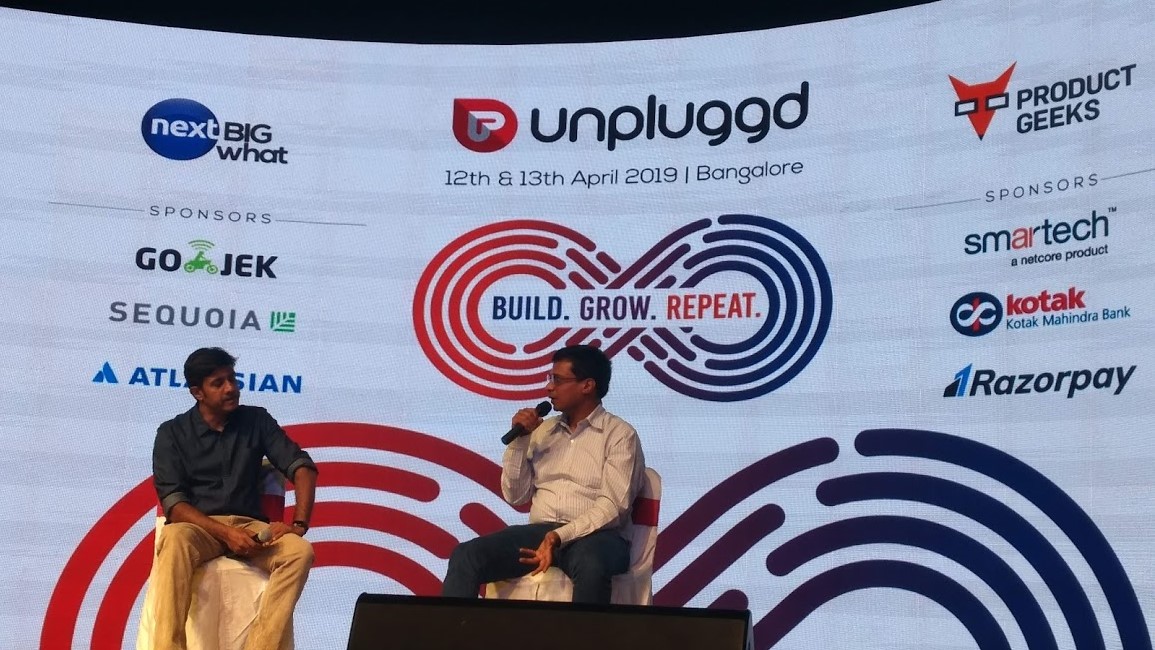
It was insightful to be at the Unpluggd 2019. With my experience during the previous editions, I was confident that the Unpluggd team would pick up speakers with great quality and they didn’t let me down. Below are the notes I made:
Sachin Bansal (Founder of Flipkart) had a chat on building Flipkart, Thinking Big and Next India Opportunities. He said growth hack for the first 1000 customers at Flipkart, when social networking was just picking up was SEO and word of mouth. They gave ESOPs to people which they didn’t appreciate that moment but only later when it grew in value. He said he learnt management skills as he built Flipkart, learnt from mistakes and moved on. Cash on delivery, returns were easy because Flipkart had its own logistics.
When asked on what the other Indian competition missed, he said, they could have built better tech. He also said that technology changes break monopolies.
In his opinion, spaces which has opportunity for technology to transform are grocery, healthcare, education, and electric transportation. When asked, what Sachin looks for while evaluating an opportunity, he said: market size, is the market available for disruption, people and their commitment. He advised to think big to build a big business, build a great team, keep the bar high and create trust.
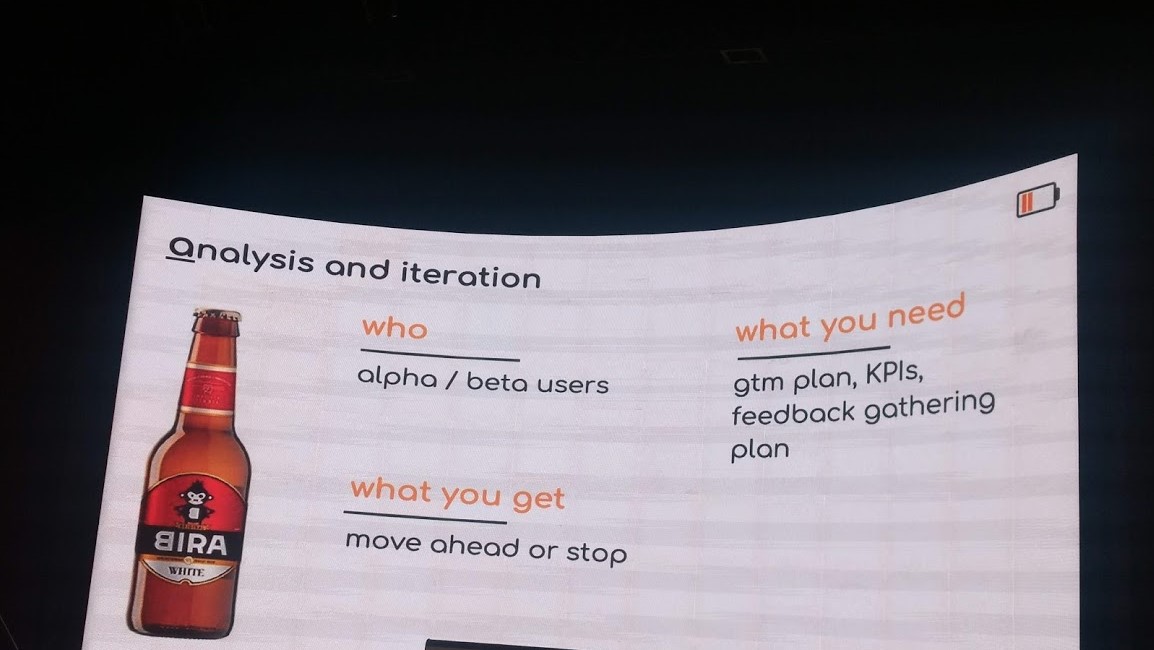
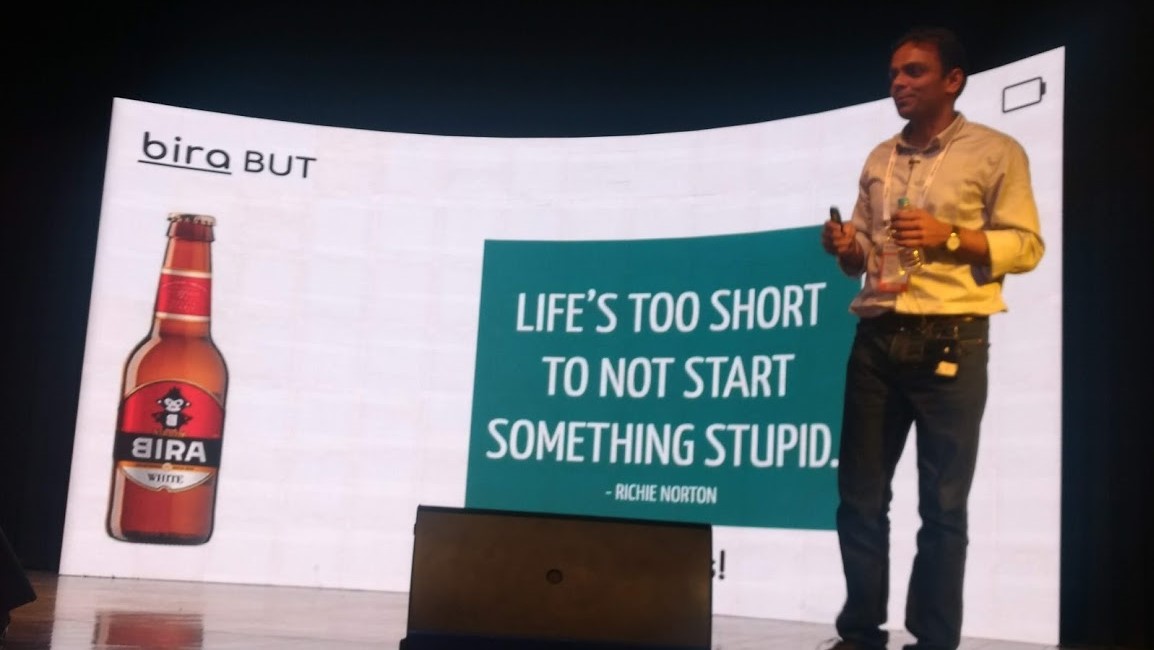
Praful Poddar’s (Head of Product, Olx) talk was very appealing. He spoke on how to fail fast, early and cheap and gave the BIRA mnemonic for product experiments.
Kunal Shah(Founder of CRED & Freecharge) in an AMA session gave some great insights:
95% of credit cards or car loans are by men
Only 5% of credit card users have enabled auto debit enabled
Only 12% of women in India are part of the workforce
Instead of fail fast, research and plan well
Easiest way to know product market fit is the measure of organic growth
People want to pay for content if they are short of time, which is not the case is here. Ex. when Tiktok and pubg are being banned means people are doing nothing all day
In India people have the tendency to give sugar coated feedback.
People who understand applause or crowd empathy, training pets are good at product management
Any product that is of high value and infrequent purchase needs high trust building
In India people buy education like insurance
Nobody enjoys fueling the car or working out but enjoying vacations or playing with kids
Boring transactions to interesting transactions
Countries with multiple ethnicity have trust problem
Education, dating have a premium scope, where Indians can spend money.
There is not a great platform for investing in fixed deposits, which Indians love
Apartments, apparels have foreign names because we trust less of Indian
Most customers didn’t know the interest charges on their credit cards
Anuj Rathi (VP, Products at Swiggy) while speaking oneffortless prioritization and how to focus on what really matters, gave the below framework:
Focus on customers 50%
Focus on competition 10%
Focus on economics 20%
Focus on future 20%
He also advised on how to prioritize using ICE- Impact, Confidence, Effort.
Anshuman Bapnaa (Chief Product Officer, Goibibo at MakeMyTrip Group) while talking on Scaling Products beyond product-market fit phase said Alignment eats strategy. You want autonomy. You earn that through alignment. How do our partners, customers feel about what we are doing. goCash, a wallet which earned when you upload your address book and you earned money when your friend travelled is an example of alignment.
Choose the right metric and then obsess about reporting it.
Set up autonomous, x-collab teams & give them missions
Overlap missions so teams reinforce each other
Finally, create an alignment rhythm that works for you.
Aakash Dharmadhikari (Director Products, GOJEK) spoke on takeaways from 100x growth and the challenges for that are growing team sizes, complex market dynamics, broken communication, and frequent misalignments. He also said lean works, even at a unicorn and told to treat your company as product, and internal stakeholders as customers. He also stressed on the importance of everyone sharing the big picture, transparency around prioritization for which dashboards and showcases for teams helped. He advised to use OKRs.
Rahul Malik (Head of Product, Atlassian, Bengaluru) said, we should learn to set up OKRs (Objectives and Key Results) in your company. Clearly articulate company strategy, communicate. There should be a sense of belonging in team.
David Zabowski (VP of Engineering, NerdWallet) on going from0 to 1, 1 to N. The 4 stages of 0 to N
Finding initial product market fit
Scaling the discovered product
Expanding to adjacent product areas: 1 to N
Scaling, iteration and leverage
Ranjeet Pratap Singh (CEO & Cofounder, Pratilipi) born in a small village in UP, looked inspirational.
Ashish Sinha (Founder of Nextbigwhat) spoke on 7 Sins of Product Managers
Lust – strong desires. Obsessed with PR, cool tech no one is using, desire to be seen as disruptive business.
Gluttony – over consumption of anything to the point of waste. More features, more options, more options. Reverse example- Why Netflix does not have short films.
Greed–
Sloth-stay in the comfortable a/c office and build what you think is right, without talking to the customers.
Wrath-when launch fails, blame game.
Envy-too obsessed with competition. Competition driven. Reactive.
Pride-too obsessed with self.
To be a good product manager, one should have business and analytical skills, customer understanding, influencing skills and the ability to criticize your own ideas.
Arvind Pani (CEO, Reverie) which was acquired by Jio said, not every startup needs to aspire for billion dollar valuations.
Vivek (Cofounder of BOUNCE) was full of confidence when he spoke on finding Product-Market Fit in a Brand New Category. He said behavioral shaping is happening in India and shared mobility will pickup.
Anandamoy Roychowdhary (Director – Technology, Sequoia Capital India Advisors) while speaking on how to hire and grow team as you scale said, look for passion and grit
Have been a regular reader of Yourstory and a fan of it flagship event TechSparks. This time wanted to witness and learn from mobile entrepreneurs and went in for the MobileSparks, also hosted by Yourstory. The theme of MobileSparks 2017 was “The New Billion”. Over here, I would predominantly be focussing on the session, “Building habit forming products” delivered by Pramod Jajoo, CTO of Big Basket. Here is what he had to say on the 7 principles to follow:
1. Use user-centric design philosophy
UCD is a design process that focuses on user needs and requirements
Most commonly a four step process
Understand the user context
Develop user requirements
Design/develop
Evaluate
UCD heavily involves users in all design and evaluation phases
Examples of UCD at Big Basket
We tend to buy the same product over and over again – smart basket
Show available vouchers in the big basket voucher flow
Anti example of UCD
Online bus site missing the itenary details
An ecommerce site showing, you may like similar phones even after purchasing a phone only recently
2. Keep things simple
“Everything should be made as simple as possible, but not simpler” – Albert Einstein
WhatsApp signup is a good example
Remember, most users do not have an engineering or an MBA degree.
Keep user flows simple
Remove frictions
Contextual actions
Consistency in nomenclature
Use intuitive iconography and fonts
Quote and Forward icons in WhatsApp is quite confusing.
3. Imbibe data orientation
Make “data actionable”
Measure everything
Draw insights from the data
Take corrective actions based on what the data tells you
Make application smarter with smarter notification, personalisation…etc.
Few example of internal analysis
Cohort analysis
Scores of NPS, CSAT, CES (Customer Effort Score)
Experiments
For any non trivial changes, experiment and measure.
Have a representative sample for different experiments
Have a baseline or control group
4. Optimize performance and non-happy flows
Performance makes a huge difference in user experience and adoption
Google found that and extra .5 seconds in search page generation time dropped traffic by 20%
Make user actions responsive and (instant if possible)
Take action first and then send to server in async mode
Tweak the flow to design for performance
Image compression, prefetch, HTTP 2…etc.
5. Go beyond metros and English speaking audience
Mobile first (or may even be mobile only)
Mobile web is super critical. Progressive Web Apps.
Natural Language Processing and voice would play a huge role
Vernacular support
6. Tailor solutions for cost/value conscious users
Most Indians are cost/value conscious
If you are competing on price, then benchmark prices regularly.
You need to win on price perception and not just on price.
Communicate on the value proposition
Look at “cashbacks” as repeat purchase incentives. But keep it simple.
Win the trust
Explain value propositions clearly
Explain the rationale for fees (and do not make them hidden).
Provide value – lower cost should not mean “cheap or shoddy”.
7. Behavioral science and psychology
Lots of techniques for creating an emotional connect, effective storytelling, satisfying an itch and designing habit forming rewards. Understanding this well can have a profound effect on product success. A few techniques,
Nudge
Made popular by 2017 Nobel Prize winner for Economics – Richard Thaler
“A nudge, as we will use the term, is any aspect of the choice architecture that alters people’s behavior in a predictable way without forbidding any options or significantly changing their economic incentives. To count as a mere nudge, the intervention must be easy and cheap to avoid. Nudges are not mandates. Putting fruit at eye level counts as a nudge. Banning junk food does not.”
Example of Nudges at Big Basket:
On the basket page of the first time users without fruits and vegetables in the basket; to nudge the customer to buys F&V, we could say “More than 90% of our customers purchase fruits and vegetables. Great quality. Sourced and packed for freshness.
On the basket page, to nudge the user to qualify for the next offer, “Shop for Rs. 220 more and avail 10% off.”
Paradox of choice
Abundance of choice paralyses the user.
User’s attention is fickle and user’s time is precious.
Make smart defaults for the user.
Bundle options whenever possible.
Limit choices based on personalisation.
Smart recommendations. Ex. Facebook’s smart feed.
Less is more.
Decoy effect (cognitive bias)
One of the many cognitive biases that most humans have. Lets look at an example of decoy effect. Say, we as a seller can afford to give 20% on bulk purchases of a product. Option1; Buy 1 at Rs. 100. Option 2: Buy 5 at Rs. 400(20% off).
Just by adding a decoy choice makes customer choose our option much more. Option1; Buy 1 at Rs. 100. Option 2[Preferred choice]: Buy 5 at Rs. 400(20% off). Option3[Decoy]: Buy 4 at Rs. 380(5% off)
“The decoy effect (or attraction effect or asymmetric dominance effect) is the phenomenon whereby consumers will tend to have a specific change in preference between two options when also presented with a third option that is asymmetrically dominated.” -Wikipedia
He also advised not to overuse this.
Here are the book recommendations by Pramod:
Design of everyday things by Don Norman
Predictably irrational by Dan Ariely
Nudge by Richard Thaler and Cass Sunstein
Hooked by Nir Eyal
Paradox of choice by Barry Schwartz
Sanket Atal, Group Vice President, Oracle while talking on rethinking mobile paradigms said the three fundamental things necessary for startups to thrive are an addressable market, talent and technology.
Jason Wang of SHAREit India while talking on the journey of scaling to 300 million users said,
Understand what is the opportunity, what are the users pain points.
Share it was designed for areas with poor connection but people looking for entertainment.
The app should be super simple and super friendly.
Have people to answer questions 24/7.
Execution matters.
Focus organic growth and word of mouth.
Amit Somani, Managing Partner, Prime Venture Partners, while talking on How data can be used to understand the new billion users, and ways for startups to spot the multiple opportunities in India, quoted the below slide:
Special mentions to Arun Babu ASP from Uber India, for making his talk more lively.
A fat wallet is terrible looking. It gives you that big bulge that’s just ugly. The smartphone can lighten up a heavy wallet. We’ve seen mobile phones displace cameras, music players, books, credit cards and a lot many and we can also digitize stuffs in the wallet like business cards, receipts, ID cards, loyalty cards …etc. Here is yet another suggestion from the Google fanboy on digitizing business cards and eliminating them from your wallet.
Digitizing physical business cards
Business cards help us share contact details and make use of it over a long term for mutual benefit. It is pretty much a necessity for networking. But how do you deal with a bunch of 100+ business cards when you return from a conference or trade show. Stuffing the cards inside the wallet or maintaining a box of cards or a rolodex is burdensome, occupies physical space and cannot be carried with us wherever we go. I propose a solution wherein, Google, which also has apps like Google Goggles and PhotoScan, should come up with a mechanism to integrate business cards with contacts by provisioning users to scan business cards using the phone’s camera, transcribe what is written on the card and save or merge it to contacts. From the digitized card, the user should be able to contact them via call, e-mail, SMS, or add them on LinkedIn.
Once the user captures the business card on the contacts screen, it should display the image of the scanned business card followed by the below fields, which should be fetched from the transcribed text on the card and the user should be allowed to edit/enter the missing information manually.
Title
Name
Job Title
Company Information
Address
Phone – with options to add multiple phone numbers
Email – with option to add multiple email addresses
Website – with options to add multiple URLs
Blog
Birthday
Social Media – (LinkedIn, Google+, Facebook, Twitter, Skype, Others)
Label/Category
Option to add a note like how and when they met
In some cases, business cards are printed on both the side and hence there should be an option to capture the rear of the card too, which should be displayed at the bottom. When the user taps on a saved card, an expanded view of the card should be displayed with the front image of the card on top, followed by the details, followed by the rear image of the card.
Design, store and send electronic business cards to other mobiles
Your business cards are something that you may need, especially if you are in a profession that needs to build contacts. Handing out your card is a much useful way of making new contacts and it should be just a swipe or flick away with your mobile device. Converting business cards as digital entities and making them shareable peer to peer using NFC or any other wireless contact sharing would save a lots of physical space and also a few trees. The user should be allowed to capture and save his/her own card or create a customised card, which can be shared over phone to phone wireless sharing or over email.
My card section on top should show the captured image of the business card along with the editable contact details below,
Title
Name
Job Title
Company Information
Address
Phone – with options to add multiple phone numbers
Email – with option to add multiple email addresses
Website – with options to add multiple URLs
Blog
Birthday
Social Media – (LinkedIn, Google+, Facebook, Twitter, Skype, Others)
Alternatively, if the user wishes to create/design his/her card rather than scanning it, the user should be provided with a create option in the My Card section. Upon clicking create, the user should be displayed a form to fill in the above contact details along with option to upload the company logo under company information. Once the user completes entering the details the next screen should prompt to select from a few available templates of business card. In order not to confuse the user too much and to keep the creation process simple, only limited templates should be provided with options of background colour limited to White, Grey and Blue and prefixed text colours complementary to that of the background. The text font should initially be limited to only one, which looks professional and pleasing. Once the user selects the template, a preview of the user’s card should be displayed with options to finalize the card or to go back and change the template or edit the details. The finalized card should be displayed in the My Card section of the business cards tab in the contacts screen, with options to share wirelessly to others.
Mock-up of Contacts screen with an additional tab for Business Cards. (Designed using Marvel)
Improving safety on the roads helps road users, prevents accidents and saves lives. It secures people while traveling on the roads. Improving and maintaining the road infrastructure can ensure on its part, safety on roads and give a great travel experience.
Impediments on roads such as potholes, unmarked speed breakers, unmarked road turns, fallen signages, malfunctioning signal…etc can cause drivers to lose control over their vehicles and cause accidents. Such accidents can be prevented to a significant degree, if there are proper caution signs/marks and when the roads are properly maintained. However it is difficult for the civic agencies to monitor all the roads for maintenance issues . My suggestion would be to crowd source these to bring it to the notice of civic agencies using Google maps. Civic agencies should tie up with Google maps, where Google maps provides an option for the users to earmark locations where there are potholes, unmarked speed breakers and unmarked turns on roads. These markers done on Google maps can be seconded as authentic issues by subsequent users who pass through the same locations. Upon taking confirmation from a few users, Google maps should send notification to the civic authorities, who can in turn address the issue. Such notifications can also be utilised to point out broken/leaking public water pipes, damaged electric poles, unsafe electric cables lying on the roads, or anything which compromises the safety of the road users and which needs to be addressed.
For this purpose, Google maps should place an option on the map screen, to report a maintenance issue, by marking the location, adding specific details and upon submitting, a notification should be sent to the civic agencies.