TED Talks I liked

A few years back, when I was preparing to give an internal company talk, my then boss suggested, I listen to a few TED Talks and improve my presentation skills. I had never heard about TED Talks before that. Over time, I developed a habit of watching at least one TED Talk per week and enjoy watching these talks and taking notes for personal reference. Based on my interest, the content, the enthusiasm of the speaker and the presentation styles, I have created my watch list and am delighted to share it here. 

The Danger of a Single Story – Chimamanda Ngozi Adichie

What Makes a Good Life. Lessons from the Longest Study on Happiness – Robert Waldinger

The Danger of Science Denial – Michael Specter

Why You Should Make Useless Things – Simone Giertz

The Happy Secret to Better Work – Shawn Achor

Your Body Language May Shape Who You Are – Amy Cuddy

Inside the Mind of a Master Procrastinator – Tim Urban

Less Stuff, More Happiness – Graham Hill

How to Get Your Brain to Focus – Chris Bailey

The Best Stats You’ve Ever Seen – Hans Rosling

The History of Our World in 18 Minutes – David Christian

The Power of Introverts – Susan Cain

How Great Leaders Inspire Action – Simon Sinek

How a Single Voice in Your Head Can Save Your Life –  Sabina Nawaz

How to Speak So That People Want To Listen – Julian Treasure

The Puzzle of Motivation – Dan Pink

How to Make Stress Your Friend – Kelly McGonigal

Where Joy Hides and How to Find It – Ingrid Fetell Lee 

How I Made Friends With Reality – Emily Levine

A kinder, gentler philosophy of success  – Alain de Botton

Why We All Need to Practice Emotional First Aid – Guy Winch

There’s More to Life Than Being Happy – Emily Esfahani Smith

The Art of Saying No – Kenny Nguyen

My Stroke of Insight – Jill Bolte Taylor

Strange Answers to the Psychopath Test – Jon Ronson

How to Be Happy Every Day: It Will Change the World – Jacqueline Way 

How to Achieve Your Most Ambitious Goals – Stephen Duneier

My Journey in Design – John Maeda

Happiness and its surprises – Nancy Etcoff

What Really Motivates People to be Honest in Business – Alexander Wagner

PS: Browse the Playlists on TED
TED encourages sharing the talks, under Creative Commons license. Please refer TED Talks Usage Policy

Addendum:

The Single Biggest Reason Why Start-ups Succeed – Bill Gross

How to run meetings effectively

I have been reading on how to run meetings effectively and be considerate of others time. Here is a compilation from what I learnt. Studies indicate that we spend anywhere from 35%–55% of our time, and sometimes much more, in meetings. Of the approximately 11 million meetings that take place every day in the US, a third are unproductive. It comes at a cost. An estimated $37 billion is lost every year to unproductive meetings, in the US alone. 

Successful executives like Jeff Bezos, Elon Musk, and Steve Jobs developed their own techniques to combat bad meetings and here’s how Steve Jobs did it:

  1. At Apple, any meeting should have a clear agenda. (Also, it is good to be clear of the venue and the time)
  2. He kept meetings as small as possible. To Steve Jobs, the core idea of an effective meeting is for it not to be crowded.
  3. He made sure someone was responsible for each item on the agenda. He called that person, Directly Responsible Individual or DRI. The DRI would own the task, facilitate discussion around the agenda item and often manage post-meeting actions about it. (Research shows that clearly and publicly attaching a name to a task fosters accountability. This, in turn, increases follow-through)
  4. Conclude agenda topics with actions or next steps. Each action item will have a DRI and the deadline or time to complete.

Virgin Group founder Richard Branson insists everyone stands in meetings. If you’re standing, you’re not going to chitchat for too long, and you’re not going to have long, drawn-out conversations. 

Agile teams have standup meetings, timeboxed between 5 to 15 mins, with participants standing up to remind people to keep the meeting short and to-the-point and usually take place at the same time and place every working day, with the simple 3 point agenda: 

  1. What I did yesterday?
  2. What will I do today?
  3. Am I facing any challenges in accomplishing my sprint goals?

Now, let’s see how to create the Perfect Meeting Agenda. Consider creating it as a set of questions to be addressed:

  • Instead of a topic titled “Budget Problems,” consider a question such as, “How will we reduce our spending by 100K by the end of the fiscal year”?
  • Instead of a topic titled, “Customer Process Improvement,” consider a question like, “What are the key ways of improving overall response time to customers by 25%?”
  • Instead of a topic titled “Leader Succession,” try changing it to “Where are we vulnerable from a leadership turnover perspective and how might we address these vulnerabilities?”
  • Instead of a topic titled “Continuing Our Strategic Planning,” try changing it to what exactly will be worked on in the meeting such as, “What is the key market threat we need to be aware of, how could it affect us, and what can we do about it?”
  • Instead of a topic titled, “Miscellaneous Updates,” try changing it to “What key pieces of information do each of you have to share or need from one another?”

A question-and-answer approach makes it easier to determine your invitation list, for one: it’s the people essential to answering the questions. This approach also better informs when to actually end a meeting — when the questions have been answered to satisfaction.

  • Design questions that are specific and challenging.
  • Collaborate to identify questions that truly matter.
  • Privilege the most important questions first.
  • Execute on the agenda.

And remember: if you can’t think of any questions to be answered in a meeting, that may be your sign that a meeting is simply not needed. Give back the gift of time to would-be attendees. They will thank you.

Let’s also see a few Meeting Mistakes:

  • You don’t have a strong agenda.
  • You invite too many people. Amazon’s Jeff Bezos follows the Two Pizza Rule: No meeting should have more people than can be fed with a pair of pepperoni pies. This not only allows for quicker decisions, it also lets teams test their ideas without the interference of groupthink
  • You don’t have a facilitator.
  • You don’t establish and follow ground rules.
  • Not starting a meeting on time. A whopping 37% of meetings start late, mostly because someone attending it was late
  • You listen to the loudmouth, rather than the expert.
  • You use your phone.
  • You drink too much coffee or eat during the meeting.
  • You indulge in small talk. (Leave the small talk for the water cooler.)

Term of the post: meetingitis –  An excessive tendency to hold unnecessary meetings.

To summarise: 

Effective Meeting = Agenda + Action Items + Responsible Individual + Timeline

Addendum: During a Lean Coffee meeting at office, we discussed on how to stop small talks during meetings and save time.

  • Start the meeting on time and not wait for latecomers.
  • The organizer can strictly stick to the meeting agenda.
  • The meeting rooms shall have printed notices saying “Please keep the casual conversations at water cooler points or at cafeteria” and also some stats on the time and money wasted by unnecessary meetings, so that the participants are conscious.
  • If the agenda items are discussed, close the meeting and give participants their valuable time back.

Note taking – a productivity hack

A pen and a notebook have been a great productivity tool for me. I take notes and ToDos. I write down deadlines and important dates. When a ToDo item is Done, I strike it off, so as to keep track of what is pending. For taking notes, I prefer to use a spiral sketchbook that is turned over by the side rather than a notepad that is turned over at the top. Why note taking has been a crucial skill for me as a tester. I take notes,

  • About an application under test
  • During requirement discussions
  • During testing, making notes of issues
  • For test idea generation
  • To keep track of the queries
  • To keep track of the issues
  • To keep track of the deliverables, deadlines and it’s status
  • To remember important points during calls and conferences
  • To note down ideas or suggestions …etc.

The benefits of note taking:

  • “Note taking isn’t just about recording information. Effective note taking is thinking on paper.” – Nicole Liem Yang of Show Me the Notes
  • Not only do good notes help us recall facts and ideas, there’s good evidence that the act of writing things down helps many of us to remember them better.
  • By jotting down what you need to remember later, you can then turn your focus on what you’re hearing or reading. You will have room to ask follow up questions or clarifications
  • Notes help us to prioritize the important. 
  • Notes help to eliminate the communication gap.

We have smartphones and laptops. Then why use notebooks?

  • You have a significantly higher chance of achieving your goals if you write them down. This is likely why vision boards or lean visual controls have become popular. 
  • We can always have that handy and in sight, thus reminding us of our priorities.

A few tips on note taking:

  • Keep it short. Yet, it should be clear so that you understand when you refer to it next time.
  • Don’t write down every single word.
  • Focus on important points.
  • Use abbreviations or short-hand writing.
  • Forget spelling and grammar.

Here are a few note taking methods

  • Cornell Style of Note Taking
  • The Outlining Method
  • Mind Mapping

One of the greatest note-takers was Leonardo Da Vinci, whose notes (Codex Leicester) were bought by Bill Gates for over $30 million and are exhibited today to the public.

References: 

https://en.wikipedia.org/wiki/Note-taking

Taking Notes: The Secret to Getting Better Results in Life

Note-taking as a Skill for Testers

https://www.lifehack.org/articles/featured/writing-and-remembering-why-we-remember-what-we-write.html

https://www.lifehack.org/articles/featured/advice-for-students-taking-notes-that-work.html

https://txm.com/5-types-of-visual-controls/

How to telecommute / work from home effectively?

What is telecommuting?

Telecommuting, also called working from home, remote work, telework, or teleworking, is a work arrangement in which employees do not commute or travel to a central place of work, such as an office building, warehouse or store and work from home, coffee shop or a place of their choice. Below listed are a few points to help you telecommute / work from home effectively:

  • Take pride in your work.
  • Start early – you can get a lot done with a fresh mind.
  • At the home office, no one’s watching. You are responsible for what you do.
  • Communicate expectations with anyone who will be at home with you so that they don’t distract/disturb you.
  • Pretend like you are going to office. Don’t stay in the nightdress/pyjamas. Structure your day like you would do in office. This helps you to be focused and productive.
  • Choose a dedicated workspace – Setting your work space apart from your home space allows you to better delineate the two, and lets your brain know when it needs to be in work mode or home mode.
  • Set goals for the day, create a To-Do list and commit to doing things. Using a simple notepad and pen works better. Write down and strike off as you finish a task.
  • Set deadlines for tasks.
  • Work in Sprints – to allow yourself dedicated time to a task at hand, work in sprints of no more than an hour at a time before you take a break. This way, your main task gets your entire focus for the allotted time, and then you can take a break for a few minutes to recharge.
  • Save calls for the afternoon.
  • Use technology smartly, to stay connected. (Ex. Skype, Slack, Hangout, Microsoft Teams)
  • Communicate Deliberately. Remote workers have to be better at communication than their office brethren.
  • Communicate well and often. Check in with co-workers and the boss several times a day.
  • Find the team’s golden hour – it makes sense to find the time when the majority of the team is available, so that you can schedule daily standup or all-hands meetings or other important events during that time.
  • Be virtually present in meetings.
  • Every 1 hour, take short and clear breaks. Get up and get outside to the balcony, for a while. Coffee breaks and lunch allow for some respite and time away from the desk and screen.
  • Follow the 20/20/20 rule – look away from the screen, every 20 mins, to something 20 feet away, for 20 secs.
  • Don’t go to non-work appointments in the middle of the day.
  • Make it harder for yourself to mess around on social media and TV. Resist the impulse.
  • Resist the urge to snack often.
  • Set office hours. Pick a definitive start and finishing time each day.
  • Have a shutdown ritual – this could be anything, from writing up what you did during the day and planning what you want to achieve tomorrow.
  • Do not forget to update the status for the day with the team and the manager.
  • Follow a routine – waking up, exercise, breakfast, logging in to work, lunch, logging out of work, evening family time, dinner, sleep. Routines help you to be organised.
  • As a manager,
    • Be proactive. Reach out to your team members regularly to set clear goals and expectations, offer support and assistance, and show you care about them as people, not just employees
    • Provide the right tools for the employees
    • Communicate clearly
    • Set clear expectations
    • Track progress
    • Be transparent
  • Remember to stay healthy,
    • Exercise regularly
    • Clean home creates a positive environment and helps focus.
    • Drink plenty of water
    • Eat healthy
    • Maintain proper hygiene
    • Get some fresh air, take a few deep breaths
    • Maintain a good posture
    • Take short breaks, quick walks, and do a few stretches
    • Put aside your devices at night
    • Have enough sleep at night and feel sufficiently rested

Every remote worker can have their own version of this list that helps them work to their full potential and be 100% productive for their team.

PS: I had compiled and shared this with my team 2 years back, when we had to work from home for a few days. Sorry that I do not remember the exact links or the sites, to provide reference here. Re-sharing it now for the benefit of all those who are privileged to have an option of working from home.

Enhancing the Messages app for a better User Experience

One morning around 6.30 am, my phone beeped upon receiving an SMS. Usually, I get my office cab details in SMS around the same time every day and thought it might be the same. When I took the phone to check the message, I was shocked to see that someone abroad had used my credit card to transact around 900 GBP. My sleep went off in the shock and I immediately dialled my bank to notify that the transaction was not done by me. 

Of late, we have started receiving lots of spam and marketing messages/SMS on mobile. We receive transaction alerts from banks as SMS. It happens, we fail to notice these alerts as they get buried with the rest of the other spam messages in the Inbox. In case, any unauthorised transaction has been made and if we fail to notice the banking alert SMS, it could prove costly.

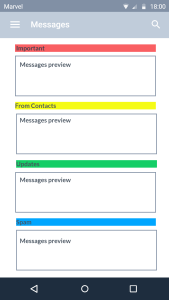
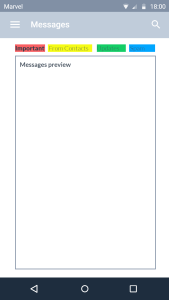
With Android rolling out RCS (Rich Communication Services) messages, I thought I can share a suggestion to organise the messages in a better way so that we don’t miss out any messages that are important. Besides, too many spam messages are annoying, which keeps me away from opening the messages app and there certainly should be an option to filter these spam messages. Google has implemented tabbed messages in Gmail and thought why not we have a similar option for the messages too with four tabs. The first tab can be for Important alert messages like bank alerts, ATM withdrawal alerts, credit card spending, OTPs, stock market trade details, online wallet transfers and purchase receipts …etc. The second tab can be for the messages From Contacts. All other messages which might not be important and might not be spam too can be in the third tab, Updates. The marketing and spam messages in the fourth tab, Spam.

Below are a few layout suggestions to organise and display the messages. They are the candidates to experiment and understand which serves the users best and which the users love. The layout can have grid, list and tab views to display the messages. This UI presentation makes the messages to be organized and well presented. More importantly, it helps in noticing important messages and making decisions quickly, which is missing today in the messaging app. The time to act upon a required message will be less here when compared to the current message inbox.  Apart from the layouts suggested, it would also be helpful if the user has feature to sort unread messages, follow-up messages and add reminders to the messages. All these improvements can eventually make the experience of using the messaging app much better.  

Mock-up of grid view
(Designed using Marvel)
Mock-up of list view
(Designed using Marvel)
Mock-up of tab view
(Designed using Marvel)

References:

A Plan for Spamhttp://paulgraham.com/spam.html

Better Bayesian Filteringhttp://paulgraham.com/better.html

Filters that Fight Backhttp://paulgraham.com/ffb.html

Mobile UX Design: List View and Grid Viewhttps://uxplanet.org/mobile-ux-design-list-view-and-grid-view-8f129b56fd5b

Web Layout Best Practices: 12 Timeless UI Patterns Analyzedhttps://www.uxpin.com/studio/blog/web-layout-best-practices-12-timeless-ui-patterns-explained

Thanks to Pari & Ravi for reviewing the draft and the feedback 🙂

Addendum:

These days, after shopping at stores, very few people save the physical receipts, which would be used in case of exchanges, warranty or for any other tracking purpose. It would be of great help if the messages app also has options to categorize and store receipts, that are sent as messages after billing through POS machines. Additionally, these receipts can also be useful to redeem loyalty points. Gradually, shops can eliminate the necessity to issue physical copy of receipts. If the Messages app can summarize all the spends for a month or year that would be an added delight, which would help us manage budgets.

Also, I m interested to have Google pay integration with Messages. If I receive my monthly notification for credit card payment or phone bills, I should be allowed to pay directly from the Messages app.

A common man’s wish list for good governance

The newly elected government in India has just assumed office and here is a common man’s wish list for good governance.

A website with information on various government services – A lot many people find it difficult to figure out how they or their family can avail various government services or schemes. It would be better, if the government can create a website like howto.gov.in and posts instructions either as text or videos in English and other prominent Indian languages, on how someone can apply for a birth certificate, new gas connection, enrol a family member for Aadhaar, open a new bank account, apply for health or life insurance, submit grievances to government offices…etc. With almost everyone having a mobile phone, these instructions should be sharable so that many people can be made aware of the various procedures.

Reference: https://ashokprabhu.com/2013/03/30/creating-a-better-nation-with-well-informed-citizens/

People help desk at government offices, run by private agencies – When I had to apply for a passport in 2006, after I graduated from college, I had no clue on how to do it. I was told, I need to go to the collectorate and apply for it. I was anxious, as getting it done in a government office is not an easy task without bribing people. However, I noticed something good that time. I was told, there is a helpdesk and upon paying Rs. 40 service charge, they would prepare my passport application and inform me what all needs to be done. I paid just Rs. 40 service charge and they took care of everything and finally provided me an acknowledgement slip. Creating such help desks in all government offices and setting time frames for every application like birth/death certificate or any other official documents would help the public to a great extend besides reducing corruption.

To improve transparency in government tendering process, the government should publish all tenders online on a website like tenders.gov.in

To increase transparency and reduce corruption, various government departments can voluntarily submit the statement of accounts online for which the government can commission a website like fundsandspends.gov.in

To track and audit donations made to government and non-governmental organisations, the government can create and maintain a public repository, donations.gov.in, where all the donations made and how it was used are reported and maintained, and can be under the watch of the government auditors.

Reference:https://ashokprabhu.com/2013/03/30/tracking-and-auditing-donations-made-to-government-and-non-governmental-organisations/

Increasing transparency in hospitals – Some hospitals and doctors take patients for a ride, taking advantage of critical situations. Make hospitals, nursing homes and clinics display the charges levied for various procedures and all the cost of consumables used during treatment, at the lobby, prominently visible to patients and also on the hospital’s website, online.

Exercise India – Poor health cost people peace of mind, besides making them financially poor. Like how the government launched Swachh Bharat Mission or promoted Yoga, the government should also launch campaigns urging people to exercise daily or at least go for a brisk walk for 20 minutes every day, which would make them people healthy and happy. Besides, the government can also fund building walking tracks for every locality in the towns and cities.

Of late youngsters are losing motivation to join the armed forces. Sainik Schools are considered to be feeder institution to the armed forces. Sainik Schools can be further improved to attract talented youngsters, and also students from economically weaker sections of the society, by means of scholarships. To enable this, it would be ideal to bring all the Sainik Schools under the full purview of the ministry of defence and provide full scholarships for 50% of the students from the rural and economically weaker sections of the society, in each Sainik School, from the budget allocated to the armed forces. On my alma mater’s (Sainik School Amaravathi Nagar) website, I see that the full fee per year per student comes to around Rs. 1,55,000/-. Each Sainik School has a strength of around 600 and there are around 25 Sainik Schools across India. So the cost to the government per year would be approx. Rs. 233 crore to cover for the entire students or Rs. 117 crore for 50% of the students, which is much less than 0.1 % of the budget allocated to the armed forces in India.

Renaming of airports and railway stations – While some airports and railway stations are named after the city or town they are located in, a few are named after political personalities. For ease of use and to remove biases, let the emphasis of naming the airports and railway stations be on the location or the city rather than personalities. A good precedent is the renaming of all the districts and transport corporations in Tamil Nadu in the year 1997.

The government had earlier mooted the idea of ‘One Nation, One Election’. However, in the event of not conducting one common election every five years, the government can look at one election every year for all the states scheduled for election in that year, to be held during the summer holidays.

One elected representative per family – If someone wants to contest election, his/her direct blood relatives i.e parents, spouse, children or siblings should not be an elected representative. Let there be policies which prevents more than one MP or MLA from the same family. India might be a democratic country and everyone might have the freedom to contest elections. However, people take undue advantage and this only leads to family politics. Also with a population of 130 crore, there should be no dearth of good people to contest elections.

Digitise all police stations across the country and build a robust Case Management System that is integrated with various investigative agencies. Below is a suggestion for a Case Management System specific to Child Protection:

https://docs.google.com/document/d/1TIkG8ae409ETrcyh1079w79a_c3PKXjirzZvY4QNAtw/edit?usp=sharing

Need for more smaller states – Currently, many Indian states in terms of landmass or population are larger than many countries in the world. Create more smaller states in India, which in turn would bring the government closer to people and make administration more efficient.

References: https://www.firstpost.com/politics/logic-of-telangana-is-sound-why-india-needs-small-50-states-999325.html

https://qz.com/india/513927/is-it-time-to-restructure-india-into-smaller-states/

This year we will be celebrating the 150th birth anniversary of Mahatma Gandhi, who stood for non-violence and suggest we celebrate by focusing on one issue, that is, bullying at school, which when addressed will help bring up kind and polite students, who will go on to be good citizens and in turn build a better society around them.

Reference: https://ashokprabhu.com/2019/05/28/150-years-of-mahatma-gandhi/

Jai Hind!

Originally submitted at https://mygov.in

150 years of Mahatma Gandhi

This year we will be celebrating the 150th birth anniversary of Mahatma Gandhi, who stood for non-violence and suggest we celebrate by focusing on one issue, that is, bullying at school, which when addressed will help bring up kind and polite students, who will go on to be good citizens and in turn build a better society around them.

Bullying in school is a significant problem worldwide and is one of the most common antisocial behaviors among children. It is a public health problem and can threaten students’ physical and mental wellbeing at school and can negatively impact their ability to learn.

The victims, in the short term, may feel depressed, anxious, angry, have sleep disturbance, excessive stress and nightmares, have a significant drop in school performance, or may commit suicide. The consequences include missing classes, avoiding school activities, playing truant or dropping out of school altogether. This in turn has an adverse impact on academic achievement,  future education and employment prospects. Being bullied is also linked to a heightened risk of eating disorders and social and relationship difficulties.

In the long term, they may feel insecure, lack trust, develop a mental illness or develop further health challenges. They may also desire vengeance, sometimes leading them to torment others in return. Involvement in school bullying can be a predictor of future antisocial and criminal behaviour and both bullies and their victims can later fall prey to alcohol, substance abuse and violent behaviour.

The best way to address bullying is to stop it before it starts. Training the staffs of schools and educating students to prevent and address bullying can help sustain bullying prevention efforts over time. Governments should advice schools to implement comprehensive bullying prevention programs and help in developing and enforcing curriculum that is culturally responsive and sensitive to all. Governments along with NGOs can produce educational programs, class lessons, videos, anti-bullying posters and educate students, teachers and parents on the effects of bullying and pave way for a peaceful co-existence. Governments and schools should also help students to connect better by helping them  develop skills in conflict resolution, problem solving, negotiations, listening, communication, and decision making. As a society, we should teach children kindness and empathy and help them build understanding of those around them.

“In a gentle way, you can shake the world.” – Mahatma Gandhi

Spring cleaning the physical wallet

Wallet3

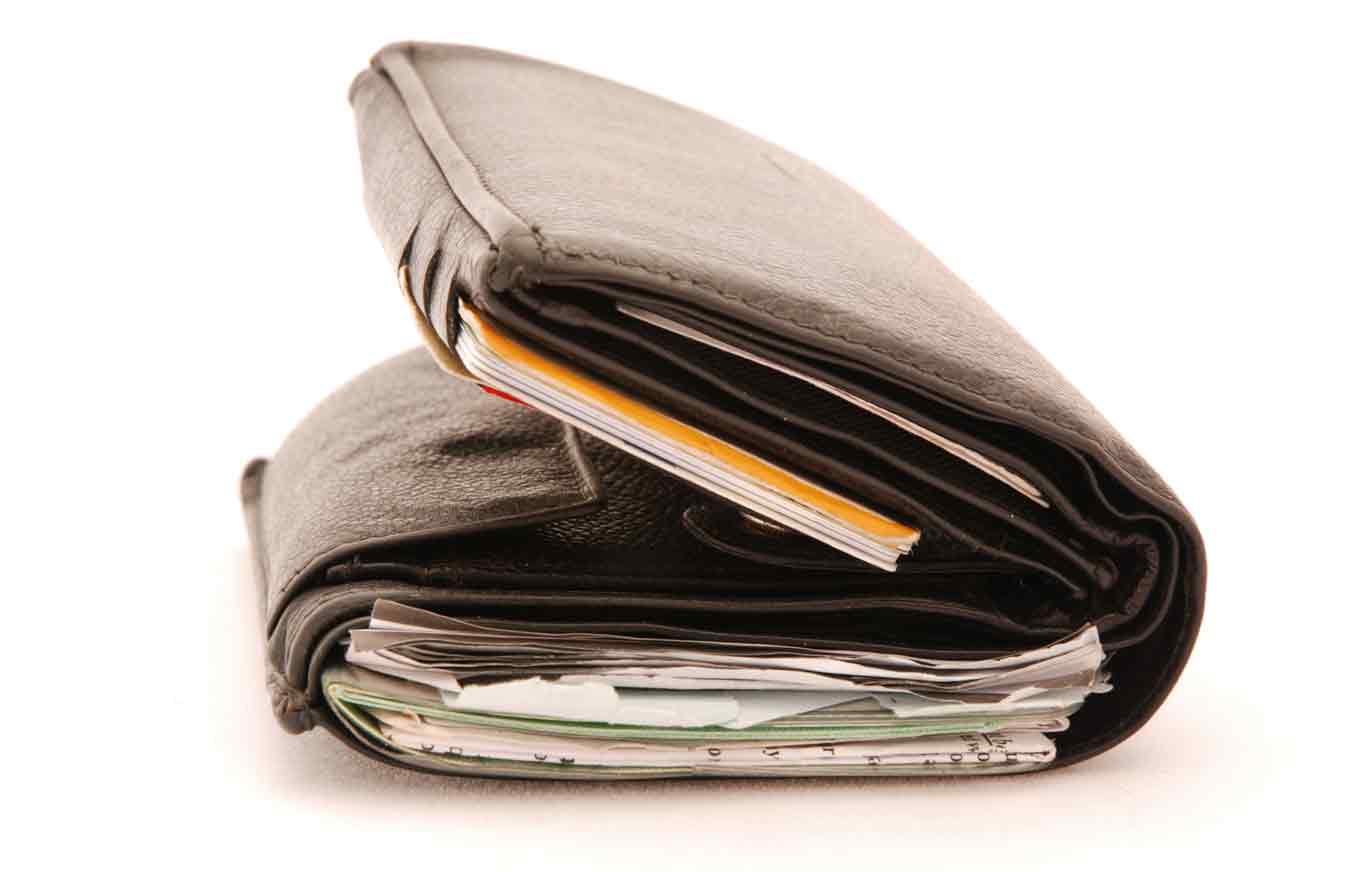
A fat wallet  is terrible looking. It gives you that big bulge that’s just ugly. The smartphone can lighten up a heavy wallet. We’ve seen mobile phones displace cameras, music players, books, credit cards and a lot many and we can also digitize stuffs in the wallet like business cards, receipts, ID cards, loyalty cards …etc. Here is yet another suggestion from the Google fanboy on digitizing business cards and eliminating them from your wallet.

  • Digitizing physical business cards

Business cards help us share contact details and make use of it over a long term for mutual benefit. It is pretty much a necessity for networking. But how do you deal with a bunch of 100+ business cards when you return from a conference or trade show. Stuffing the cards inside the wallet or maintaining a box of cards or a rolodex is burdensome, occupies physical space and cannot be carried with us wherever we go. I propose a solution wherein, Google, which also has apps like Google Goggles and PhotoScan, should come up with a mechanism to integrate business cards with contacts by provisioning users to scan business cards using the phone’s camera, transcribe what is written on the card and save or merge it to contacts. From the digitized card, the user should be able to contact them via call, e-mail, SMS, or add them on LinkedIn.

Once the user captures the business card on the contacts screen, it should display the image of the scanned business card followed by the below fields, which should be fetched from the transcribed text on the card and the user should be allowed to edit/enter the missing information manually.

  • Title
  • Name
  • Job Title
  • Company Information
  • Address
  • Phone – with options to add multiple phone numbers
  • Email – with option to add multiple email addresses
  • Website – with options to add multiple URLs
  • Blog
  • Birthday
  • Social Media – (LinkedIn, Google+, Facebook, Twitter, Skype, Others)
  • Label/Category
  • Option to add a note like how and when they met

In some cases, business cards are printed on both the side and hence there should be an option to capture the rear of the card too, which should be displayed at the bottom. When the user taps on a saved card, an expanded view of the card should be displayed with the front image of the card on top, followed by the details, followed by the rear image of the card.       

  • Design, store and send electronic business cards to other mobiles

Your business cards are something that you may need, especially if you are in a profession that needs to build contacts. Handing out your card is a much useful way of making new contacts and it should be just a swipe or flick away with your mobile device. Converting business cards as digital  entities and making them shareable peer to peer using NFC or any other wireless contact sharing would save a lots of physical space and also a few trees. The user should be allowed to capture and save his/her own card or create a customised card, which can be shared over phone to phone wireless sharing or over email.

My card section on top should show the captured image of the business card along with the editable contact details below,

  • Title
  • Name
  • Job Title
  • Company Information
  • Address
  • Phone – with options to add multiple phone numbers
  • Email – with option to add multiple email addresses
  • Website – with options to add multiple URLs
  • Blog
  • Birthday
  • Social Media – (LinkedIn, Google+, Facebook, Twitter, Skype, Others)

Alternatively, if the user wishes to create/design his/her card rather than scanning it, the user should be provided with a create option in the My Card section. Upon clicking create, the user should be displayed a form to fill in the above contact details along with option to upload the company logo under company information. Once the user completes entering the details the next screen should prompt to select from a few available templates of business card. In order not to confuse the user too much and to keep the creation process simple, only limited templates should be provided with options of background colour limited to White, Grey and Blue and prefixed text colours complementary to that of the background. The text font should initially be limited to only one, which looks professional and pleasing. Once the user selects the template, a preview of the user’s card should be displayed with options to finalize the card or to go back and change the template or edit the details. The finalized card should be displayed in the My Card section of the business cards tab in the contacts screen, with options to share wirelessly to others.

Design

Mock-up of Contacts screen with an additional tab for Business Cards. (Designed using Marvel)

Addendum – Jul 2023

iOS 17 – NameDrop

iOS 17 makes iPhone more personal and intuitive – Apple (IN) 

What is Apple’s NameDrop feature in iOS 17? All you need to know on magical feature | Mint  

Using Google Maps to Improve Safety on Roads

sign7_italy

Improving safety on the roads helps road users, prevents accidents and saves lives. It secures people while traveling on the roads. Improving and maintaining the road infrastructure can ensure on its part, safety on roads and give a great travel experience.

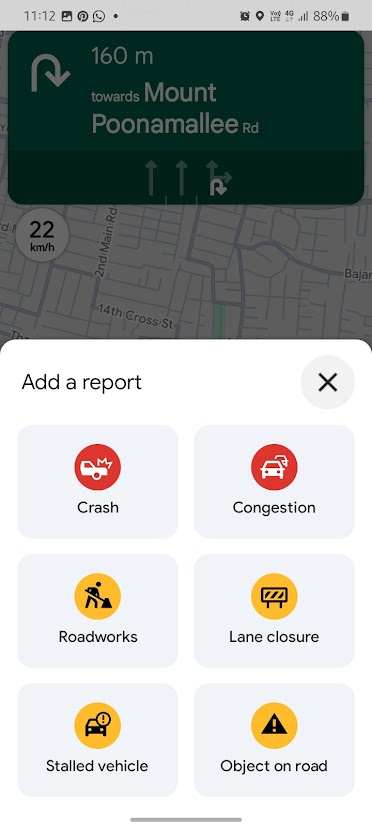
Impediments on roads such as  potholes, unmarked speed breakers, unmarked road turns, fallen signages, malfunctioning signal…etc can cause drivers to lose control over their vehicles and cause  accidents.  Such accidents can be prevented to a significant degree, if there are proper caution signs/marks and when the roads are properly maintained. However it is difficult for the civic agencies to monitor all the roads for maintenance issues . My suggestion would be to crowd source these to bring it to the notice of civic agencies using Google maps. Civic agencies should tie up with Google maps, where Google maps provides an option for the users to earmark locations where there are potholes, unmarked speed breakers and unmarked turns on roads. These markers done on Google maps can be seconded as authentic issues by subsequent users who pass through the same locations. Upon taking confirmation from a few users, Google maps should send notification to the civic authorities, who can in turn address the issue. Such notifications can also be utilised to point out broken/leaking public water pipes, damaged electric poles, unsafe electric cables lying on the roads, or anything which compromises the safety of the road users and which needs to be addressed.

For this purpose, Google maps should place an option on the map screen, to report a maintenance issue, by marking the location, adding specific details and upon submitting, a notification should be sent to the civic agencies.

“Be alert! Accidents hurt.” ~ Author Unknown

Addendum: Nov 2024

Apps to help during emergency – feedback to Google/Android

I am a great fan of Google and its ‘Do not be evil’ philosophy. I feel that the utility of mobile devices during emergency situations can be improved, if the below functions are added.

Emergency dialler

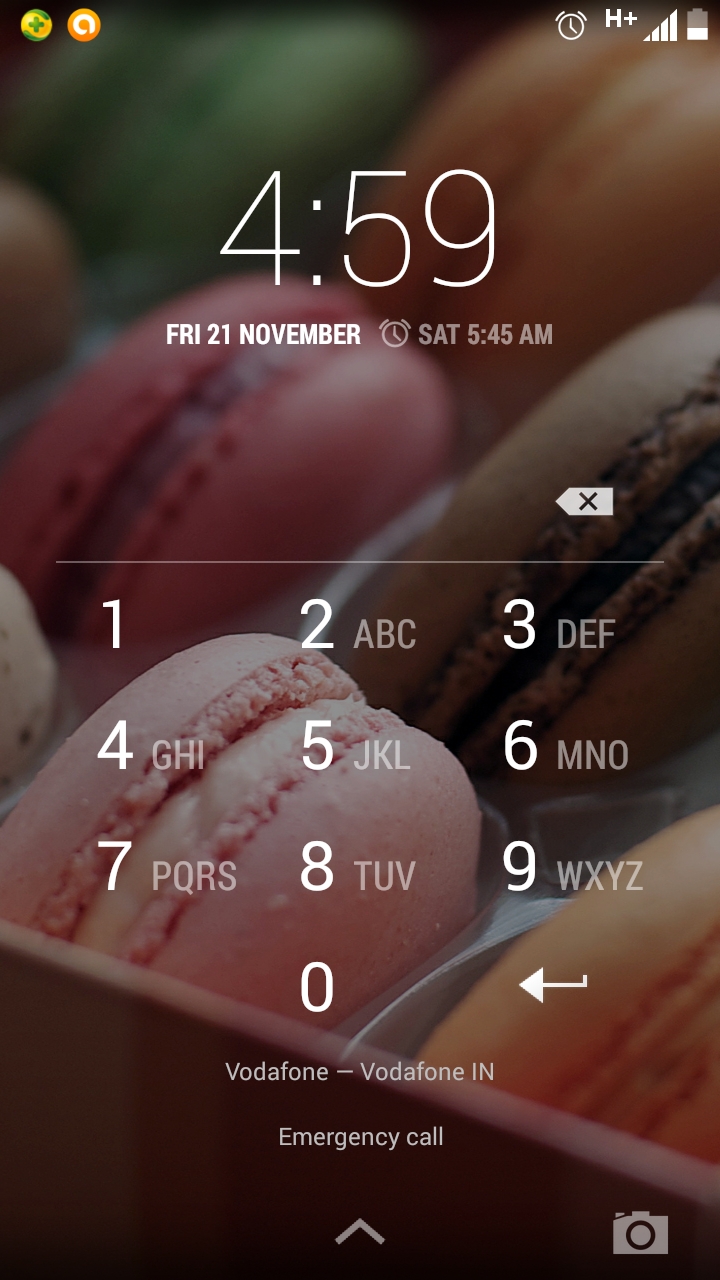
In a country like India, when a person meets with an accident and becomes unconscious, those who come to help or the police would want to find out the identity of the victim. They would also try to access the mobile phonebook to contact the family or friends of the victim. In most cases, mobiles are locked using passcodes, so as to protect personal data and hence is not of much help during such emergencies.

What can be done?

The screen 1 below shows the sample screen of a locked mobile, with an option for making an emergency call. When the ‘Emergency call’ option is clicked, screen 2 as shown below is displayed. However, screen 2 allows to dial only numbers like 911 or 112. The emergency contact for various countries differ and hence those too should be included. Now, to inform the family or friends of the victim or to find out the identity of the victim, dialing to a number on the phone book wouldn’t be possible as the phone is locked. So, when the phone is locked/passcode protected, the users should be able to access and dial a few numbers from the phone book. For instance, when the user taps on the ‘Emergency call’ option in screen 1, screen 3 should be presented instead of screen 2 as it is shown currently. In screen 3, the user should be presented with a list of 3-5 emergency contact numbers. These emergency contact numbers should be pre-selected from the phone book, based on a prompt from the device.

Ex. User should be able to map/assign the contact ‘Mom’ as Emergency 1, ‘Dad’ as Emergency 2, and so on, where ‘Mom’ and ‘Dad’ are contacts stored in the phonebook.

Screen 1
Screen 1
Screen 2
Screen 2
Screen 3
Screen 3


‘Track me’ app

What is this?

This app should help the mobile user to text, send a photograph of any person, place or thing or to send a voicemail, to a Google protected mailbox/application, which can only be accessed by Google and any investigation agencies.

Why is this required?

Case 1: When women in Indian cities travel alone in an auto rickshaw during night times, they are advised to send a message with the name of the driver and the registration number of the auto, to their friends or family members. This helps to track, in case of any unforeseen events.

Case 2: In the movie 127 hrs, Aron Ralston goes on a hike to the Blue John Canyon, without informing his mother. His mother was not aware of his whereabouts and files a missing complaint.

So, when a person is going somewhere without informing anyone, as mentioned in case 2 or if a person is travelling alone as mentioned in case 1, the mobile user should be presented with a track me button in the home screen. The user should be able to open the app and text, capture an image like the auto rickshaw registration number or record a voice on where he is going and for what purpose and click on save. This message should be saved to a Google server, which cannot be deleted by the user and should be auto deleted after 2-4 weeks time. When the person is found missing or does not return home for long, parents can file a complaint and the investigation agencies should be able to trace the whereabouts of the missing person using the message the user left lastly. Though the phone movement can be tracked using signals, this app would give an option for the users to relay his actual intentions of going somewhere or his whereabouts. Ex: Not all people are comfortable to disclose where they intend to go and what they intend to do there. This app would help to track them and at the same time protects their privacy.

Addendum:

Impact 🙂

1. The “Emergency Dialler” idea got implemented in Android N, released in Aug 2016.

2. Google has come up with Trusted Contacts app based on my app suggestion “Track me” which was sent to suggestions@google.com. Google’s new Trusted Contacts mobile app lets you connect to friends and family in the event of an emergency.

3. The Trusted Contacts has been replaced with Personal Safety app, by Google.

4. This is one of the first screen designs I made, when I had no design experience, using MS Paint. Later, I tried Marvel, Canva, Adobe XD & Figma for designs.


Tracking and auditing donations made to government and non-governmental organisations

There are instances where authorities misuse donations or public funds. For example, when some one donates furniture to government schools and if it is not properly publicised, and the school also receives government funds, the school authorities can obtain fake bills and show that the furniture were purchased from the government fund and loot the money sanctioned by the government. Donor will be under the impression that his money was used for a certain purpose and the government will be under the impression that government funds were for the same purpose.
 
One way to make donations transparent would be to create and maintain a public repository where all the donations made to government and non-governmental organisations and how it was used are reported and maintained, and can be under the watch of the government auditors.
This will not only reduce the leakage of funds but also improve trust and confidence among donors and encourage more donations.
 
 
****************************************************************
 
Submitted this idea for a better a future, as part of the Leaders of Tomorrow contest conducted by ISB, where I went on to receive the Best Profile award.

Making higher education accessible to the underprivileged members of the society

India is capable of becoming a knowledge super-power. Why not help the under privileged too be a part of this? There are quotas and reservations, but still there are people who cannot afford the cost of education.
 
What can be done in addition to the reservations? Though the law prohibits educational institutions from taking capitation fee from students, most colleges do collect capitation fees and donations, which are kept unaccounted and in turn becomes black money. When the government is unable to curb this, why not pass a bill, legalize it and make it taxable. Some might argue, why sell education. Even otherwise, it is sold, illegally! Rather than letting go off tax revenue, why not proactively account those.
In return to taking capitation fees, the bill should mandate educational institutions to admit 5-10% of students without charging them in any form and for any purpose, through a single window system facilitated by the government.
Such an amendment will not only benefit the underprivileged to get quality education, but also the government in terms of tax revenue.
****************************************************************
Submitted this idea for a better a future, as part of the Leaders of Tomorrow contest conducted by ISB, where I went on to receive the Best Profile award.
 

Creating a better nation with well informed citizens

How to do this on a large scale? One way is by extending the scope of RTI act, so as to include mass media, which has an important role in nation building, such that, 25-30% of the first page of all regional and nationwide news papers, 20-30 secs of air-time of all regional and nationwide TV/Radio channels during prime time be handed over to the government for free usage or for an yearly fees based on the newspaper’s/channels’ readership.

This space/air-time, which can be shared between the state and central government proportionately on daily or weekly basis, can be used to impart moral education, educate people on social issues and create awareness on legal matters and government policies. The government can use this to proactively disclose information on issues of larger public interest, which in some cases can reduce the number of RTI applications and also avoid harassment of RTI applicants.

Also, this space/air-time can be used to sensitise people on various frauds/scams and the modus operandi of scamsters. Preventing people from getting cheated will spare a lot of liquid cash which can be a growth booster rather than that money getting converted as black money.

Moreover, the government and politicians, most times spend lavishly to inaugurate new schemes or infrastructure facilities. Availability of such newspaper space or air-time can also be used to declare open any new schemes/infrastructures, which in turn will save money for the government, prevent chaos and traffic jams and save time for a lot of people including the government.

The newspaper space can sometimes be used to publish large scale tenders, which to some extent can prevent corruption in allotting tenders.

Publications of all such kind will create better informed and educated citizens and over the long run will pave way for a peaceful and better society.
 
****************************************************************
 
Submitted this idea for a better a future, as part of the Leaders of Tomorrow contest conducted by ISB, where I went on to receive the Best Profile award.